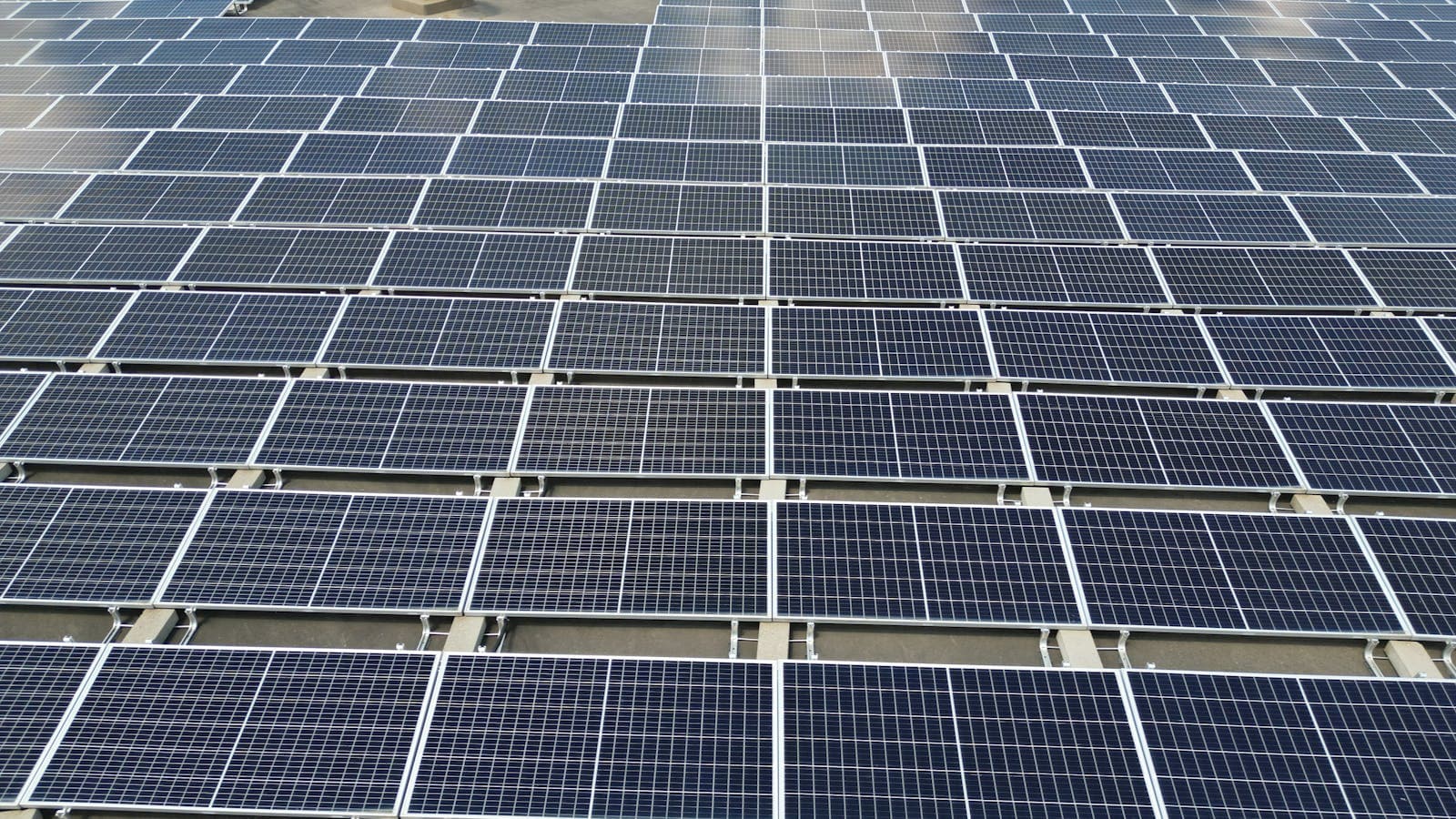
Size commercial solar systems correctly for warehouses, offices, and retail in the Middle East. Load analysis, inverter selection, and ROI calculations.
Why Commercial Solar Sizing Is Different
Commercial solar installations differ fundamentally from residential ones. The loads are larger, the consumption patterns are more predictable, and the financial returns are often faster. A warehouse, office building, or retail complex consumes most of its electricity during working hours, which aligns perfectly with solar production. This makes commercial properties ideal candidates for solar investment.
However, getting the sizing wrong is expensive. An undersized system leaves money on the table. An oversized system exports excess power at unfavourable rates. This guide walks through the sizing process for commercial properties in the UAE and Middle East.
Step 1 — Analyse Your Load Profile
Before sizing a single panel, you need a detailed understanding of when and how much electricity your business uses.
Gather 12 Months of Utility Data
Request interval data (15-minute or hourly readings) from your utility provider (DEWA, SEWA, FEWA, or SEC). This reveals your consumption pattern throughout the day and across seasons. Key metrics to extract:
- Peak demand (kW): The highest instantaneous power draw, which determines your inverter size
- Total monthly consumption (kWh): Determines overall system size
- Daytime vs night-time split: Only daytime consumption can be directly offset by solar without batteries
- Seasonal variation: Summer cooling loads in the Gulf can be 3-4 times higher than winter
Typical Commercial Load Profiles
| Business Type | Monthly Consumption | Peak Demand | Daytime Ratio |
|---|---|---|---|
| Office building | 20,000 - 100,000 kWh | 50 - 300 kW | 75-85% |
| Retail / shopping | 30,000 - 200,000 kWh | 80 - 500 kW | 70-80% |
| Warehouse / logistics | 10,000 - 50,000 kWh | 30 - 150 kW | 80-90% |
| Manufacturing | 50,000 - 500,000 kWh | 150 - 1,500 kW | 60-80% |
| Hotel | 100,000 - 500,000 kWh | 200 - 1,000 kW | 50-65% |
Step 2 — Determine Optimal System Size
The goal is to maximise self-consumption: generating solar electricity at the same time you are consuming it. In the UAE, net metering allows you to export surplus, but the financial return on self-consumed energy is higher than exported energy.
The 70-80% Rule
For most commercial properties in the Middle East, sizing the solar system to cover 70-80% of daytime consumption delivers the optimal balance between investment and return. This ensures that nearly all generated solar energy is consumed on-site, maximising the value of every panel.
Sizing Formula
System size (kWp) = Annual daytime consumption (kWh) / (Annual solar yield per kWp x self-consumption target)
In the UAE, annual solar yield is approximately 1,700-1,900 kWh per kWp installed (accounting for temperature derating, dust, and system losses).
Worked Example — Office Building
- Annual consumption: 600,000 kWh
- Daytime ratio: 80% = 480,000 kWh
- Self-consumption target: 75% of daytime = 360,000 kWh
- Solar yield: 1,800 kWh/kWp
- System size: 360,000 / 1,800 = 200 kWp
Step 3 — Roof Assessment
Commercial rooftops need structural and spatial evaluation before installation.
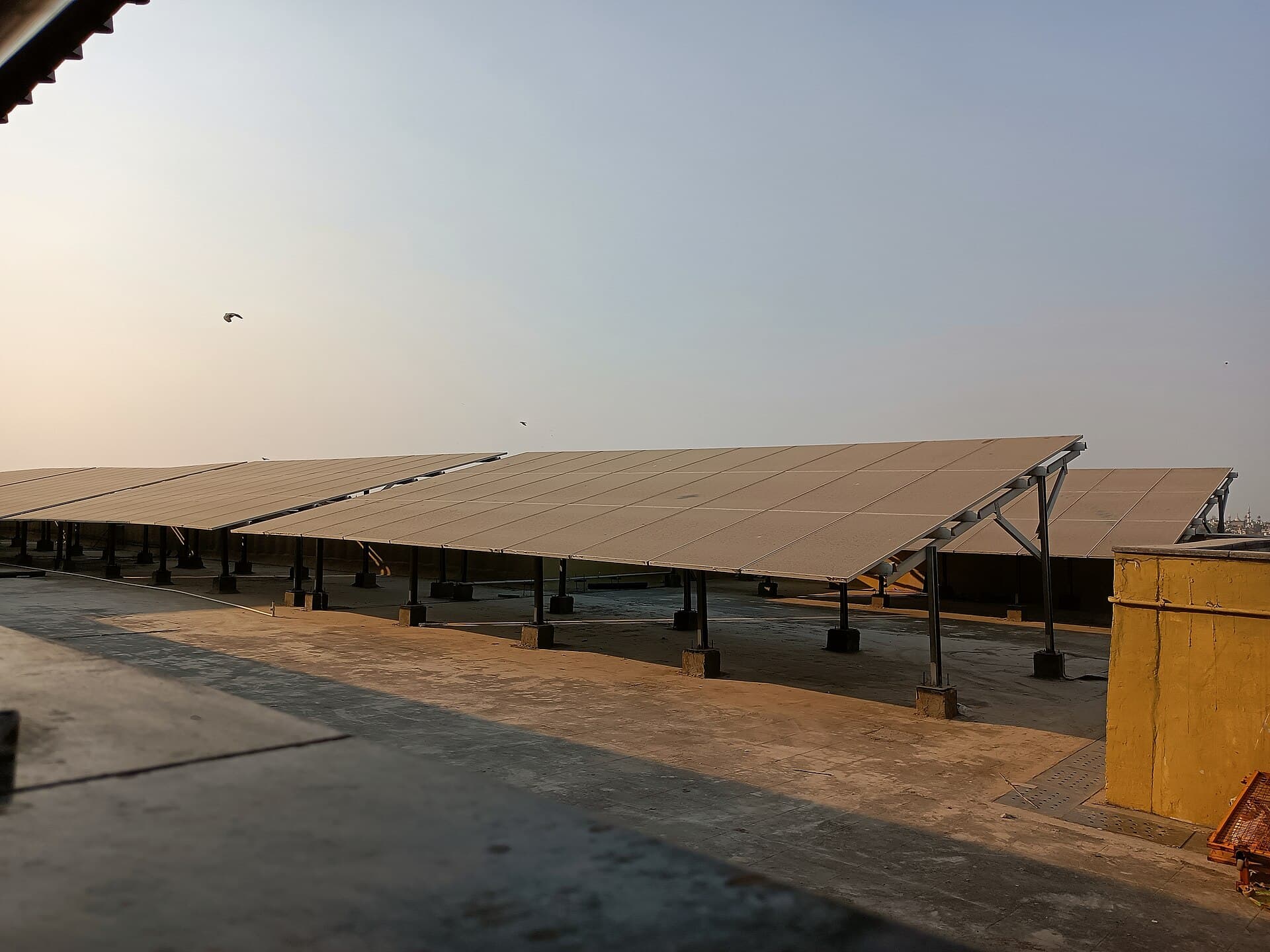
- Available area: Allow 5-6 m2 per kWp of solar panels (including walkways and spacing). A 200 kWp system needs approximately 1,000-1,200 m2 of usable roof space.
- Structural capacity: A commercial solar array adds 12-15 kg/m2 to the roof load. A structural engineer must verify the roof can support this additional weight plus wind uplift loads.
- Orientation and tilt: Flat commercial roofs allow optimal south-facing tilt. On pitched roofs, east-west configurations can still perform at 85-90% of optimal.
- Shading analysis: Map shadows from rooftop equipment (HVAC units, water tanks, elevator shafts) throughout the year. Even small shadows can significantly reduce string output.
Step 4 — Inverter Selection
| System Size | Inverter Type | Advantages |
|---|---|---|
| Up to 50 kWp | String inverters (e.g., DEYE SUN-50K) | Cost-effective, easy to maintain, good for simple roof layouts |
| 50 - 200 kWp | Multiple string inverters | Redundancy (one inverter failure does not shut down the entire system), flexible configuration |
| 200+ kWp | Central inverter or string inverter array | Central inverters are more compact; string arrays offer better partial-shading performance |
Step 5 — Financial Analysis
Key Financial Metrics
- Simple payback period: Total investment divided by annual savings. Commercial systems in the UAE typically achieve 3-5 year payback.
- Internal Rate of Return (IRR): Well-sized commercial systems deliver 15-25% IRR over 25 years.
- Levelised Cost of Energy (LCOE): The cost per kWh generated over the system lifetime. UAE commercial solar LCOE is typically AED 0.10-0.15/kWh, well below retail electricity rates.
ROI by Business Type
| Business Type | System Size | Investment (AED) | Annual Savings (AED) | Payback |
|---|---|---|---|---|
| Office (500 m2) | 50 kWp | 150,000 - 200,000 | 40,000 - 55,000 | 3-4 years |
| Warehouse (2,000 m2) | 150 kWp | 400,000 - 550,000 | 110,000 - 150,000 | 3-4 years |
| Retail complex | 300 kWp | 750,000 - 1,000,000 | 200,000 - 280,000 | 3-4 years |
| Factory | 500 kWp | 1,200,000 - 1,600,000 | 350,000 - 480,000 | 3-4 years |
Installation Considerations
- Obtain all necessary utility approvals (DEWA, SEWA, or SEC) before purchasing equipment
- Schedule installation during low-business periods to minimise disruption
- Use a monitoring platform that tracks each string independently for rapid fault detection
- Install bird deterrent mesh under panels in areas with pigeon problems (common in Gulf warehouses)
- Plan cable routing to avoid crossing high-traffic areas on the roof
- Consider a Power Purchase Agreement (PPA) if capital expenditure is a constraint
Frequently Asked Questions
Common questions about sizing commercial solar systems in the Middle East.
Frequently Asked Questions
How much roof space do I need for a commercial solar system?
What is the payback period for commercial solar in the UAE?
Should I size my commercial solar system to cover 100% of consumption?
Ready for a personalized quote?
WhatsApp us — average reply time under 15 minutes.