High voltage, small scale
256 V nominal architecture in a single 5 kWh, 20 Ah unit operating from 224 to 292 V.
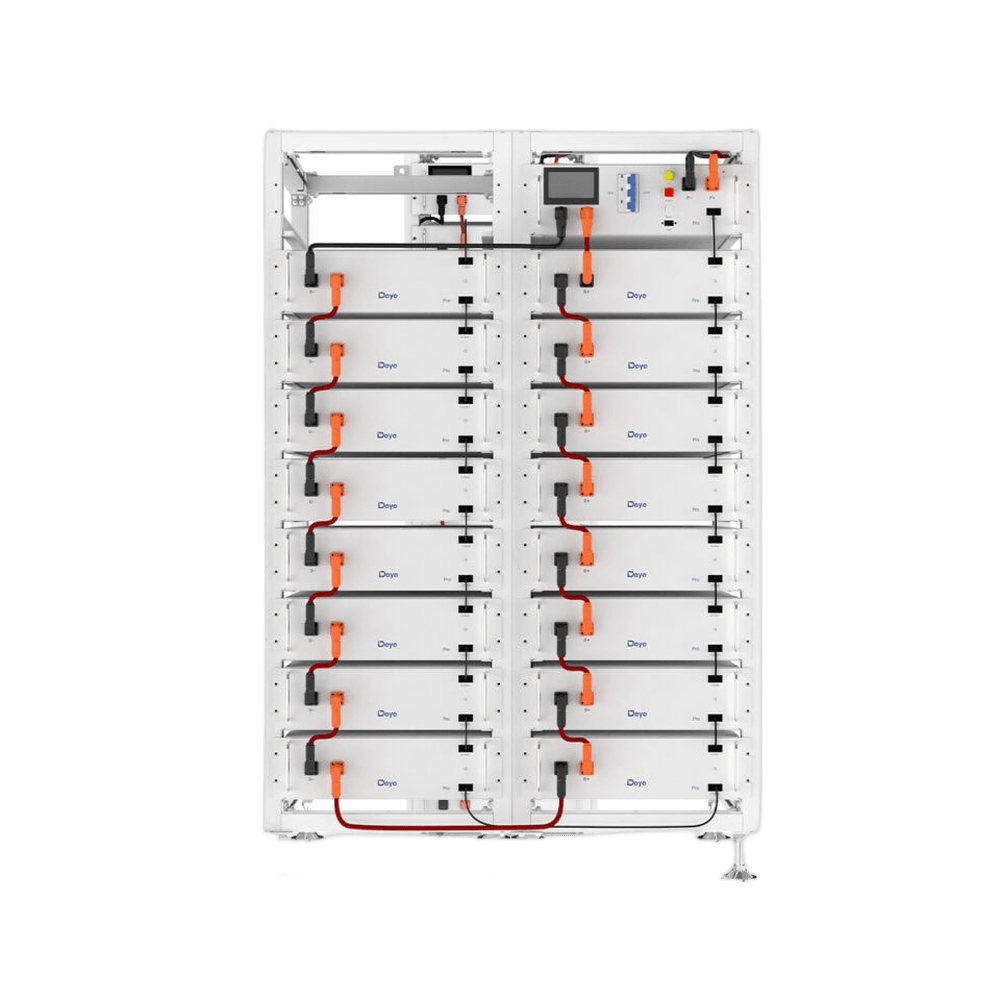
Solar BatteriesModel SS-F5
Deye's compact high-voltage unit: 5 kWh at 256 V in a 45 kg IP65 housing, paralleling to six units and covered by a stated 10-year warranty.
In stock
256 V nominal architecture in a single 5 kWh, 20 Ah unit operating from 224 to 292 V.
IP65 protection with humidity tolerance spanning 0 to 100%.
Charge and discharge are both rated across -20 to 55 degrees Celsius.
Master-slave BMS with passive balancing and optional DC arc detection over the LiFePO4 cells.
Deep cycling by design, with a rating beyond 6,000 cycles to 70% end-of-life capacity.
A 45 kg, 470 x 650 x 170 mm unit for wall or floor mounting, up to six in parallel.
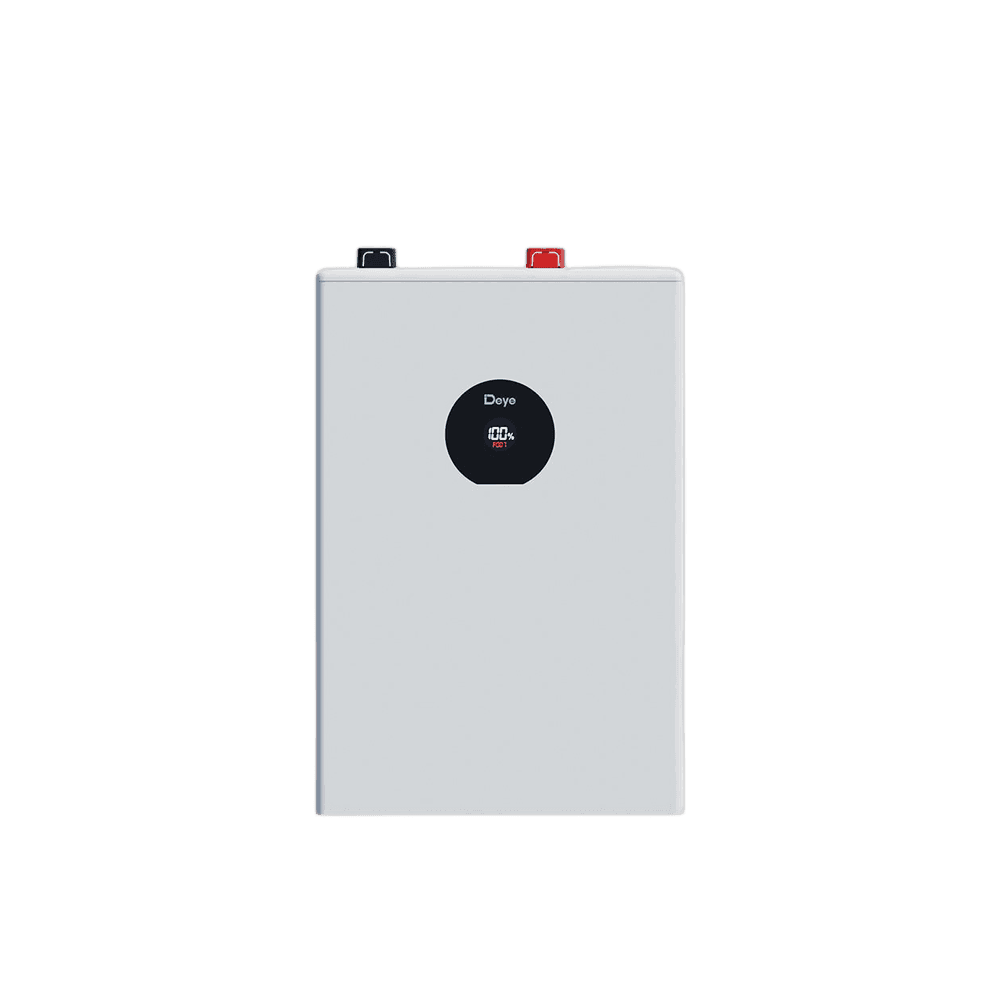
Not every high-voltage system needs a tall stack of modules: the Deye SS-F5 delivers 5 kWh at 256 V nominal from a single 45 kg, 470 x 650 x 170 mm unit, operating between 224 and 292 V with high-voltage battery inverters over CAN2.0 or RS485. Its IP65 enclosure and 0-100% humidity rating tolerate harsh placements, and both charging and discharging are specified across the full -20 to 55 degrees Celsius span, so winter performance is in the datasheet rather than in hope. A master-slave BMS with passive balancing supervises the LiFePO4 cells - rated past 6,000 cycles to 70% capacity - and DC arc detection is available as an option. The recommended depth of discharge is 90%, with 10 A recommended current against a 20 A maximum, and up to six units parallel into one system. Wall- or floor-mounted, it reads out SOC and fault codes and carries Deye's stated 10-year warranty. We are an authorised Deye distributor and supply the SS-F5 from our own stock, with technical support before and after the sale.
Specifications last updated 24 January 2026
| Energy | 5 kWh |
|---|---|
| System Energy | 5 kWh |
| Nominal Voltage | 256 V |
| System Nominal Voltage | 256 V |
| Operating Voltage | 224-292 V |
| Rated Capacity | 20 Ah |
| Cell Chemistry | LiFePO4 |
| Cycle Life | >6000 |
| End-of-Life Capacity | 70 % |
| Recommended Depth of Discharge | 90 % |
|---|---|
| Max. Charge Current | 20 A |
| Max. Discharge Current | 20 A |
| Max. Charge/Discharge Current | 20 A |
| Recommended Charge/Discharge Current | 10 A |
| Min. Battery Module Quantity | 1 |
| Parallel Units | 6 |
| Protection Features | Master-Slave BMS, Passive Balancing, DC Arc Detection (optional) |
| Warranty (Years) | 10 |
| Communication Ports | CAN2.0, RS485 |
|---|---|
| Dimensions | 470 x 650 x 170 mm |
| Status Indicator | SOC, fault codes |
| Weight | 45 kg |
| Altitude | <3000 m |
|---|---|
| Charge Temperature | -20 to 55 °C |
| Discharge Temperature | -20 to 55 °C |
| Operating Humidity | 0-100 % |
| Installation Location | Wall-Mounted, Floor-Mounted |
| Enclosure IP Rating | IP65 |
| Storage Temperature | 0-35 °C |
| Working Temperature | Charge/Discharge: -20 to 55 °C |
No - it is a high-voltage unit at 256 V nominal with a 224-292 V operating range, intended for high-voltage battery inverters.
A 20 A maximum for both charge and discharge, with 10 A recommended for everyday operation.
It is rated IP65 with humidity tolerance from 0 to 100% and operation from -20 to 55 degrees Celsius; altitude is limited to 3,000 m.
Yes - up to six units run in parallel in one system, communicating over CAN2.0 and RS485.
The cells are rated for more than 6,000 cycles to 70% end-of-life capacity, and the stated warranty is 10 years.
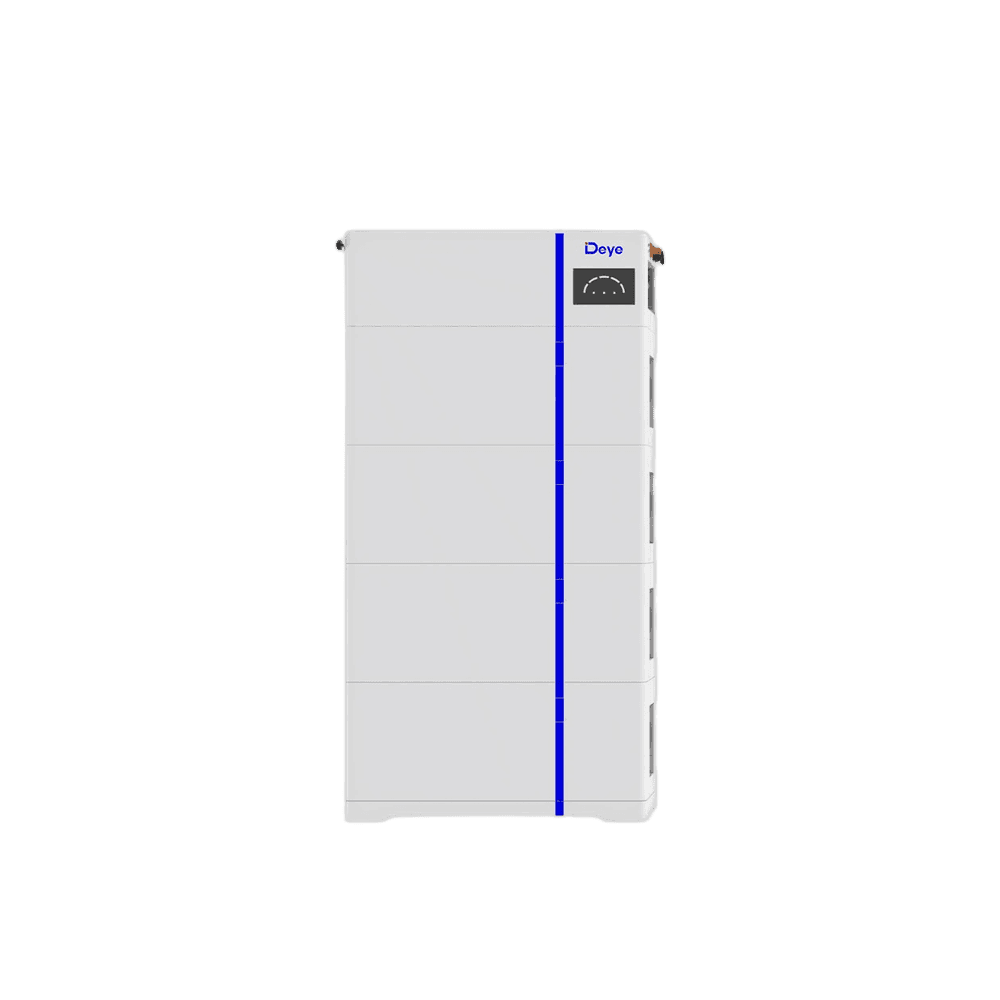
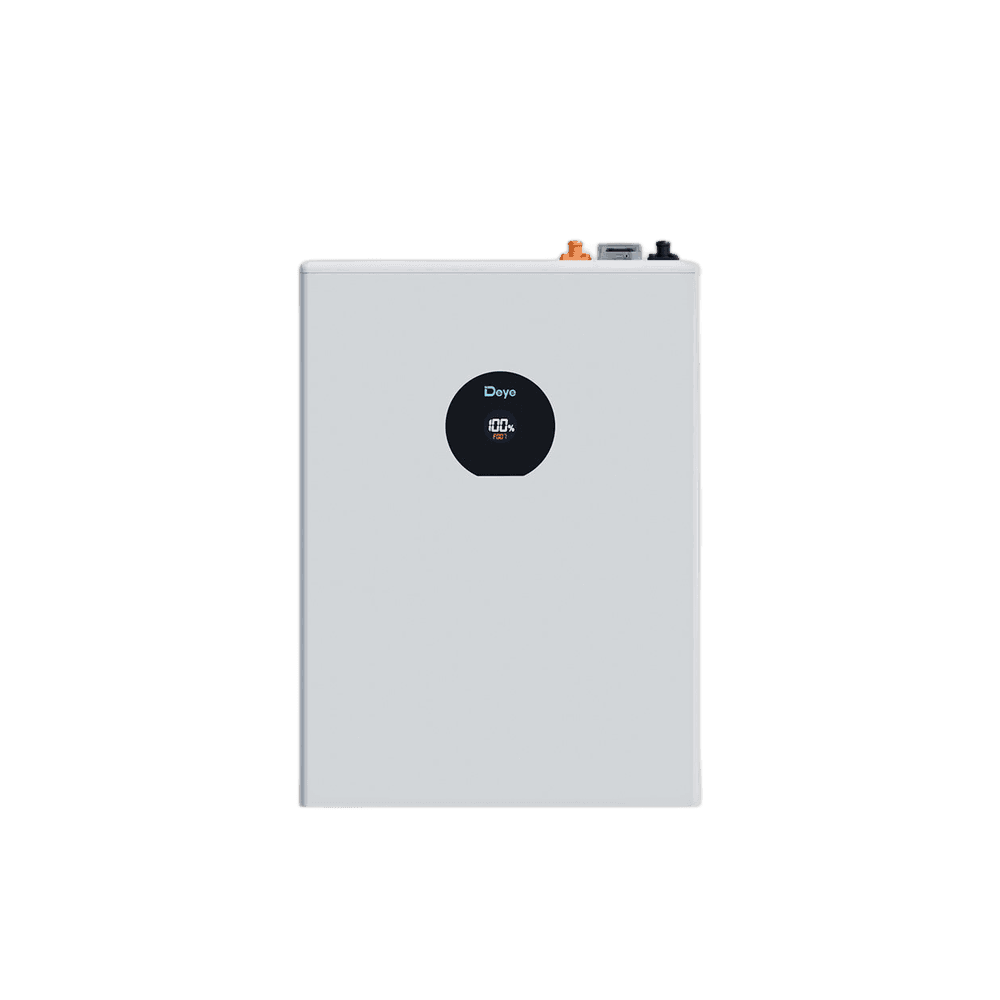
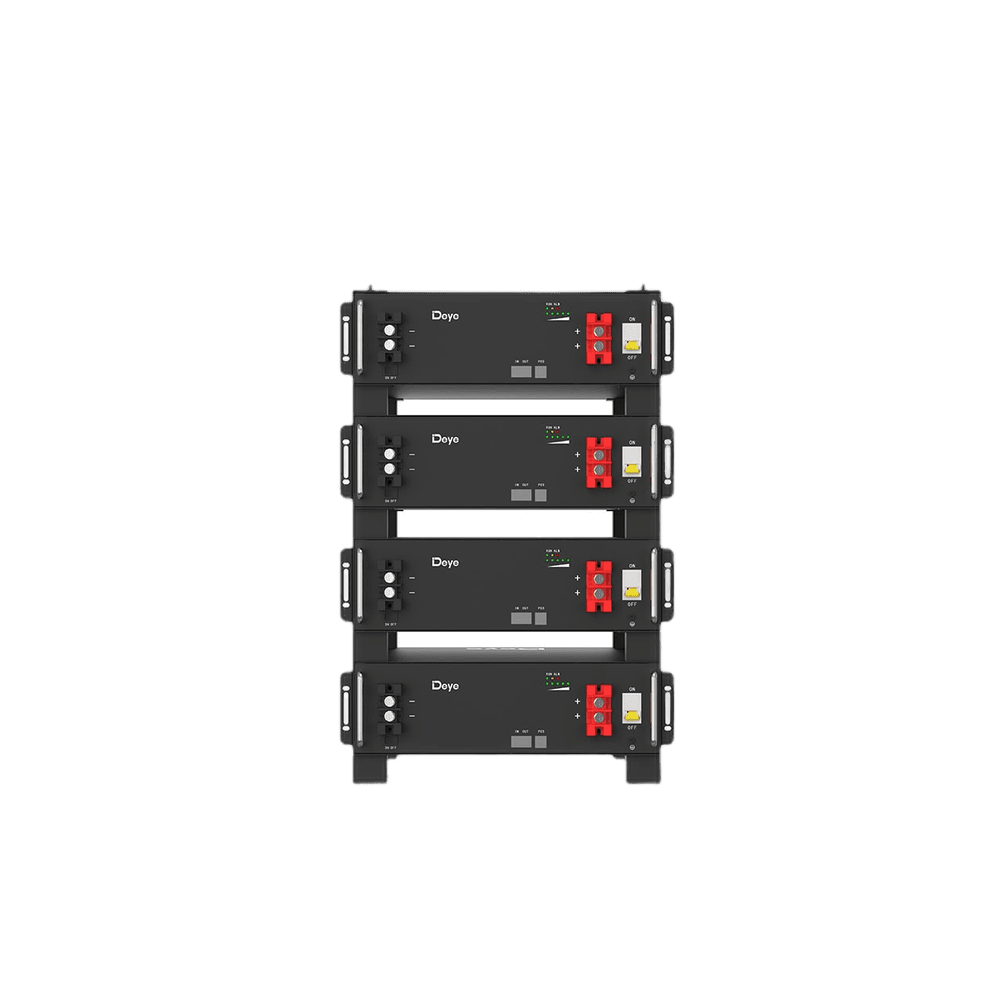
19 Deye battery records state a 0-55 °C charge window, five state -20 to 55 °C, and 30 state a 0-35 °C storage window. What those three figures mean for a garage in a UAE summer.
Read: Can You Put a Solar Battery in a Dubai Garage? →A 12 V lithium battery, a LiPo pack, an 18650 cell and a car battery are not the same thing. What separates them, and which belongs in a solar system.
Read: Lithium battery types and voltages: 12 V, polymer, 18650 and car batteries →Every capacity the Deye battery records state: 20, 39, 40, 100, 120, 200, 208, 235, 280 and 314 Ah, 1.28 to 4340 kWh — and how your own figure gets built.
Read: Deye Battery Capacities in Saudi Arabia: 20 Ah to 314 Ah →