Every capacity the Deye battery records state: 20, 39, 40, 100, 120, 200, 208, 235, 280 and 314 Ah, 1.28 to 4340 kWh — and how your own figure gets built.
A buyer types the capacity he wants — 150 Ah, or 300, or 80, or 20 kWh — not the capacity printed in a spec column. This page puts the two side by side: every capacity our thirty-four battery records state, in amp-hours and in kilowatt-hours, then how the figure you asked for is built out of them, and which model to open next.
We sell 35 Deye LiFePO4 batteries against 34 spec records, and every number below is copied from a column in those records: rated capacity in Ah, energy in kWh, nominal voltage, units in parallel and the system ceiling. A column that states no figure gets no figure from us.
If you already have a capacity in mind, send your load in watts and the hours you need it for on WhatsApp +971 4 255 0887 or by email at sales@deyeinverters.net, and we will answer with the model and the number of units from this same list.
Every amp-hour capacity the records state
An amp-hour is a capacity at a stated voltage, so the figure means nothing until you read the voltage beside it. That is why three models here carry the same 100 Ah while their energy is 5.12, 2.56 and 1.28 kWh — their nominal voltage is 51.2, 25.6 and 12.8 V. The column this list is ordered on is rated capacity, exactly as each record states it.
| Rated capacity (Ah) | Model | Energy (kWh) | Nominal voltage (V) |
|---|---|---|---|
| 20 | SS-F5 | 5 | 256 |
| 20 | SS-F10 | 10 | 512 |
| 39 | GB-A (module capacity 39.1) | 4-16 | 409.6 |
| 40 | GB-L Pro | 8-24 | 204.8-614.4 |
| 40 | GB-SL | 8.18-24.54 | 204.8-614.4 |
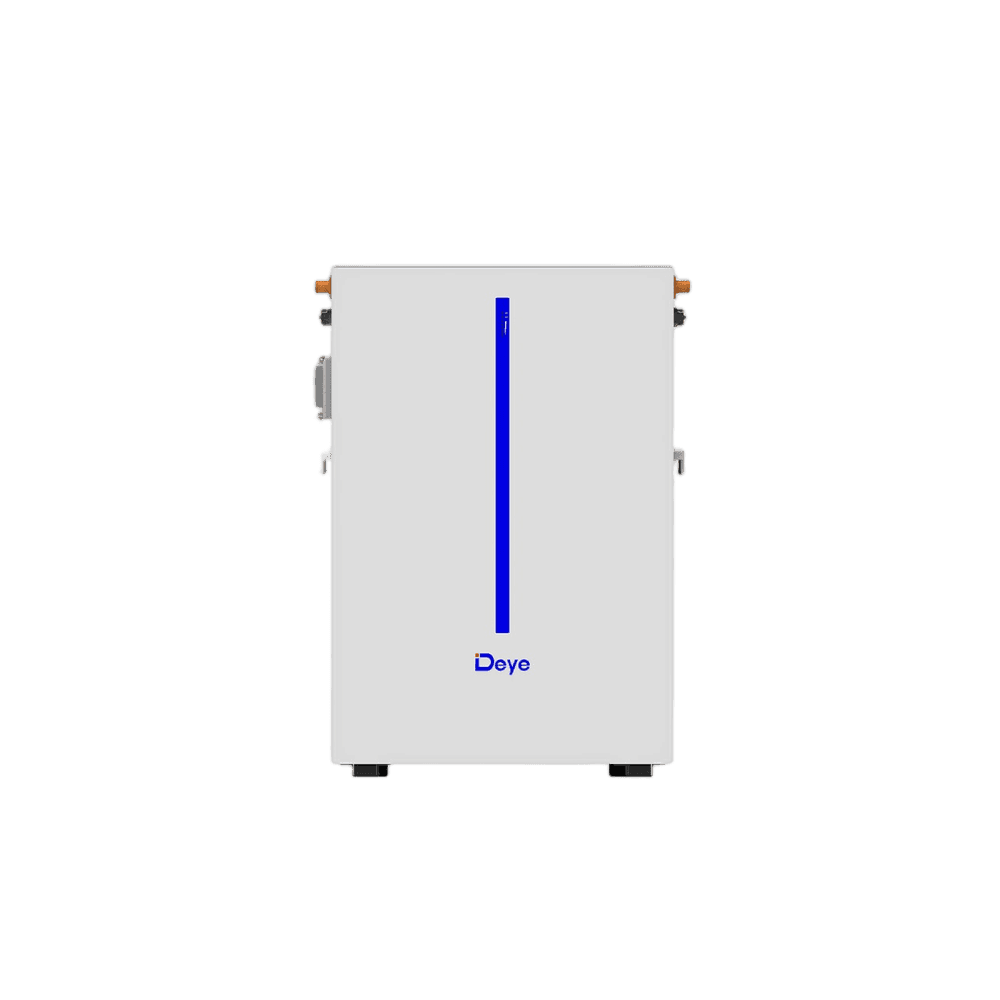
| 100 | AI-W5.1-B | 5.12 | 51.2 |
| 100 | SE-F5, SE-F5 Plus, SE-F5 Pro | 5.12 | 51.2 |
| 100 | SE-G5.1, SE-G5.1 Pro-B | 5.12 | 51.2 |
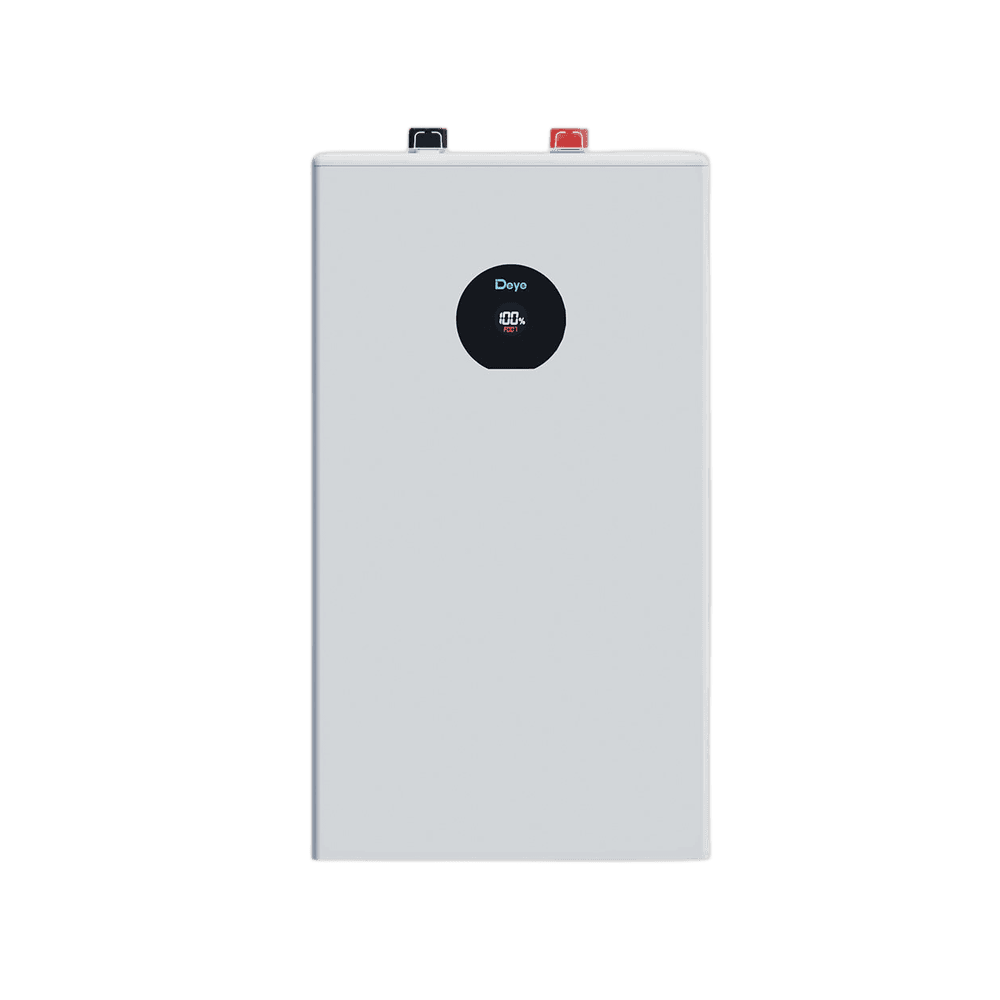
| 100 | RW-L2.5A | 2.56 | 25.6 |
| 100 | WD-G12100 | 1.28 | 12.8 |
| 100 | BOS-G | 15.36-61.44 | 153.6-614.4 |
| 100 | BOS-G Pro | 25.6-87.04 | 256-870.4 |
| 100 | BOS-W | 25.6-87.04 | 256-870.4 |
| 100 | BOS-GL60-GH60 | 5.12 per module, 61.44 per system | 51.2 per module, 307.2-614.4 per system |
| 100 | GE-FH60 & GE-FL60 | 61.44 | 614.4 |
| 100 | GE-F120 | 122.8 | 614.4 |
| 120 | RW-M6.1-B | 6.14 | 51.2 |
| 200 | RW-F10.2 | 10.2 | 51.2 |
| 200 | RW-F10.2-B | 10.24 | 51.2 |
| 200 | SE-G10.2 | 10.24 | 51.2 |
| 200 | WD-G12200 | 2.56 | 12.8 |
| 200 | BOS-A | 7.68 per module, 53.76-161.28 per system | 38.4 per module, 268.8-806.4 per system |
| 208 | RW-G10.6 | 10.64 | 51.2 |
| 235 | SE-F12 | 12.03 | 51.2 |
| 280 | BOS-B | 14.3 per module, 215 per system | 51.2 per module, 768 per system |
| 280 | MS-G215 | 14.3 per module, 215 per system | 51.2 per module, Not Stated per system |
| 280 | MS-GS215-2H3 | 14.3 per module, 215 per system | 768 per system |
| 314 | SE-F16 | 16 | 51.2 |
| 314 | RW-F16 | 16 | 51.2 |
| 314 | WS-GS2000-2H3 | 2057 | 819.2 |
| 314 | WS-L4300-2H3 | 4340 | 768 |
So the three that share 100 Ah — WD-G12100, RW-L2.5A and SE-F5 — are three different sizes, not one: voltage separates them, capacity does not. Comparing on amp-hours alone compares things that are not comparable.
A 150 Ah lithium battery: which unit it is built from
The two published capacities that bracket the figure are 120 Ah in RW-M6.1-B — 6.14 kWh at 51.2 V, 6.14 kWh usable, 58 kg — and 200 Ah in SE-G10.2 — 10.24 kWh at 51.2 V, 8.19 kWh usable. Anything between them, and anything above them, is built by the number of units rather than by one unit: the SE-G10.2 record states up to 64 units in parallel with a 655 kWh ceiling, and the RW-M6.1-B record states up to 32 units with a 196 kWh ceiling.
The figure we need from you in order to choose is not the amp-hours but the energy in kWh and your system's nominal voltage; the unit count and the model follow from those. Send your daily consumption and the hours of backup you want, and we will answer with the stack and its price.
A 200 Ah lithium solar battery: five records
Rated capacity 200 Ah is stated in five records, and their energy differs because their voltage does: RW-F10.2 at 10.2 kWh and 51.2 V (9.2 kWh usable), RW-F10.2-B and SE-G10.2 at 10.24 kWh at the same voltage, WD-G12200 at 2.56 kWh and 12.8 V, and the BOS-A module at 7.68 kWh and 38.4 V inside a cabinet whose nominal voltage is 268.8–806.4 V and whose energy is 53.76–161.28 kWh.
300 Ah and 400 Ah: the highest module capacity on the list
The highest module capacity the records state is 314 Ah. It is in SE-F16 and RW-F16 at 16 kWh and 51.2 V, 14.4 kWh usable, weighing 109 and 122 kg; and in the WS-GS2000-2H3 and WS-L4300-2H3 containers at 2057 and 4340 kWh. The SE-F16 and RW-F16 pages are written for anyone searching that figure, with the price, dimensions and weight their records state.
Above one unit's capacity, the number of units does the work: the SE-F16 and RW-F16 records each state up to 32 units in parallel with a 512 kWh ceiling, and the SE-F12 record — 235 Ah and 12.03 kWh — states a 384.96 kWh ceiling. Any energy under those ceilings is reached by unit count.
80 Ah and 72 Ah
The two published capacities on either side of those figures are 40 Ah in the GB-L Pro and GB-SL cabinets — nominal voltage 204.8–614.4 V, energy 8–24 and 8.18–24.54 kWh — and 100 Ah in six models at 51.2 V, each 5.12 kWh. The lightest unit on the list is WD-G12100: 100 Ah at 12.8 V, which is 1.28 kWh and 11 kg, and it is the unit that stacks to build a higher voltage.
5000 Ah: what the figure usually means
The highest module capacity in the records is 314 Ah, so that figure is not a unit capacity. If 5 kWh is what was meant, it is exactly the energy of SS-F5 — 5 kWh at 256 V and 20 Ah — or the 5.12 kWh of the six models that work at 51.2 V. And 5000 Wh is the same 5 kWh written in watt-hours.
And in kilowatt-hours: 3 kWh to 30 kWh
Most people who write the figure in kilowatts are asking about the size of a system rather than about one unit, so here is the same list read by energy.
A 3 kWh lithium battery
The nearest unit energy below the figure is 2.56 kWh in RW-L2.5A — 100 Ah at 25.6 V, 2.3 kWh usable, 32 kg — and above it 4 kWh: the GB-L Pro module, and the lowest energy the GB-A cabinet states. The RW-L2.5A record states up to 32 units in parallel with an 81.92 kWh ceiling, so everything between the two figures is built by count.
A 5 kWh lithium battery
Seven records sit at this size. SS-F5 states exactly 5 kWh at 256 V and 20 Ah. Six state 5.12 kWh at 51.2 V and 100 Ah, and what separates them is the usable-energy column and the mounting column: AI-W5.1-B (4.6 kWh usable, 74.5 kg, floor-mounted), SE-F5 (4.1, 41 kg, wall, floor or stack), SE-F5 Plus (4.61), SE-F5 Pro (5.12), SE-G5.1 (4.1) and SE-G5.1 Pro-B (5.12).
A 10 kWh lithium battery
Five records cluster around the figure: SS-F10 at 10 kWh, 512 V and 20 Ah, RW-F10.2 at 10.2 kWh and 200 Ah, RW-F10.2-B and SE-G10.2 at 10.24 kWh, and RW-G10.6 at 10.64 kWh, 208 Ah and 9.58 kWh usable.
A 15 kWh lithium battery
The SE-F16 and RW-F16 records state 16 kWh and 314 Ah at 51.2 V, with 14.4 kWh usable. Below them SE-F12 states 12.03 kWh, 235 Ah and 10.83 kWh usable. A request for exactly 15 falls between those two records, and the usable-energy column decides it, not the name.
A 20 kWh lithium battery
That energy falls inside the range three cabinets state: GB-L Pro 8 to 24 kWh, GB-SL 8.18 to 24.54, and BOS-G 15.36 to 61.44. The battery-module column of the GB-L Pro record names GB-L8-Pro, GB-L12-Pro, GB-L16-Pro, GB-L20-Pro and GB-L24-Pro; the BOS-G record names BOS-G15 through BOS-G60; and the AI-W record names AI-W5.1-B, AI-W10.2-B, AI-W15.3-B, AI-W20.4-B, AI-W25.6-B and AI-W30.7-B.
A 25 kWh lithium battery
The BOS-G Pro range starts at 25.6 kWh and ends at 87.04, and the BOS-W range is the same 25.6–87.04; the module in both is 100 Ah and 5.12 kWh. The battery-module column names BOS-G25-Pro through BOS-G85-Pro for the first, and BOS-W25, BOS-W40, BOS-W60 and BOS-W85 for the second.
A 30 kWh lithium battery
The figure sits inside the BOS-G range (15.36–61.44) and the BOS-G Pro and BOS-W range (25.6–87.04), and the battery-module column names BOS-G30 and BOS-G30-Pro. The BOS-GL60-GH60 record names BOS-GH20 through BOS-GH60, with 61.44 kWh of system energy and a 960 kWh ceiling. The priced unit of the AI-W line is AI-W5.1-B, whose record states up to 36 units in parallel with a 184 kWh ceiling.
What this list does not print
No figure goes on the page that a column does not state. The system ceiling is stated in 21 of the 34 records, usable energy in 24 and parallel units in 30; where it is absent we put no estimate in its place. And we never turn a current into a capacity: the AI-W5.1-B record states a peak discharge current of 150 A, which is a current and not a capacity, and does not make the unit 150 Ah.
The full list with prices and dimensions is on the Deye batteries page, one record per model. Or send your daily kWh and the hours of backup you want on WhatsApp +971 4 255 0887 and we will answer with the unit count, the model and the price.
Frequently Asked Questions
Why is battery capacity written in amp-hours sometimes and kilowatt-hours other times?
How do I get to 150 Ah from your models?
What is your highest unit capacity, and your highest energy?
Is usable energy the same as the capacity printed on the unit?
What is the difference between unit capacity and the system ceiling?
I want a capacity that is not one of these figures. What then?
Ready for a personalized quote?
WhatsApp us — average reply time under 15 minutes.