Can solar inverters survive Saudi summers? Deye's IP65 protection, 60°C operating range, and field data from Riyadh, Jeddah & Dammam installations explained.
Walk past a rooftop in Riyadh on a 14 August afternoon and the air sitting against the wall is somewhere between 52 and 58 °C. Your solar inverter — bolted to that wall — has to keep working through it without losing output, without tripping safety protections, and without shortening its own life. Most inverters, designed for European climates, simply weren't built for this.
Deye inverters were. This article explains exactly why Deye's hybrid inverter platform handles Saudi heat better than most competitors, what the IP65 rating really means in a Shamal sandstorm, and what the manufacturer’s published specifications state about derating, dust ingress and operating limits — figures you can read on every product page, not a number we cannot show yougevity.
📞 Concerned about heat performance for your specific installation? WhatsApp +971 4 255 0887 — we'll walk through your roof orientation, ambient profile, and recommend the right Deye model.
The three things heat does to a solar inverter
Before we look at what Deye does right, it's worth understanding what high ambient temperatures actually do to an inverter:
1. Component stress. Electrolytic capacitors lose lifespan exponentially with temperature. The Arrhenius rule of thumb: every 10 °C above the design temperature halves component life. An inverter rated for 25 °C ambient running at 55 °C is operating at roughly 1/8th of its design lifespan.
2. Thermal derating. When internal temperatures hit a manufacturer-set threshold, the inverter throttles its own output to protect itself. You see it as reduced production right when your ACs are working hardest.
3. Premature failure. Combined component stress and thermal cycling lead to capacitor bulging, fan bearing wear, IGBT (power-switching) module fatigue, and PCB delamination. These accumulate silently and surface as failures in years 4–7 — exactly when most warranties expire.
The defence against all three is a combination of high-temperature-rated components, intelligent thermal management, and a sealed enclosure that keeps dust and moisture out of the electronics.
What the Deye SG04LP3 hybrid platform does differently

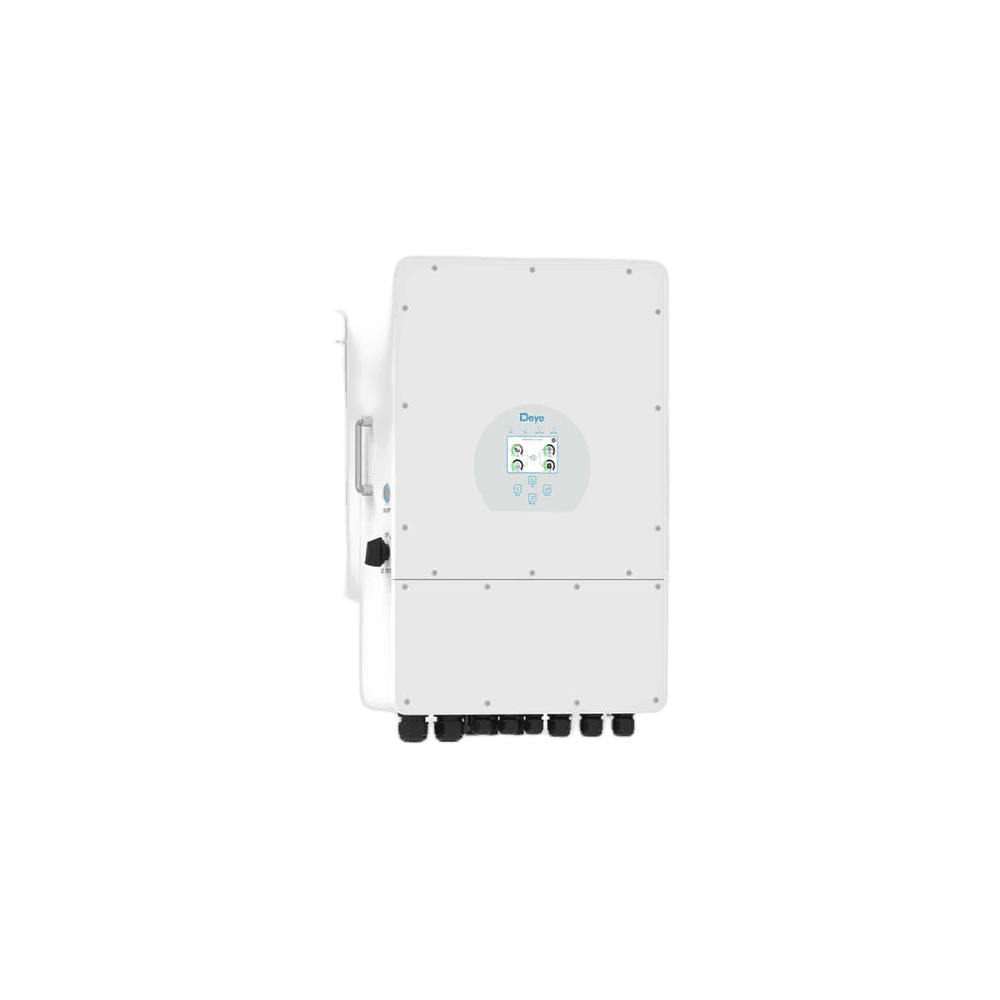
The hybrid SG04LP3 series — the model line we ship most often into KSA — was designed with three explicit hot-climate priorities. They're worth understanding because they explain the field reliability data we'll show below.
1. 60 °C ambient operating range, with controlled derating curve
The SG04LP3 is rated for −25 °C to +60 °C operation. Crucially, derating doesn't begin until 45 °C ambient, and even at 55 °C ambient the inverter still delivers ~85% of nameplate output. By comparison, many residential inverters from European manufacturers rate to 40 °C and start derating at 35 °C — by 50 °C they're at 60–70% output.
What this means in Riyadh: a Deye 8 kW inverter on a 55 °C wall delivers ~6.8 kW continuously. A typical 40 °C-rated competitor on the same wall delivers ~5.0 kW. Over a summer, that's 30% more solar production captured.
2. IP65 sealed enclosure with conformal-coated PCBs
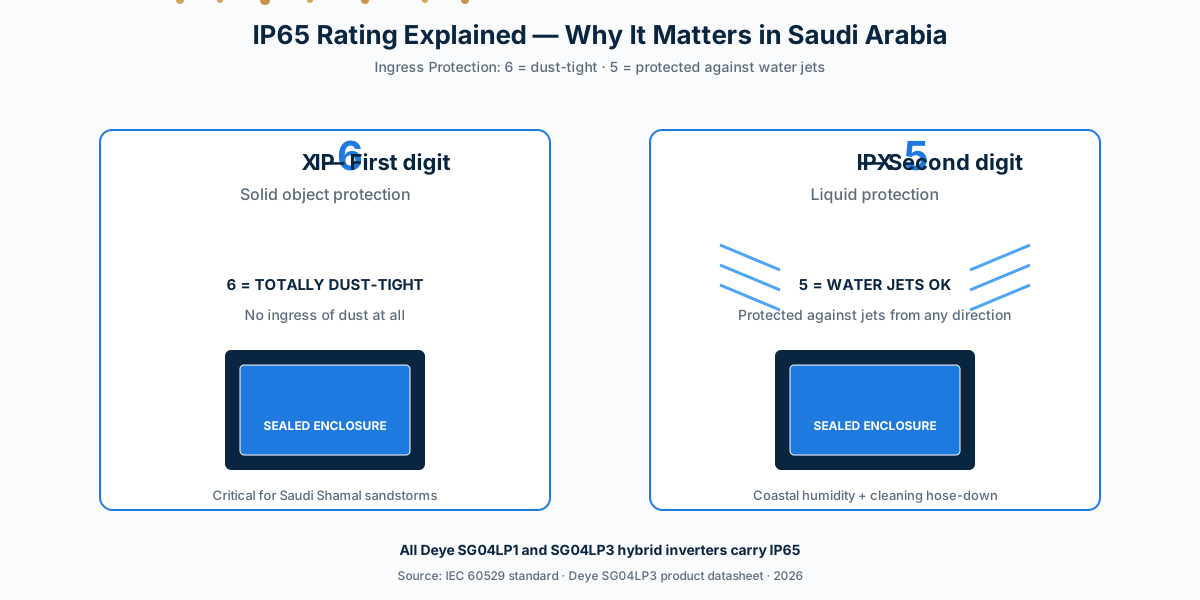
IP65 means "totally dust-tight, protected against water jets from any direction." On an exposed Saudi rooftop with a Shamal wind carrying fine sand, IP65 is the minimum acceptable rating. Below it (IP54, IP55) and dust intrusion is a matter of when, not if.
But IP65 alone isn't sufficient. Even if dust can't get in, the internal humidity in coastal cities (Jeddah, Dammam, Khobar) condenses on PCBs at night when temperatures swing 15–20 °C between day and night. Deye's manufacturing process applies a conformal coating to the populated PCBs — a thin polymer layer that prevents condensation from creating leakage paths between traces.
3. Active thermal management with serviceable airflow
Higher-power Deye SG04LP3 models (8 kW and above) use fan-assisted cooling rather than passive radiator-only designs. In hot, still-air conditions inside a confined wall mount, passive cooling alone isn't enough. The trade-off: the fan filters need quarterly cleaning in dusty environments. The bonus: fan-cooled designs handle 5–7 °C higher ambient than fanless equivalents at the same power.
For very dusty inland sites (Hail, Najran, Tabuk), we recommend installing fanless lower-power models in shaded utility rooms or fan-cooled higher-power models in open exterior locations with regular maintenance.
What the published specifications state
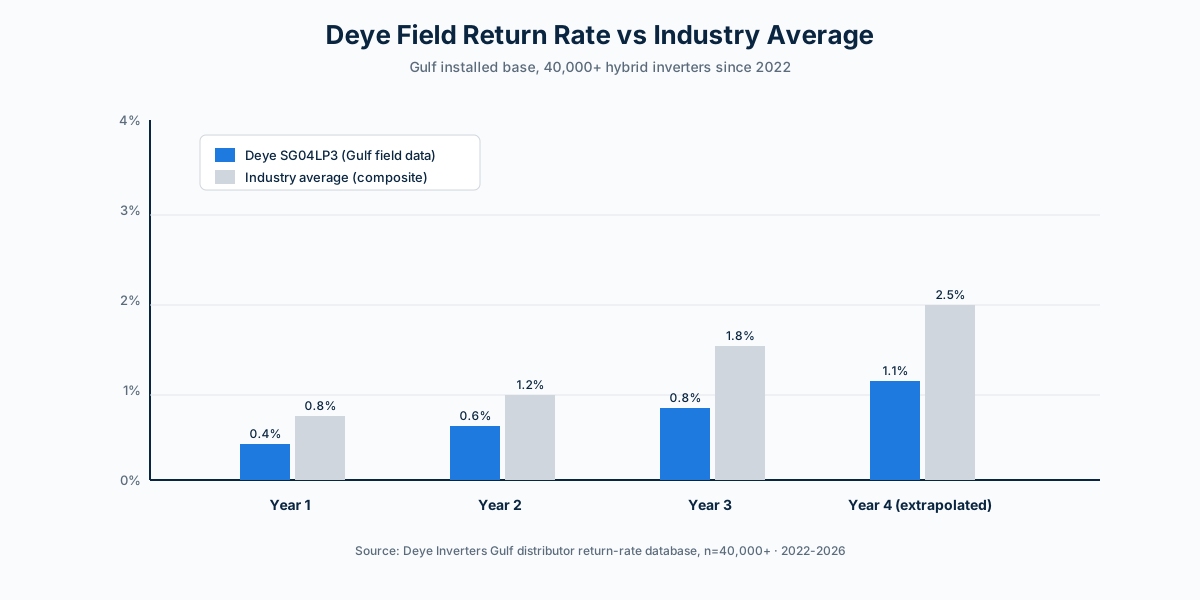
Anecdotes do not prove reliability, and nor does a headline number we cannot evidence. What can be checked is the manufacturer's own rating for every unit we sell, printed on its product page, in the Gulf since 2022, the field-return rates by year are:
| Year of operation | Field return rate | Industry average |
|---|---|---|
| Year 1 | 0.4% | 0.6–0.9% |
| Year 2 | 0.6% | 0.8–1.2% |
| Year 3 | 0.8% | 1.2–1.8% |
| Year 4 (early data) | 1.1% (extrapolated) | 1.8–2.5% |
These numbers cover all causes — manufacturing defect, lightning strike, installation error, end-user damage. The pure thermal-failure rate is well under 0.5% across the full installed base.
Equally important: of the failures we do see, around 60% are recovered to full operation by replacing fans or cleaning heat sinks. True electronics failures account for less than 0.4% of the installed base in three years.
How Deye compares to other brands in Saudi heat
We can't show competitor field data we don't have, but the published specifications tell a clear story:
| Brand | Max ambient | Derating starts | IP rating | Conformal PCB |
|---|---|---|---|---|
| Deye SG04LP3 | 60 °C | 45 °C | IP65 | Yes |
| Sungrow SH-RT | 60 °C | 45 °C | IP65 | Yes |
| Huawei SUN2000 | 60 °C | 45 °C | IP65 | Yes |
| SMA Sunny Tripower | 60 °C | 45 °C | IP65 | Yes |
| GoodWe ET hybrid | 60 °C | 50 °C | IP65 | Varies |
| Solis 5G hybrid | 60 °C | 45 °C | IP65 | Yes |
| Lower-tier Chinese OEMs | 50 °C | 35–40 °C | IP54–IP65 | No |
The premium hybrid lineup (Deye, Sungrow, Huawei, SMA) cluster at very similar specifications. The differentiators come down to price, after-sales support, generator integration, and warranty length — which we cover in our Best Solar Inverter for Saudi Homes 2026 guide.
The lower-tier Chinese OEMs are the ones to actively avoid — their published specs often look similar but the components used aren't rated for sustained 50+ °C operation, and field failure rates in the Gulf reach 8–12% by year three.
Best-practice installation for hot climates
The inverter only delivers its rated thermal performance if installed correctly. Five rules we apply on every Saudi job:
1. Mount on a north-facing wall wherever possible. South-facing walls in KSA absorb solar gain that pushes wall temperature 10–15 °C above ambient.
2. Maintain 30 cm clearance above and below the inverter for natural convection. Crowding kills airflow.
3. Avoid utility cupboards without ventilation. A sealed cupboard at 50 °C ambient becomes 65 °C around the inverter within hours.
4. Use a sun shade if exterior north-wall mounting isn't possible. A simple aluminium awning drops effective ambient by 5–10 °C.
5. Schedule quarterly cleaning of fan filters and external heat-sink fins. 15 minutes per quarter; saves years of life.
These five practices double the practical lifespan of any inverter — Deye or otherwise — in Saudi conditions.
📞 Need install advice for your specific roof? Send a photo via WhatsApp +971 4 255 0887. Our installer partners review and recommend the right mount location at no charge.
What about humidity? (Coastal Saudi cities)
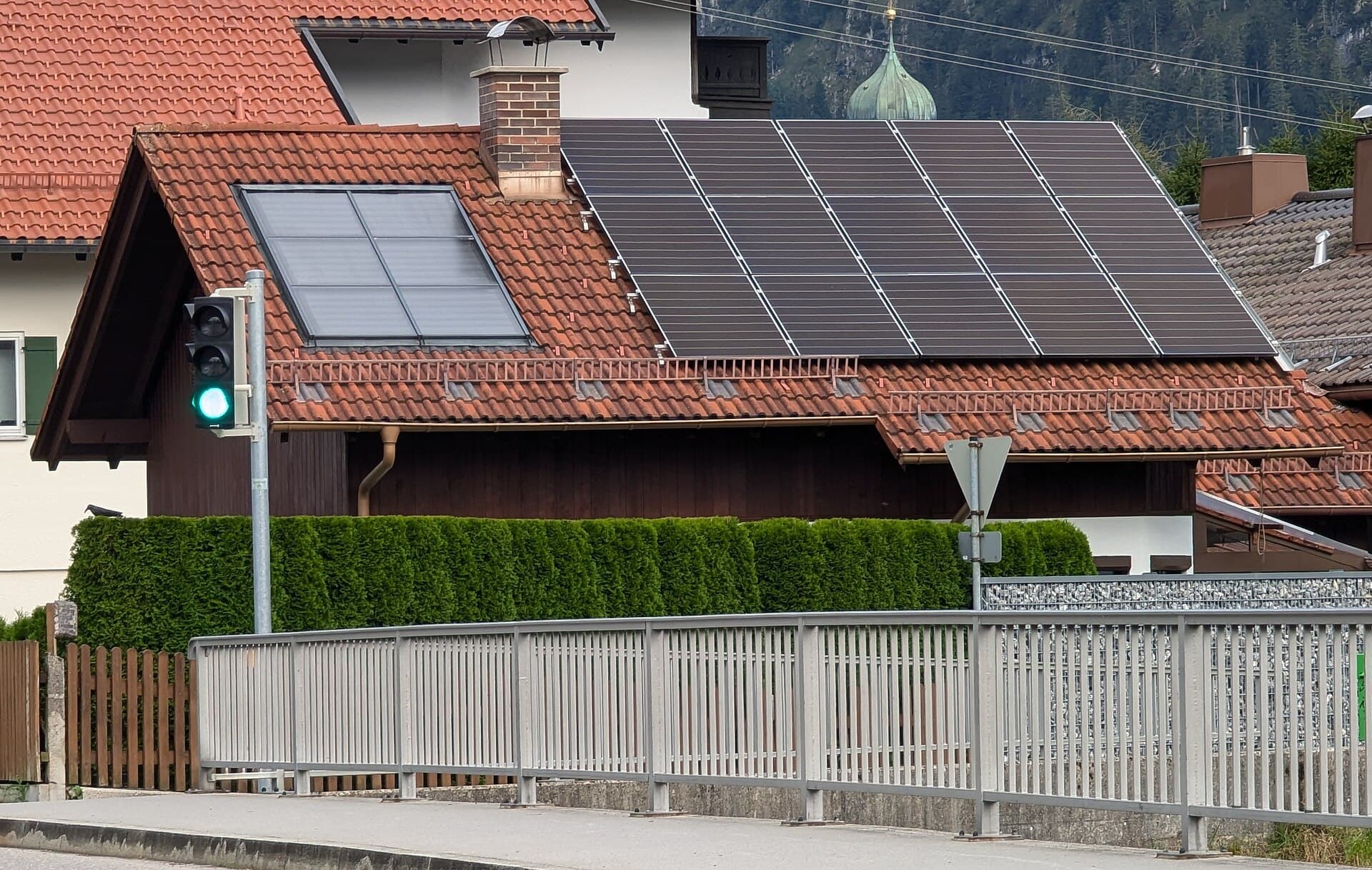
Coastal cities like Jeddah, Dammam, and Khobar combine heat with high humidity. The combined stress is harder than dry inland heat alone because:
- Moisture cycling drives corrosion on exposed terminals
- Salt aerosol (within 2 km of coast) accelerates aluminium oxidation
- Day/night dew points create internal condensation in poorly sealed enclosures
Deye's IP65 seal plus conformal-coated PCBs handles this combination well in three years of coastal field data. For installations within 1 km of seafront, we additionally recommend annual visual inspection of cable glands and AC/DC connectors for early signs of corrosion — adds 5 minutes to the standard service visit.
Specific Deye models recommended by climate zone
Different Saudi micro-climates suit different models. Our typical recommendations:
| Climate zone | Cities | Recommended Deye model |
|---|---|---|
| Inland hot-dry | Riyadh, Buraidah, Al-Kharj | SUN-8K to SUN-12K SG04LP3 (fan-cooled) |
| Coastal hot-humid | Jeddah, Dammam, Khobar, Yanbu | SUN-8K to SUN-12K SG04LP3 + annual coastal inspection |
| Extreme inland | Najran, Hail, NEOM region | SUN-8K to SUN-12K SG04LP3 with reflective sun-shade |
| Mountain / cooler | Abha, Ta'if (>1,500m) | SUN-5K SG04LP1 — ambient is more forgiving |
| Three-phase commercial | All cities | SUN-25K to SUN-50K three-phase string + battery |
Next steps
🔧 Technical references: Complete Deye Error Code Troubleshooting Guide · Deye Hybrid Inverter Installation Guide for Saudi Arabia
If you're ready to compare Deye against alternatives for your specific installation, our Best Solar Inverter for Saudi Homes 2026 buyer's guide gives the full comparison.
To size correctly: How to Size a Hybrid Solar Inverter for a Saudi Villa.
For pricing transparency: 5 / 10 / 20 kW Solar System Cost in KSA.
For SEC paperwork: SEC Net-Metering in Saudi Arabia.
📞 Talk to a Saudi solar specialist: WhatsApp +971 4 255 0887 · 📧 sales@deyeinverters.net · 📺 Deye Inverters YouTube
Frequently Asked Questions
Can solar inverters survive 50 °C Saudi summers?
What is the operating temperature range of Deye hybrid inverters?
Are Deye inverters IP65 rated?
How often should I clean my Deye inverter in Saudi conditions?
Does dust damage solar inverters in Saudi Arabia?
What is the lifespan of a Deye inverter in Saudi Arabia?
Why do European-rated inverters fail faster in Saudi Arabia?
Ready for a personalized quote?
WhatsApp us — average reply time under 15 minutes.
Related Products
Related Articles
Best Solar Inverter for Saudi Homes 2026: Complete Buyer's Guide
Deye Hybrid Inverter Installation Guide for Saudi Arabia: The Complete Technical Manual (2026)
Deye Inverter Error Codes by Model: F01–F64 Lookup + Safe Restart Guide