
A solar calculation program should show its working. The four sums behind our calculator, redone by hand with real Deye inverters and batteries.
A solar calculation program is only worth trusting if it shows its working. Most do not: you type a bill, a number of panels comes back, and there is no way to tell whether it is right. Our sizing calculator is a page rather than an app, and every result it gives can be redone with a pencil. This article does exactly that: four sums, in the order the engine runs them, with real units from the catalogue in each.
Products mentioned in this article
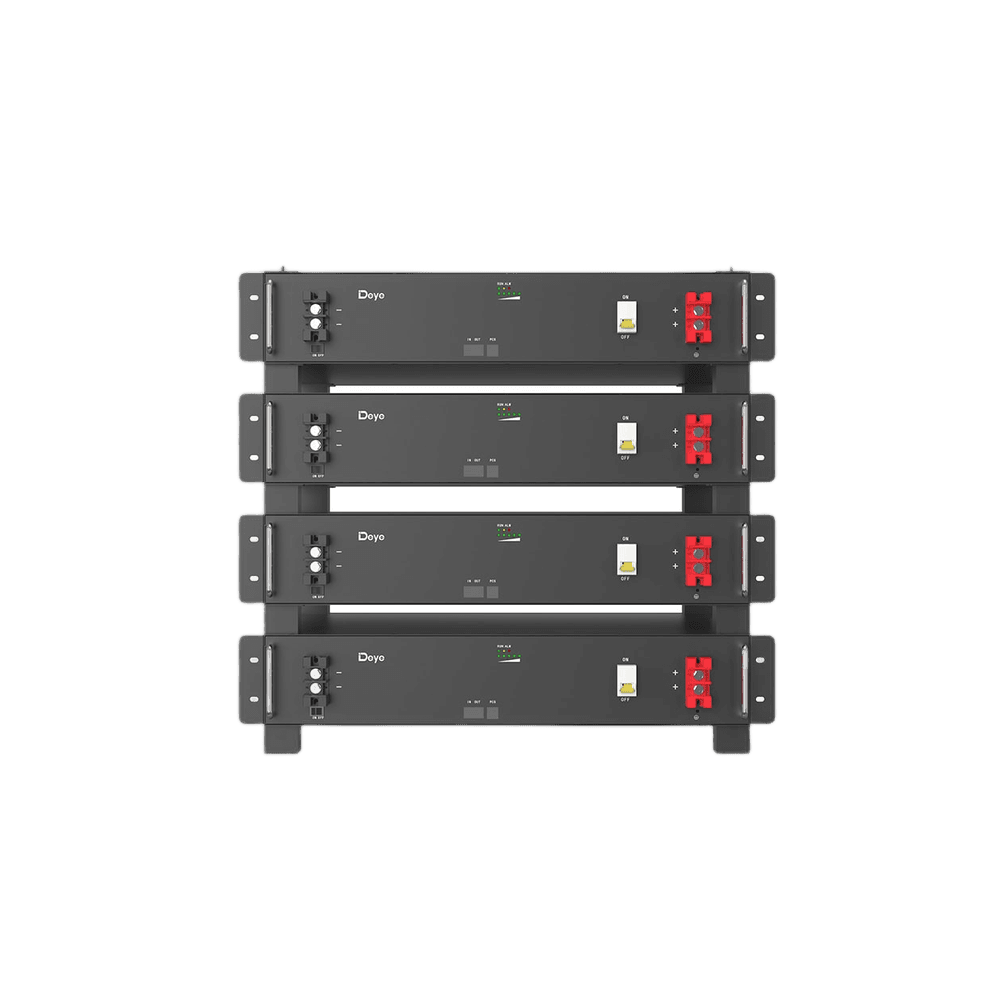
Deye 10.24 kWh 51.2 V Lithium Solar Battery SE-G10.2
- Energy:10.24 kWh
- Usable Energy:8.19 kWh

Deye 16 kWh 51.2 V Lithium Solar Battery RW-F16
- Energy:16 kWh
- Usable Energy:14.4 kWh
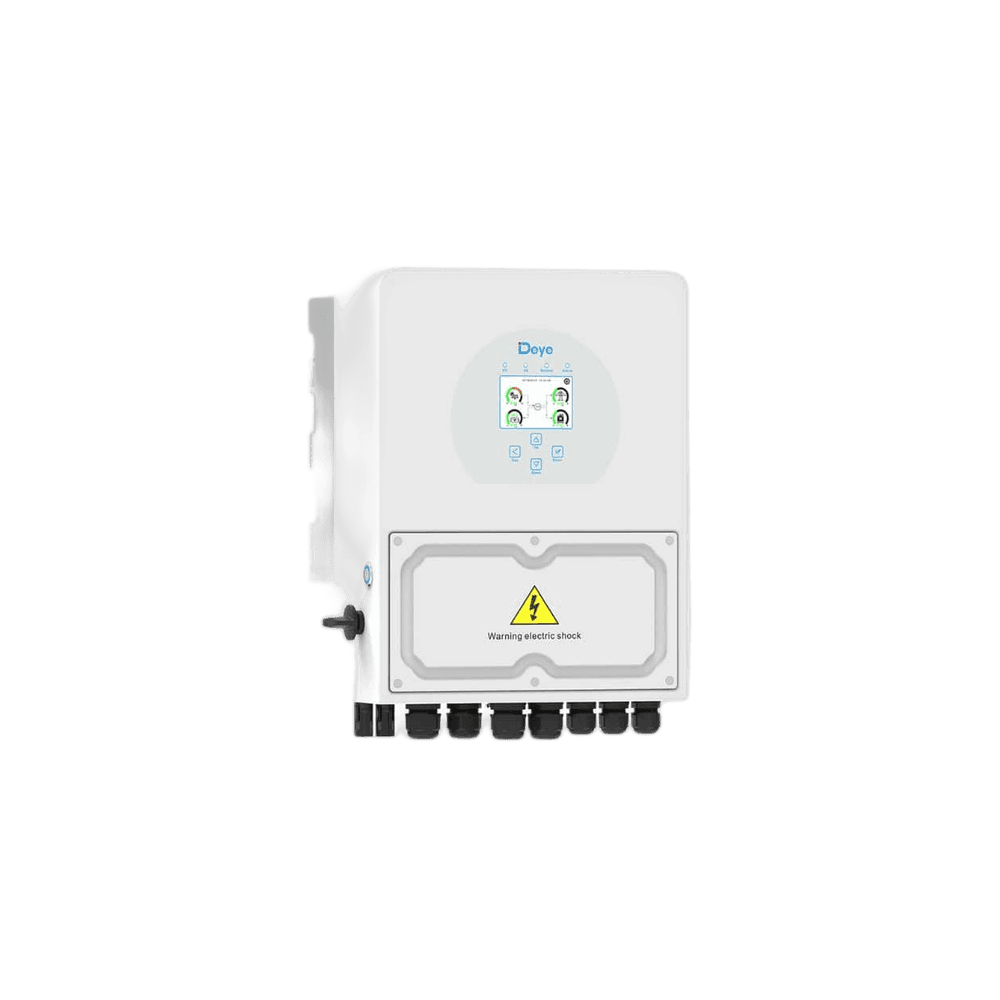
Deye 6 kW Single-Phase Hybrid Solar Inverter SUN-6K-SG04LP1-EU
- Rated AC Output Active Power:6000 W
- Max. Efficiency:97.6 %
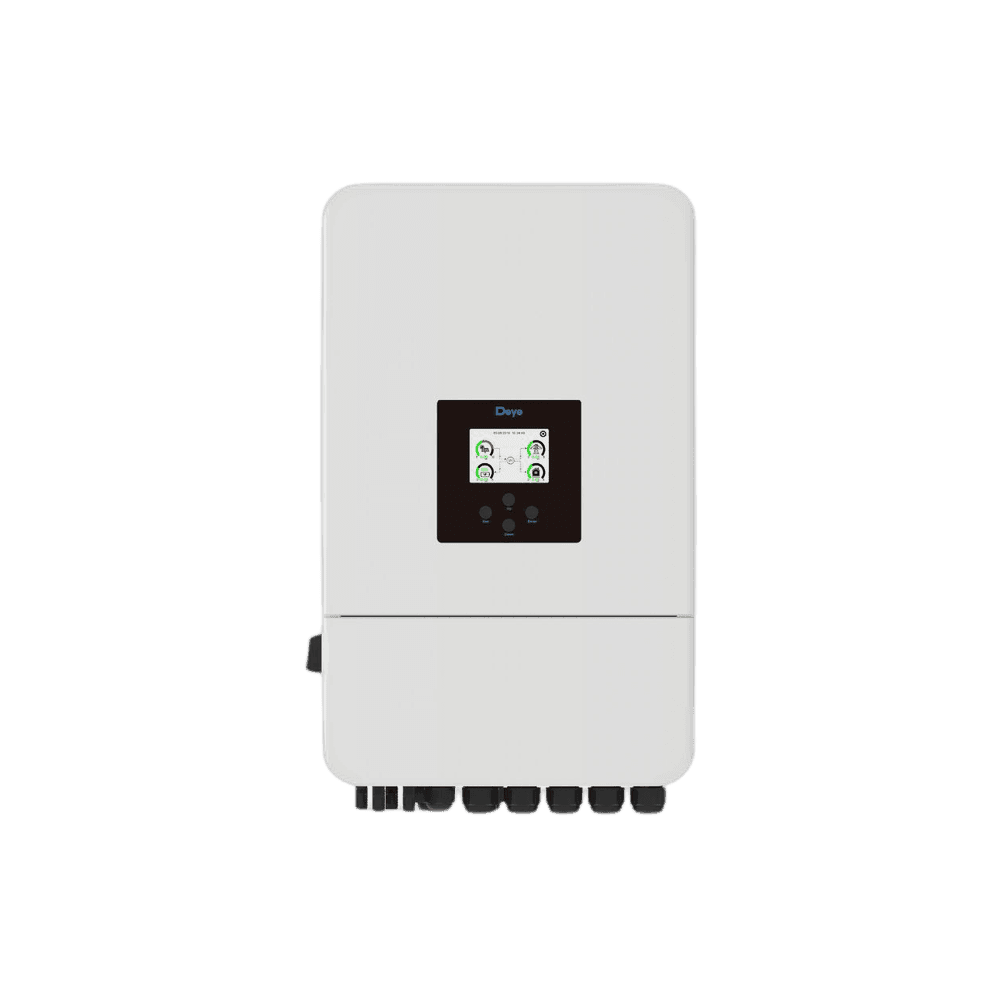
Deye 10 kW Single-Phase Hybrid Solar Inverter SUN-10K-SG05LP1-EU-SM2-P
- Rated AC Output Active Power:10000 W
- Max. Efficiency:97.6 %
Step 1: two numbers from your appliances
Everything starts from two figures, the peak load in watts and the daily consumption in kWh. The calculator builds both from the appliances you tick. Its 1.5-ton air conditioner, for example, is counted at 1,200 W running for eight hours a day, which is 9.6 kWh; its standard fridge at 150 W over eight running hours, 1.2 kWh. Motors pull harder when they start than when they run, so the peak includes a start-up surge.
If you would rather not tick appliances one by one, six building types are ready:
| Building | Peak load | Daily consumption |
|---|---|---|
| Apartment | 4,850 W | 13.8 kWh |
| House | 8,050 W | 25.4 kWh |
| Villa | 11,700 W | 49.53 kWh |
| Shop | 5,550 W | 25.2 kWh |
| Office | 9,200 W | 40.4 kWh |
| Farm | 3,925 W | 6.65 kWh |
Step 2: the inverter
The inverter's rated power must reach the peak load, and must not exceed 2.5 times that peak: beyond that the honest answer is a smaller unit, not a bigger one. The kind of system decides the kind of inverter. A grid-tied system takes a string or a hybrid inverter, a backup system takes a hybrid, and an off-grid system takes an off-grid or a hybrid unit. Above a 12,000 W peak the engine moves to three-phase.
Take the shop: a 5,550 W peak. A 5 kW unit is below it, so the engine names the SUN-6K-SG04LP1-EU, rated 6 kW. For the office, 9,200 W leads to the SUN-10K-SG05LP1-EU-SM2-P, rated 10 kW.
Step 3: the battery
For a system with the grid, the battery covers the backup hours you ask for, at your average rate of use: daily kWh times hours, divided by 24. Off-grid, it covers one full day. The number of modules is that need divided by the battery's usable energy, rounded up.
- Shop, four hours of evening backup: 25.2 × 4 ÷ 24 = 4.2 kWh. The SE-G10.2 states 10.24 kWh, 8.19 of it usable: one module.
- Office, off-grid: the whole day, 40.4 kWh. The RW-F16 states 14.4 kWh usable: 40.4 ÷ 14.4 = 2.81, so three cabinets.
One check comes before the count. A battery is paired with an inverter only if its nominal voltage lies inside the battery voltage range the inverter's record states. Both batteries above are 51.2 V, and both inverters state 40-60 V.
Step 4: the panels
The array in kWp is the daily consumption divided by peak sun hours times a performance ratio: 0.8 with the grid, 0.75 off-grid. The engine holds a sun-hours figure per country:
| Country | Peak sun hours |
|---|---|
| Saudi Arabia | 5.8 |
| UAE and Oman | 5.7 |
| Qatar, Kuwait and Bahrain | 5.6 |
| Iraq | 5.4 |
Lebanon, Syria, Yemen and Sudan have no figure in the table. The engine computes those with 5.0 hours and marks the result as assumed.
Now the same house, 25.4 kWh a day, in three places. In Saudi Arabia: 25.4 ÷ (5.8 × 0.8) = 5.47 kWp, and 5,474 ÷ 550 = 9.95, so ten 550 W modules. In the UAE the array is 5.57 kWp and eleven modules. In Iraq it is 5.88 kWp, eleven modules again. On the assumed 5.0 hours it is 6.35 kWp, twelve modules. One or two panels of difference, from one line of the sum.
Two limits close the step. The array is capped at the maximum PV input power the inverter's record states, 9.6 kW on the SUN-6K-SG04LP1-EU and 16 kW on the 10 kW unit. And each module is counted as 2.6 m² of roof, so eleven modules need about 29 m².
Check your result against a kit
The ready-made system kits are the same four sums run on the six building types, so they make a good cross-check. The shop kit with evening backup shows the 6 kW inverter, one SE-G10.2 and eleven panels worked out above; the off-grid office kit shows the 10 kW inverter, three RW-F16 cabinets and eighteen panels. If your own result lands far from the nearest kit, look at the peak load first: one extra air conditioner moves it by more than anything else.
What the calculation does not cover
It sizes the three lines of an order. It does not design the strings: how many modules go in series depends on the open-circuit voltage printed on the module's own datasheet and on the MPPT voltage range of the inverter, which you will find on its page, for example the SE-G10.2 datasheet for the battery side. It does not replace the utility's approval for a grid connection either. And it does not choose between two kinds of inverter for you; the hybrid vs string inverter comparison is the page for that.
Every unit the calculator names has its price on its own page, and that is the price you pay. Orders are collected in store, in Dubai or Riyadh.
Frequently Asked Questions
Is there a solar calculation program that needs no download?
How do you work out the number of solar panels from kWh?
Which performance ratio does the solar calculator use?
Why does a result say the sun hours were assumed?
Ready to order?
Every unit in the catalogue carries its price — add it to the cart and order online, then collect it from our store in Dubai or Riyadh.

