What a ready-made solar power system contains: three Deye kits read line by line, inverter, battery and panel count, with the sum behind each line.
A solar power system is three lines on an order: an inverter, a battery and a row of panels. Buying them is the easy part. Knowing which three belong together is the hard part, and it is the reason most people who search for a solar system end up reading forum threads instead of ordering one.
Our ready-made system kits settle it for twenty everyday cases: six kinds of building, each with evening backup, overnight backup and a fully off-grid version, plus grid-tied kits for the house and the villa. This guide opens three of them and reads every line. The figures come from the product records and from the sizing engine that builds the pages, so you can redo each sum yourself.
Products mentioned in this article
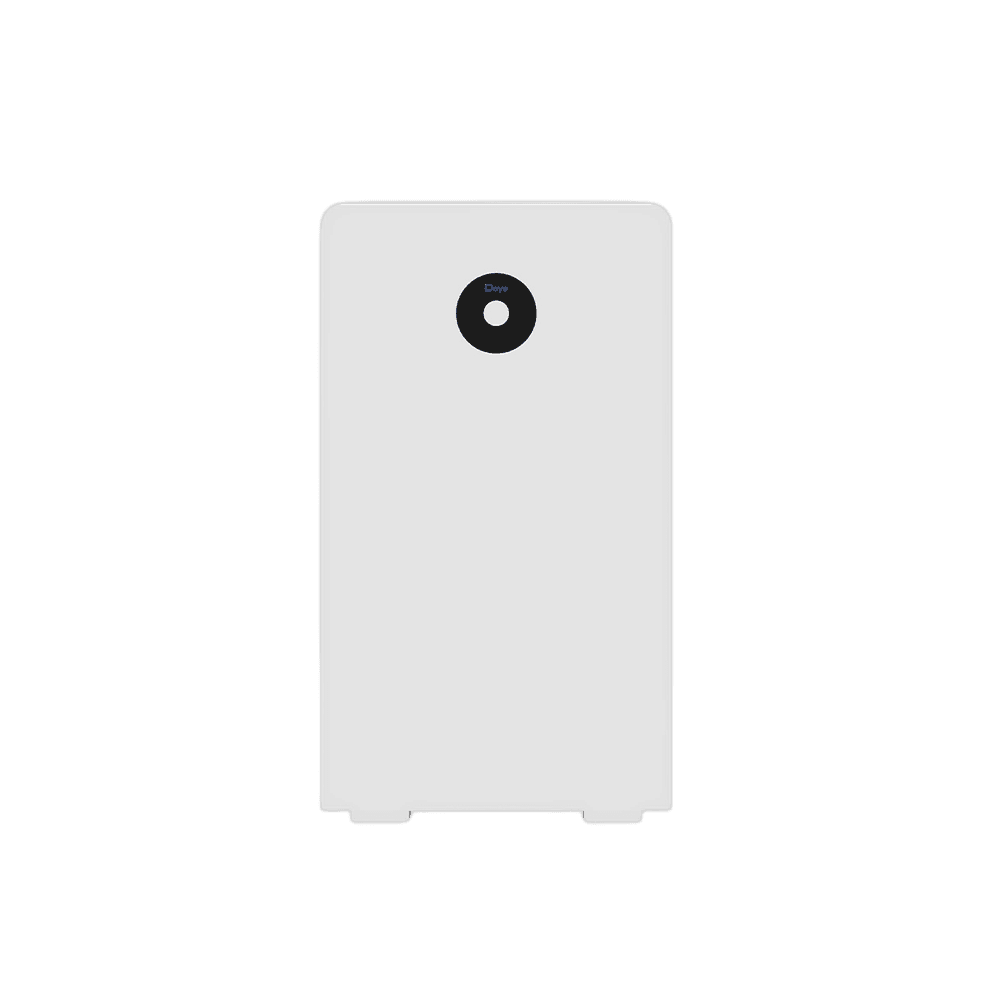
Deye 16 kWh 51.2 V Lithium Solar Battery RW-F16
- Energy:16 kWh
- Usable Energy:14.4 kWh
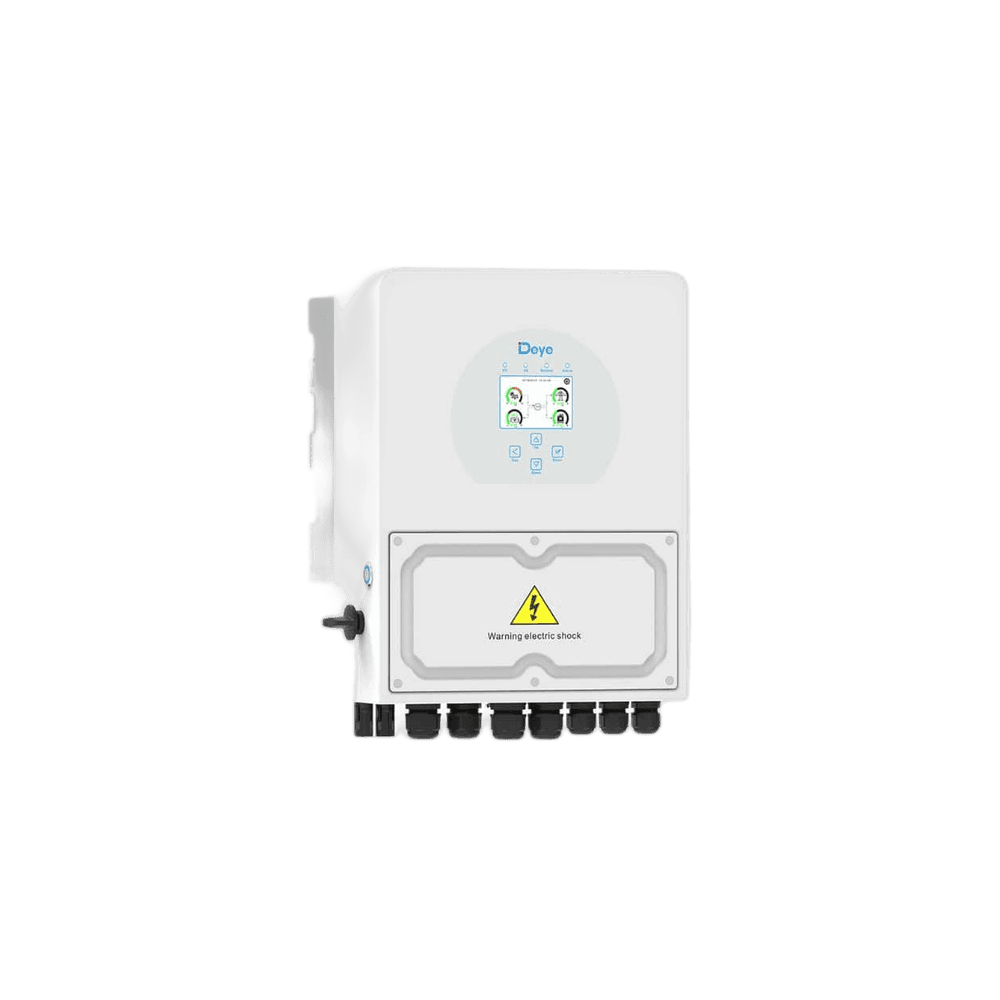
Deye 5 kW Single-Phase Hybrid Solar Inverter SUN-5K-SG04LP1-EU
- Rated AC Output Active Power:5000 W
- Max. Efficiency:97.6 %
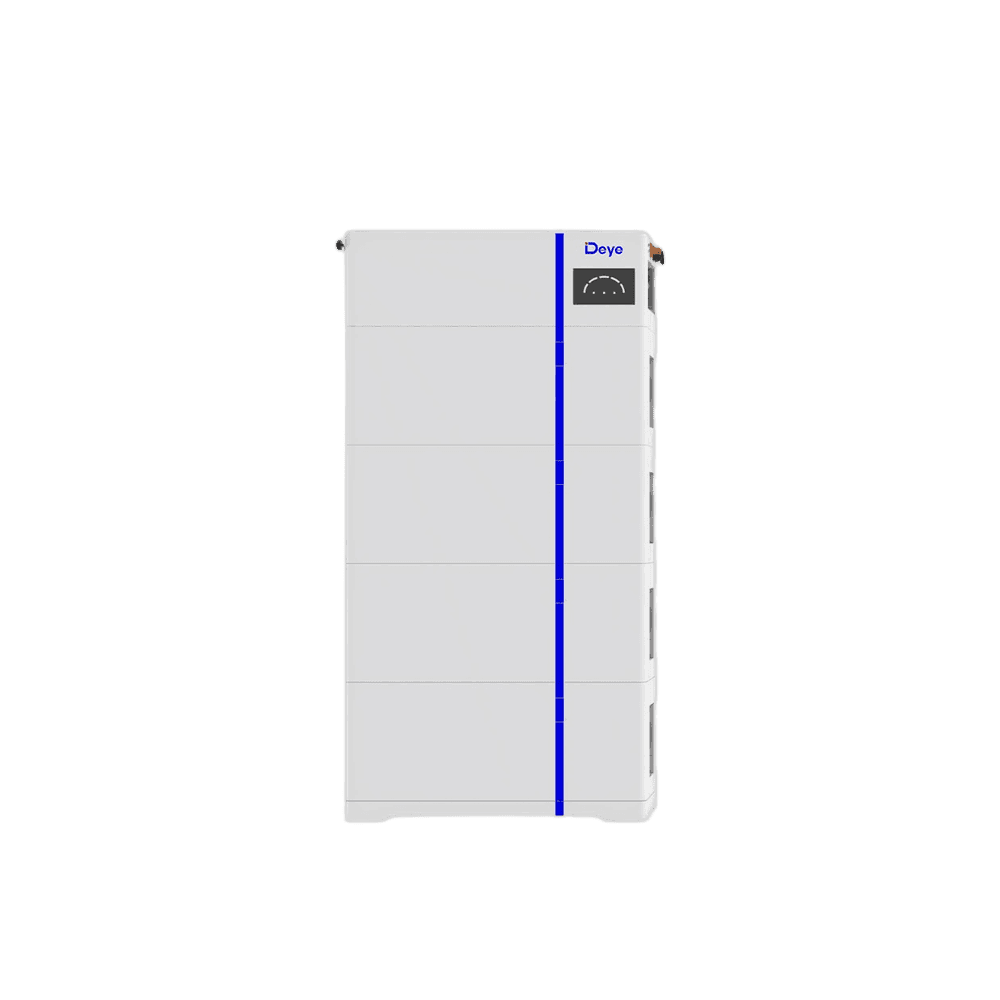
Deye 5.12 kWh 51.2 V Lithium Solar Battery AI-W5.1-B
- Energy:5.12 kWh
- Usable Energy:4.6 kWh
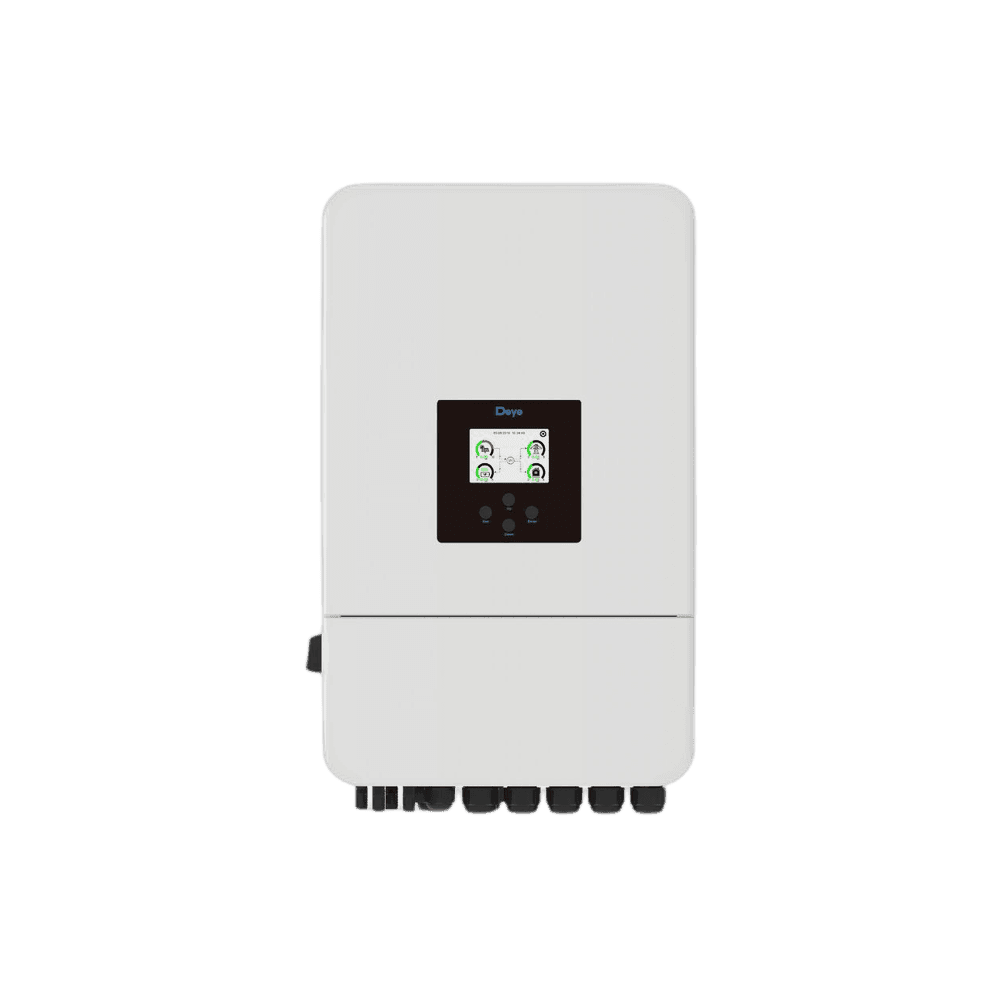
Deye 10 kW Single-Phase Hybrid Solar Inverter SUN-10K-SG05LP1-EU-SM2-P
- Rated AC Output Active Power:10000 W
- Max. Efficiency:97.6 %
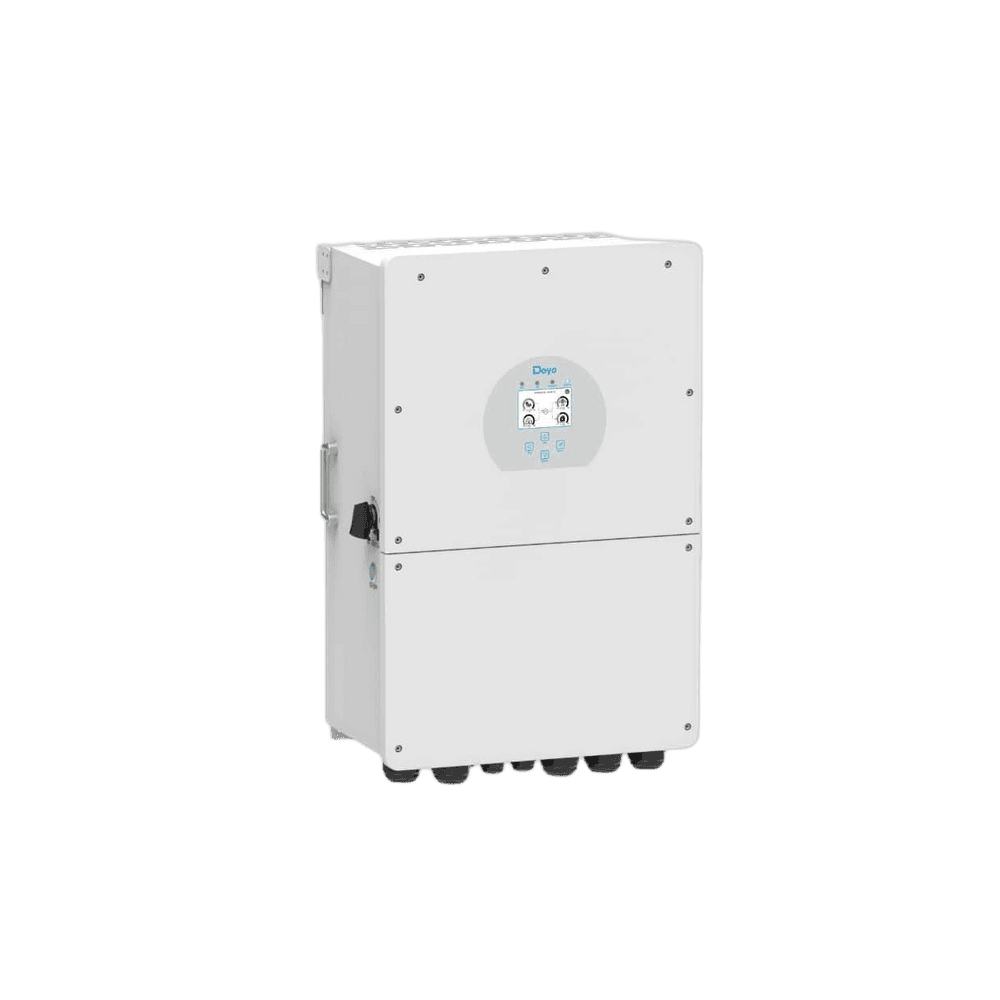
Deye 12 kW Single-Phase Hybrid Solar Inverter SUN-12K-SG01LP1-EU
- Rated AC Output Active Power:12000 W
- Max. Efficiency:97.6 %
What every kit contains
- One inverter line. A single unit rated at or above the building's peak load, and never more than 2.5 times above it. An oversized inverter is money spent on capacity nobody uses.
- A battery line, when the kit has backup or is off-grid. A grid-tied kit has none. In a backup kit the battery covers the hours you asked for; in an off-grid kit it covers one full day of consumption.
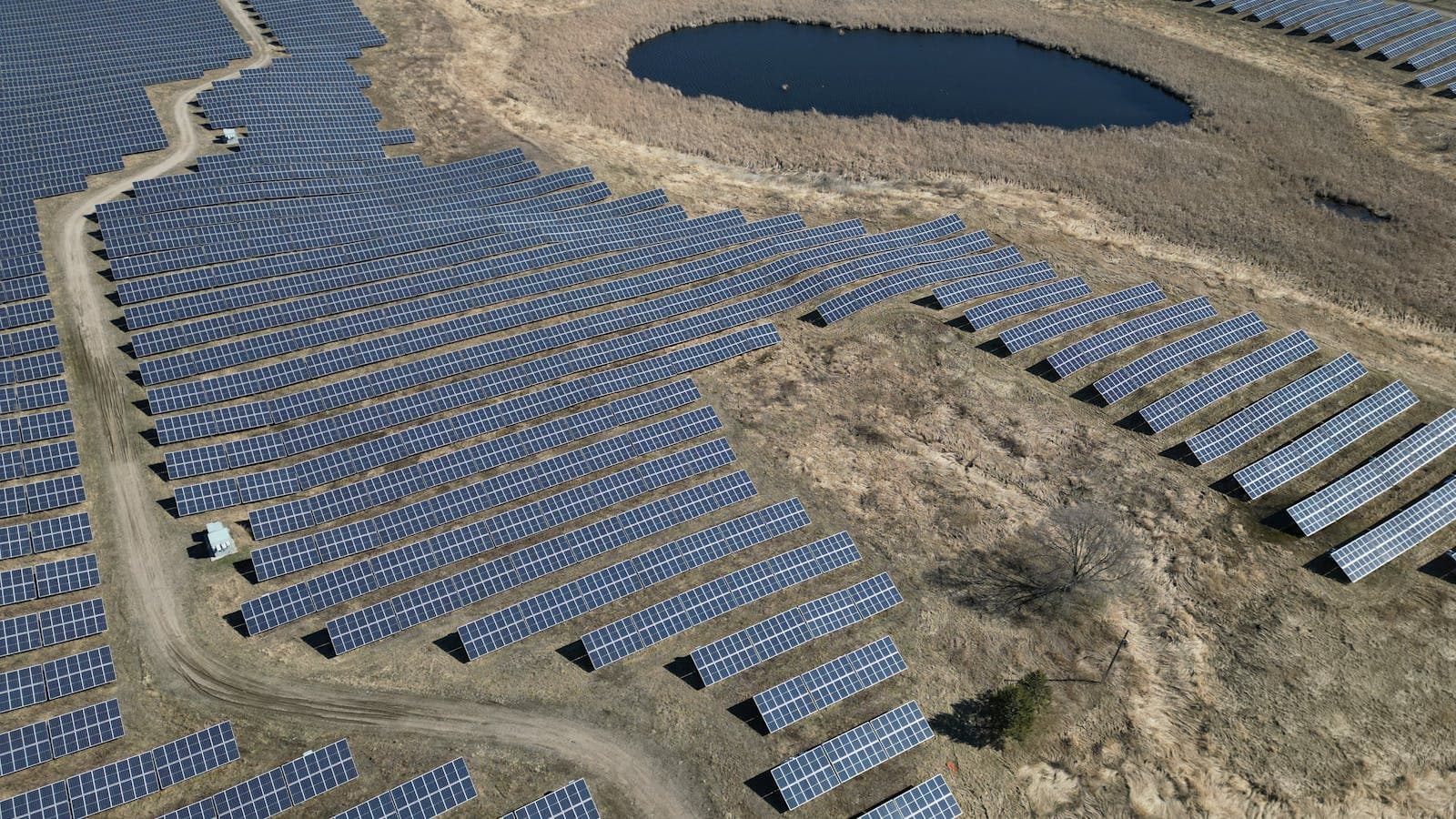
- A panel line of at least two modules. Our catalogue holds inverters, batteries and solar air conditioners and no panel of its own, so the panel line is a generic 550 W module. The kit tells you how many you need and how much roof they take; the brand is your choice.
A named battery beside a named inverter is a claim that the two work together. The engine makes that claim only when the battery's nominal voltage sits inside the battery voltage range the inverter's record states.
Kit 1: an apartment with evening backup
The apartment case is one air conditioner, a fridge, lights and Wi-Fi, a TV and a washing machine. The engine reads that as a 4,850 W peak and 13.8 kWh a day.
| Line | What the kit names | The figure behind it |
|---|---|---|
| Inverter | 1 × SUN-5K-SG04LP1-EU hybrid | 5 kW rated, above the 4,850 W peak |
| Battery | 1 × AI-W5.1-B | 4.6 kWh usable, for a 2.3 kWh evening |
| Panels | 6 × 550 W | 3.03 kWp, about 16 m² of roof |
The battery line is the one people get wrong. Four hours of backup at this home's average rate is 13.8 × 4 ÷ 24 = 2.3 kWh. The AI-W5.1-B is a 5.12 kWh LiFePO4 module with 4.6 kWh usable, so one module covers the evening twice over. Its nominal 51.2 V sits inside the 40-60 V battery range of the SUN-5K-SG04LP1-EU, which is why the two stand on the same page. The apartment kit with evening backup shows all three lines together.
Kit 2: a house with overnight backup
Two air conditioners, a kitchen and the family basics come to an 8,050 W peak and 25.4 kWh a day. The 5 kW unit is now too small, and the kit moves up.
| Line | What the kit names | The figure behind it |
|---|---|---|
| Inverter | 1 × SUN-10K-SG05LP1-EU-SM2-P hybrid | 10 kW rated, up to 16 kW of PV input |
| Battery | 1 × RW-F16 | 14.4 kWh usable, for an 8.47 kWh night |
| Panels | 11 × 550 W | 5.57 kWp, about 29 m² of roof |
Eight hours of backup is 25.4 × 8 ÷ 24 = 8.47 kWh. A 5.12 kWh module would have to be doubled; the RW-F16 holds 16 kWh, 14.4 of it usable, in one cabinet, and the kit names a single one. The house kit with overnight backup pairs it with the SUN-10K-SG05LP1-EU-SM2-P.
Kit 3: a villa with no grid at all
Four air conditioners, a freezer and a water pump: an 11,700 W peak and 49.53 kWh a day. Going off-grid changes two of the three lines.
| Line | What the kit names | The figure behind it |
|---|---|---|
| Inverter | 1 × SUN-12K-SG01LP1-EU hybrid | 12 kW rated, three MPPT inputs, up to 19.2 kW of PV input |
| Battery | 4 × RW-F16 | 57.6 kWh usable, for a 49.53 kWh day |
| Panels | 22 × 550 W | 11.59 kWp, about 57 m² of roof |
The battery now covers one full day, not a few hours: 49.53 ÷ 14.4 = 3.44, rounded up to four cabinets. The array grows as well, because an off-grid system is computed with a lower performance ratio, 0.75 instead of 0.8: there is no grid to cover a weak day. The same villa with the grid and evening backup needs 20 panels and one RW-F16. See the off-grid villa kit built around the SUN-12K-SG01LP1-EU.
An 11,700 W peak is still a single-phase system. The engine moves to a three-phase inverter only above a 12,000 W peak.
How the panel count is worked out
The array is the day's consumption divided by peak sun hours times the performance ratio. The kit pages use the UAE figure of 5.7 hours. For the apartment that is 13.8 ÷ (5.7 × 0.8) = 3.03 kWp; at 550 W a module, 3,026 ÷ 550 = 5.5, rounded up to six. Each module is counted as 2.6 m² of roof, which gives the 16 m². One more rule protects the inverter: the array is never larger than the maximum PV input power its record states, 8 kW on the SUN-5K-SG04LP1-EU.
When no kit matches your building
The kits are fixed examples. If your loads are different, the sizing calculator runs the same engine on your own appliances and backup hours and returns the same three lines. If you are torn between two batteries, the low-voltage vs high-voltage battery comparison puts the two families side by side, and every unit a kit names has its figures on a datasheet page, for example the RW-F16 datasheet.
Ordering a kit
Each line of a kit is a product with its own page and its own price, and the price on the page is the price you pay. Orders are collected in store, in Dubai or Riyadh. Prices in riyals are on the Deye Saudi Arabia page. To check a pairing before you order, ask on WhatsApp.
Frequently Asked Questions
What does a complete home solar power system include?
Why does a Deye system kit not name a panel brand?
How big a battery does four hours of evening backup need?
Does the same kit need the same number of panels in Saudi Arabia and Iraq?
Ready to order?
Every unit in the catalogue carries its price — add it to the cart and order online, then collect it from our store in Dubai or Riyadh.