Three-Phase Solar Inverter for a Dammam Factory: Which One, and Where Can You Mount It?
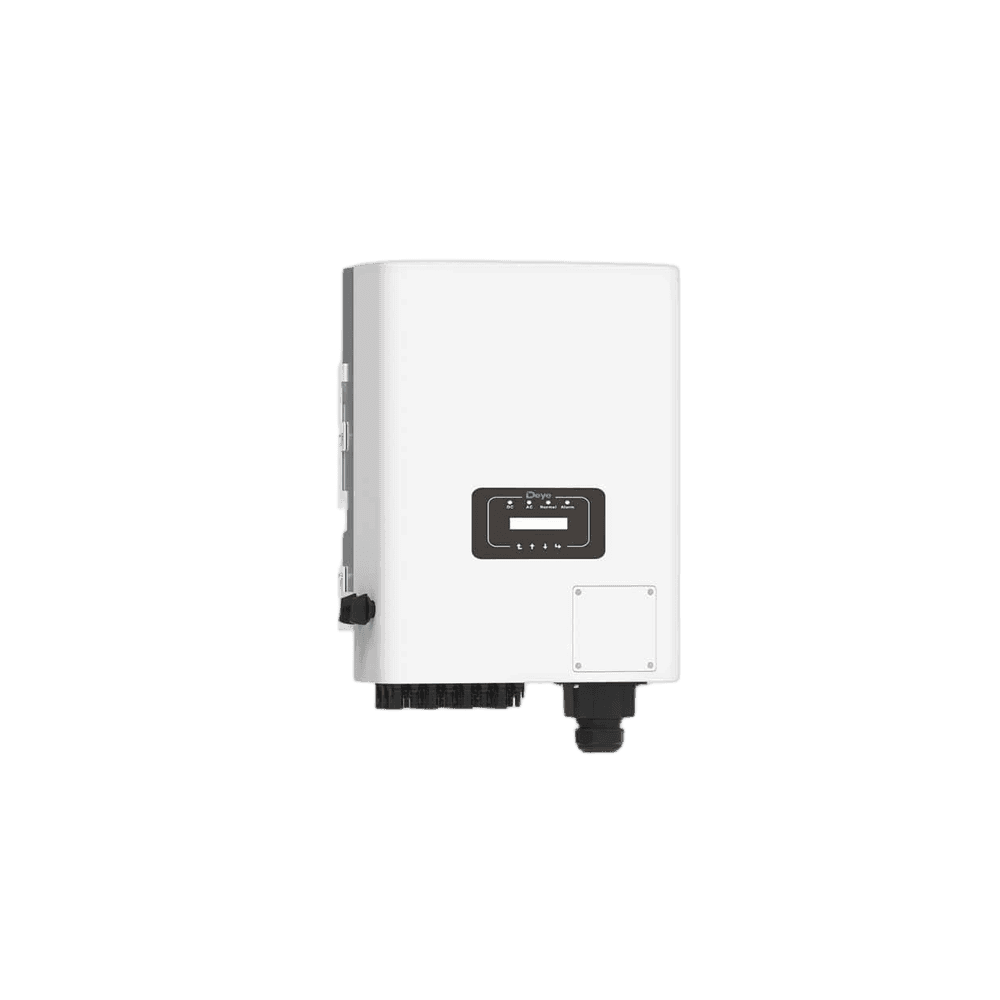
72 of the 134 Deye inverter records are three-phase, and the noise row runs from under 25 dB to under 65 dB. On an industrial site that second figure decides the mounting position — and it does not track power the way you would expect.
If you are putting solar on a warehouse, workshop or light-industrial unit in Dammam, two rows decide the job before efficiency ever comes up. The first is the grid connection form: 72 of the 134 Deye inverter records state 3L+N+PE, which is three phase plus neutral and earth, and the other 62 state L+N+PE, which is single phase. That is not a preference, it is what the machine is built to connect to. The second row is noise level, and it is the one nobody reads until the unit is on the wall. It runs from under 25 dB to under 65 dB across the range, and 17 records sit at that top figure. On an industrial site that number does not decide whether you buy — it decides where the inverter is allowed to live, which is a drawing change, not a shopping decision.
Order online: every model in the catalogue shows its price, and checkout takes a minute.
Products mentioned in this article
Deye 110 kW Three-Phase String Solar Inverter SUN-110K-G03

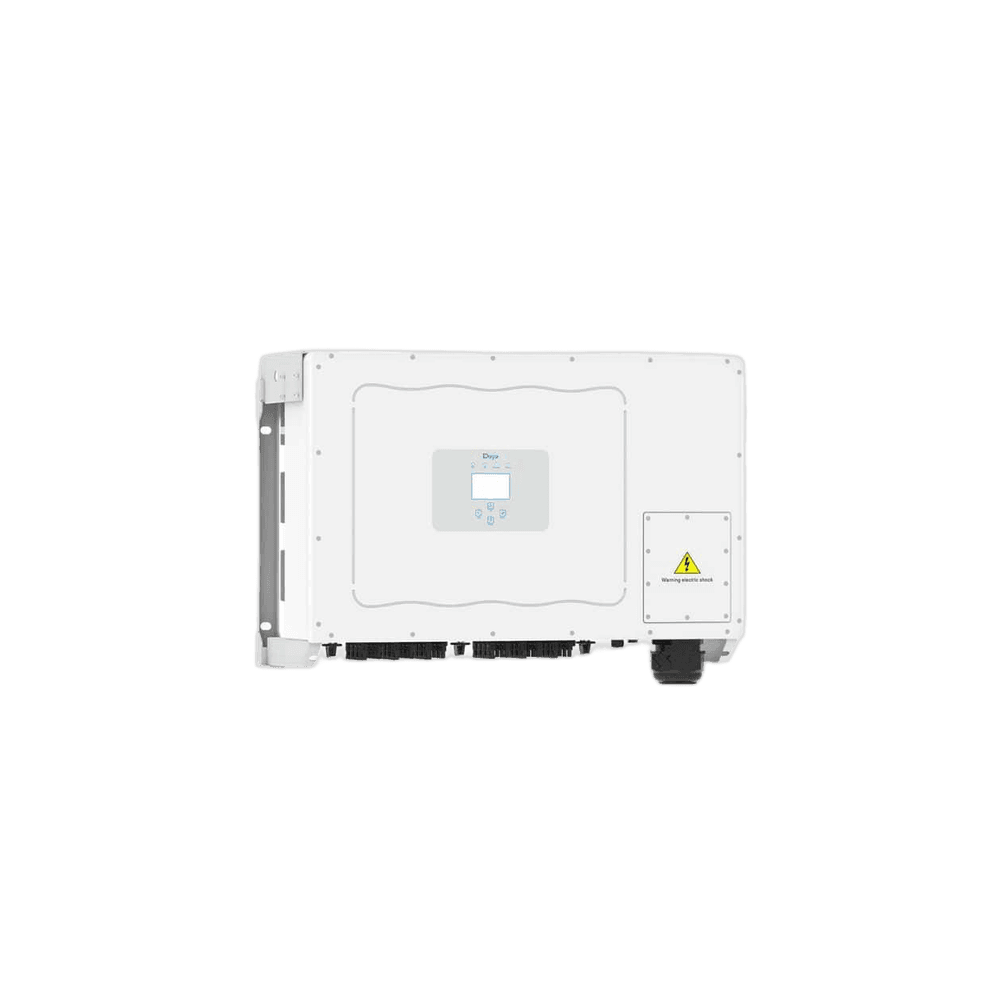
- Rated AC Output Active Power
- 110000 W
- Max. Efficiency
- 98.8 %
- Number of MPPTs
- 6
- Grid Connection Form
- 3L+N+PE
Price incl. VATAED 27,500
Deye 50 kW Three-Phase String Solar Inverter SUN-50K-G04
- Rated AC Output Active Power
- 50000 W
- Max. Efficiency
- 98.7 %
- Number of MPPTs
- 4
- Grid Connection Form
- 3L+N+PE
Price incl. VATAED 5,689
Deye 50 kW Three-Phase Hybrid Solar Inverter SUN-50K-SG01HP3
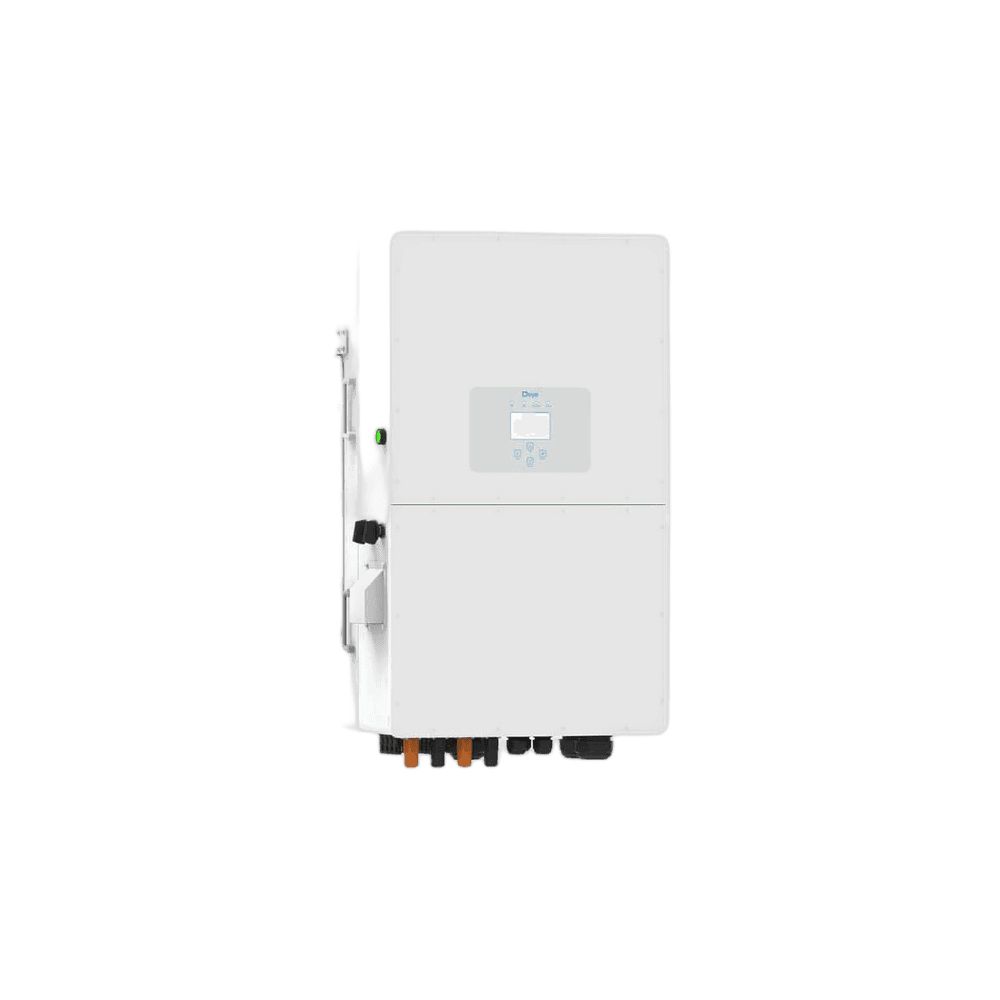
- Rated AC Output Active Power
- 50000 W
- Max. Efficiency
- 97.6 %
- Number of MPPTs
- 4
- Grid Connection Form
- 3L+N+PE
Price incl. VATAED 16,844
Deye 25 kW Three-Phase String Solar Inverter SUN-25K-G05
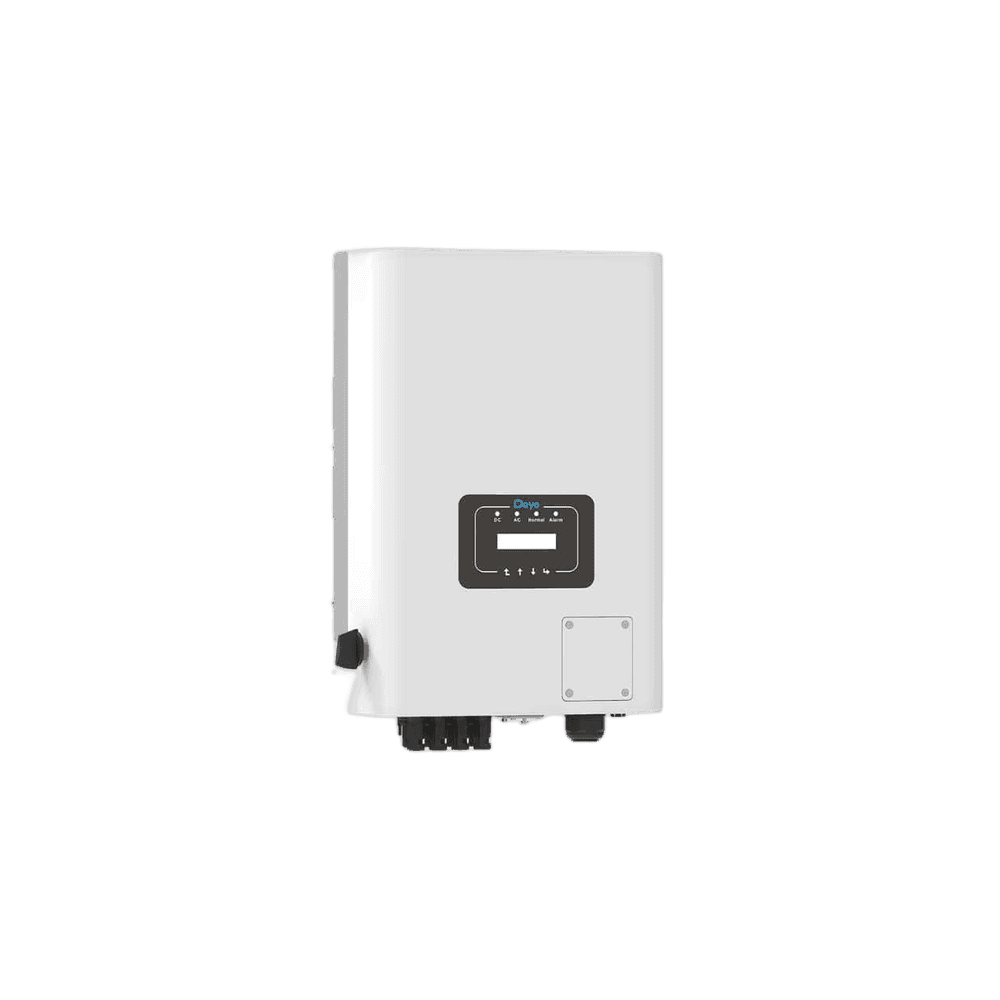
- Rated AC Output Active Power
- 25000 W
- Max. Efficiency
- 98.5 %
- Number of MPPTs
- 2
- Grid Connection Form
- 3L+N+PE
Price incl. VATAED 8,750
Is your supply three phase, and does that settle the shortlist?
It settles more than half of it. The 72 three-phase records state a rated output voltage of 220/380 V or 230/400 V, and they span an enormous range: from 3,000 W up to 136,000 W of rated AC active power. The 62 single-phase records run from 1,000 W to 16,000 W. If the building has a three-phase supply, you are choosing inside the first group, and the useful next question is whether the site needs a grid-tie string inverter or a battery hybrid.
There is a second reason to check the field rather than assume it. Many sites run a three-phase supply into the board and a mixture of single- and three-phase loads beyond it, which is where the unbalanced output row matters — and it only appears on part of the range. 34 records, all three-phase hybrids, state 100 % unbalanced output capability; the three-phase string inverters state Not Applicable.
How loud is a large three-phase inverter, really?
Loud enough to matter, and not in the order you would expect:
| Model | Rated AC output | Noise | Weight | Cooling | Max. efficiency |
|---|---|---|---|---|---|
| SUN-10K-G06P3 | 10,000 W | <45 dB | 11.5 kg | Natural Cooling | 98.3 % |
| SUN-25K-G05 | 25,000 W | <50 dB | 20 kg | Intelligent Air Cooling | 98.5 % |
| SUN-50K-G04 | 50,000 W | <65 dB | 39 kg | Intelligent Air Cooling | 98.7 % |
| SUN-50K-SG01HP3 | 50,000 W | <65 dB | 80 kg | Intelligent Air Cooling | 97.6 % |
| SUN-110K-G03 | 110,000 W | <55 dB | 81 kg | Intelligent Air Cooling | 98.8 % |
| SUN-125K-G01P3 | 125,000 W | <65 dB | 103 kg | Intelligent Air Cooling | 98.8 % |
Read the third and fourth rows of that table together. A SUN-50K-G04 rated at 50,000 W states under 65 dB. A SUN-110K-G03 rated at more than twice the power states under 55 dB. Noise does not track power in this range, so the rule of thumb that bigger equals louder will send you to the wrong model. The only way to know is to open the row on the specific product you are being quoted.
Where the noise row forces you to mount it
A number under 65 dB is a plant-room number, not an office-wall number. Nothing in the specification stops you mounting it anywhere within its IP65 rating — this is about the people working beside it, and the site drawing you will defend later.
- Keep the loudest group away from any wall shared with an office, a rest area or a prayer room. The 17 records at under 65 dB include the whole SG02HP3 line and the 120–136 kW G01P3 string inverters.
- Weight decides the fixing before noise does. A 103 kg SUN-125K-G01P3 or a 105 kg SUN-80K-SG02HP3 is a structural fixing and a lifting plan, not a two-person wall job. A 11.5 kg SUN-10K-G06P3 is not.
- If the quiet option matters more than the headline efficiency, the SUN-10K-G06P3 states under 45 dB with natural cooling — no fan at all — at 98.3 % maximum efficiency.
- Give the fan-cooled units a real airflow path. 71 of the 134 records use intelligent air cooling and 4 use smart cooling, all of them at the larger end.
- Remember the derating figure applies here too: 113 of the 134 records state a derating start temperature and every one of them states 45 °C. A plant room that traps heat costs you output on the hottest shift of the year.
String or hybrid for an industrial site?
The families answer different questions, and one row separates them cleanly. Every one of the 70 Deye grid-tie string inverter records states Zero Export Support: Yes. Not one hybrid record states it — all 49 leave it unstated, along with the microinverters and the off-grid units.
So if the requirement is to generate into your own load without pushing anything back onto the network, the string family publishes that capability and the hybrid family does not. If instead the requirement is to ride through an interruption, run a generator alongside, or shift load into the evening, that is the hybrid's territory: the SUN-50K-SG01HP3 states 200 A of continuous AC pass-through, a diesel generator input, 1.5× rated power for 10 seconds, 100 % unbalanced output and a 160–800 V lithium-ion battery range.
- Grid-tie, maximum yield, no battery: the SUN-110K-G03 at 98.8 % maximum efficiency with 6 MPPTs, or the SUN-125K-G01P3 with 8 MPPTs. Both state a maximum operating altitude of 4,000 m.
- Mid-size roof, quieter and lighter: the SUN-25K-G05 at under 50 dB and 20 kg, or the SUN-10K-G06P3 at under 45 dB and 11.5 kg.
- Battery, generator and backup: the SUN-50K-SG01HP3, with the SG02HP3 line above it for larger sites.
- A workhorse between the two: the SUN-50K-G04 states 98.7 % maximum efficiency, 4 MPPTs, 39 kg and zero export support.
The rows your electrical contractor will ask for
- Maximum AC output current. The SUN-50K-G04 states 83.3/79.7 A, the SUN-110K-G03 states 183.3/175.4 A and the SUN-125K-G01P3 states 204.6/195.7 A. This sizes the cable and the protective device, and it is the first figure a contractor asks for.
- MPPT count and altitude. 8 MPPTs on the SUN-125K-G01P3, 6 on the SUN-110K-G03, 4 on the SUN-50K-G04 and on the SUN-50K-SG01HP3. Maximum operating altitude reads 4,000 m on the large string inverters and 2,000 m on the SG01HP3 hybrids.
- Grid regulations. 131 of the 134 records name IEC 61727 and IEC 62116 in the grid regulations row; the large G01P3 and G03 units additionally name CEI 0-16, VDE-AR-N 4110 and the other medium-voltage codes. The three off-grid records name none, because they are not grid-connected machines.
- Current distortion. The three-phase records state total current harmonic distortion of under 3 %.
- Isolation and protection. DC switch reads Yes across this group and the arc fault circuit interrupter reads Optional. Anti-islanding protection and residual current detection both read Yes on the grid-connected models.
Where to get the connection and tariff answers
What you may connect, at what capacity, and on what commercial terms is not on a spec sheet. Those answers sit with your electricity provider and with the licensed contractor who submits the application on your behalf, and for a commercial connection they will also depend on your existing supply capacity at the board. Ask them for the capacity limit first — it changes the inverter selection more than any figure in this article.
What we can do is the equipment half. Related reading: what the zero-export row means on the Saudi grid and what happens to output above 45 °C. Ready to buy? Pick the model in the catalogue and order it online.
Frequently Asked Questions
Which Deye inverters are three phase?
How loud is a large three-phase solar inverter?
Can I mount an industrial inverter on an office wall?
Should a factory use a string inverter or a hybrid?
What is the most efficient Deye three-phase inverter?
What cable size does a 50 kW solar inverter need?
- #Dammam
- #three-phase inverter
- #commercial solar
- #noise level
- #industrial
- #Saudi Arabia
Ready to order?
Every unit in the catalogue carries its price — add it to the cart and order online, then collect it from our store in Dubai or Riyadh.