Solar System for a Farm in Al Ahsa: Which Inverter Will Start a Water Pump?
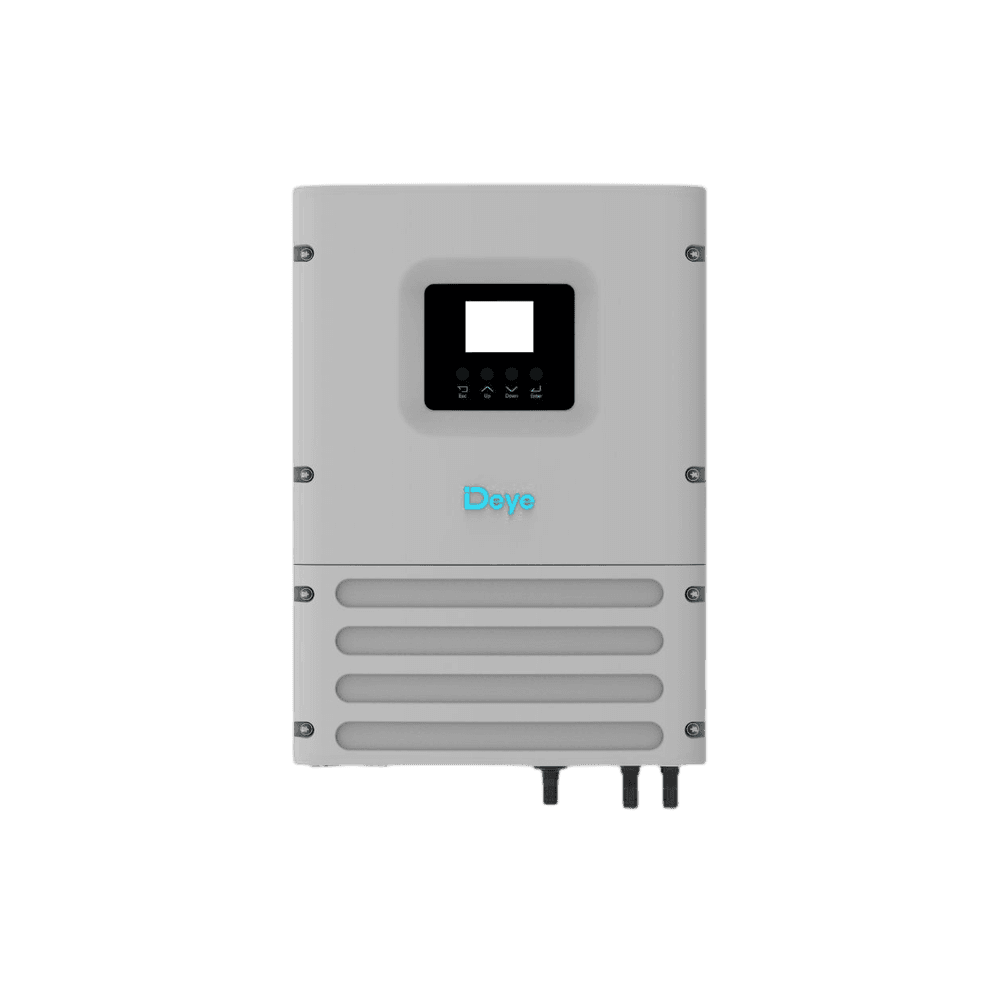
Only 52 of the 134 Deye inverter records state a peak power figure at all — 2× rated power for 10 seconds on 35 of them. If your load is an irrigation pump rather than a house, that row is your shortlist.
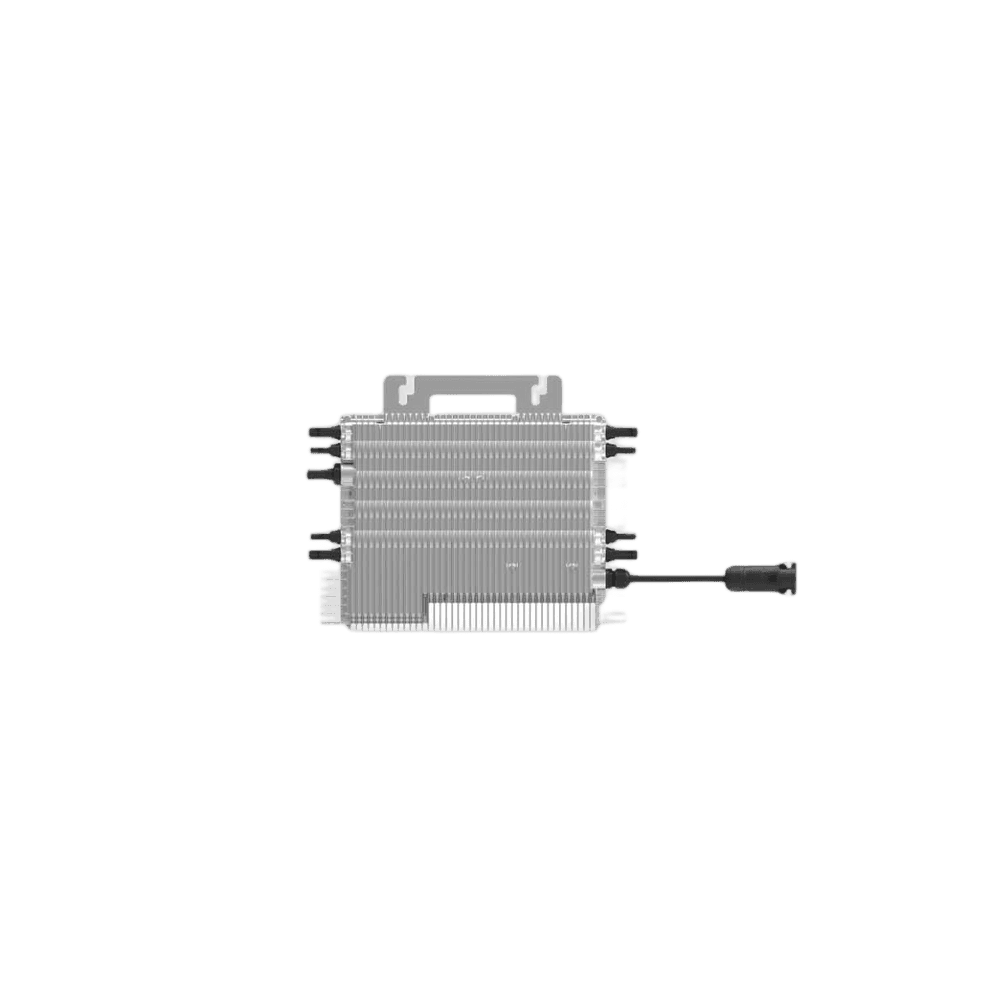
On a farm in Al Ahsa the load is usually a pump, not a house, and that changes the whole question. A motor pulls far more current in the first moment of starting than it does while it runs, and an inverter that cannot supply that surge will simply trip instead of turning the pump. The row on the spec sheet that answers this is Peak Power, written as a multiple of rated power and a duration. Only 52 of the 134 Deye inverter records state one at all: 35 state twice rated power for 10 seconds and 17 state one and a half times rated power for 10 seconds. The other 82 — every grid-tie string inverter and every microinverter — state nothing in that row, because they are not built to hold a load up on their own. Those same 52 records are also the only ones that state a diesel generator input. If your load starts a motor, that group of 52 is your shortlist.
To buy, open the catalogue, add the model to the cart and check out online.
Why is a pump harder on an inverter than a villa?
A household load is mostly steady. Lights, a fridge, air conditioning: they draw roughly what they are rated for, and the inverter sits comfortably below its own ceiling. A motor does not. At the instant it starts it demands a large multiple of its running draw for a short time, and that current has to arrive without the supply collapsing or the inverter shutting down to protect itself.
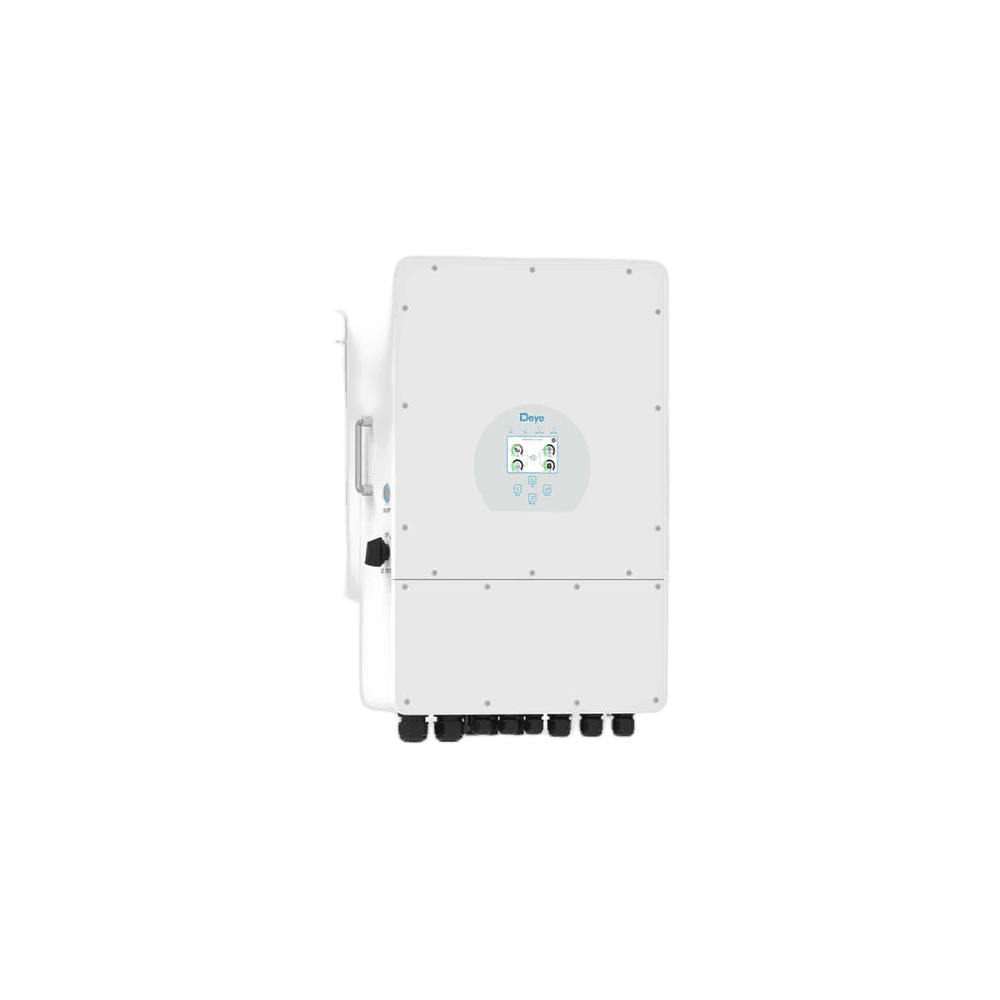
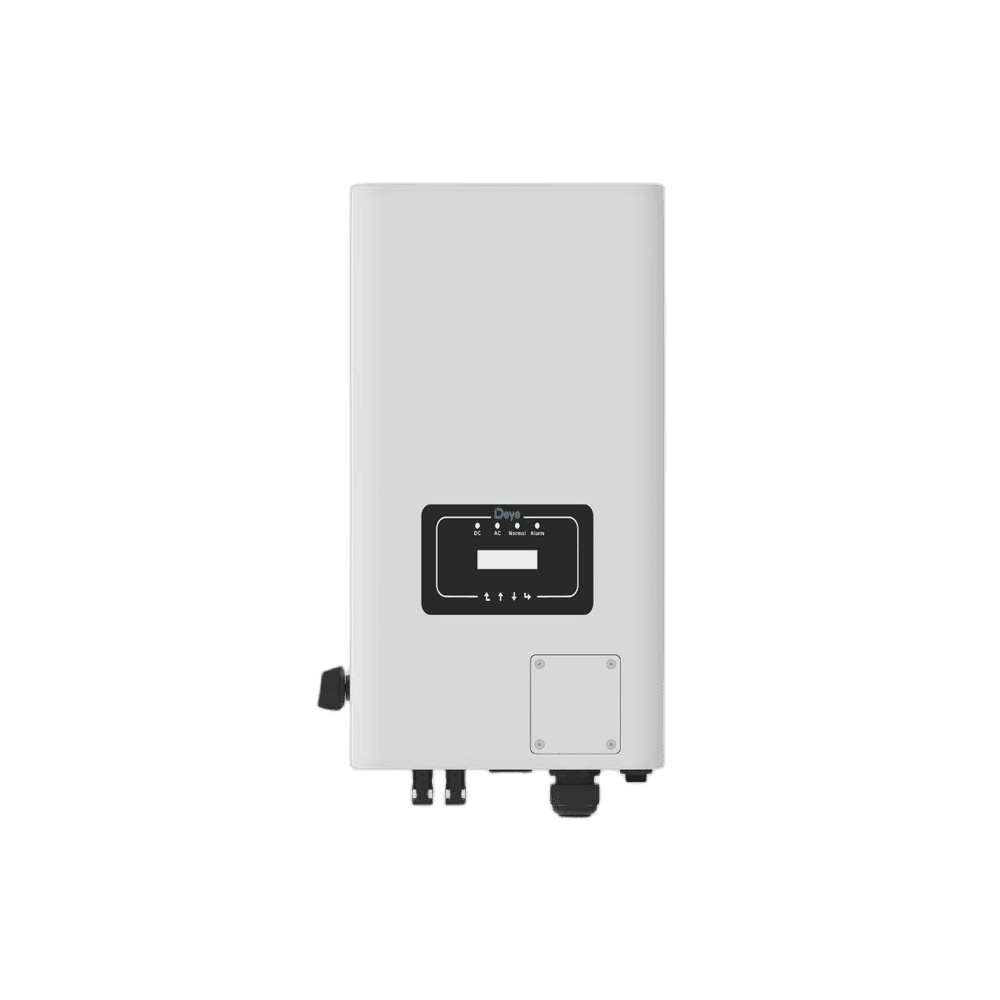
Deye publishes this as a multiple and a duration rather than a vague claim about surge capability, so you can compare two models directly. The SUN-5K-OG01LP1 states twice its 5,000 W rated output for 10 seconds. The SUN-30K-SG01HP3 states one and a half times its 30,000 W rated output for the same 10 seconds. Both are real headroom, shaped differently — and which one your pump needs depends on its own nameplate.
Off-grid or hybrid: which one belongs on a farm?
Both are in the group of 52. The difference that decides it is not power — it is what the inverter is designed to do about the grid.
| Model | Rated AC output | Peak power | Diesel generator input | Max. altitude | Parallel units |
|---|---|---|---|---|---|
| SUN-3.6K-OG01LP1 | 3,600 W | 2× for 10 s | Yes — 35 A stated | 3,000 m | 16 |
| SUN-5K-OG01LP1 | 5,000 W | 2× for 10 s | Yes — 35 A stated | 3,000 m | 16 |
| SUN-6K-OG01LP1 | 6,000 W | 2× for 10 s | Yes — 35 A stated | 3,000 m | 16 |
| SUN-12K-SG04LP3 | 12,000 W | 2× for 10 s | Yes, current not stated | 2,000 m | 10 |
| SUN-20K-SG05LP3 | 20,000 W | 2× for 10 s | Yes, current not stated | 3,000 m | 10 |
| SUN-30K-SG01HP3 | 30,000 W | 1.5× for 10 s | Yes, current not stated | 2,000 m | 10 |
Now the decisive row. The three OG01LP1 records are the only inverters in the range that state Not Applicable for anti-islanding protection, residual current detection and grid regulations. Every one of the other 131 records names IEC 61727 and IEC 62116. That is not a gap in the data — it is what an off-grid inverter is: not a grid-connected machine, and not meant to be one.
So the choice reads like this. If the pump house has a utility connection you intend to keep, the hybrid is the answer: it is built to sit alongside the grid, disconnect safely when the grid fails and charge from either source. If there is no grid worth connecting to — the common case out among the date farms — the OG01LP1 units carry the same 2× peak, the same IP65 enclosure and the same −40 to 60 °C rating as the hybrids beside them.
The rows that separate one farm system from another
- Altitude. The three OG01LP1 records and the SUN-20K-SG05LP3 state a maximum operating altitude of 3,000 m; the SUN-12K-SG04LP3 and SUN-30K-SG01HP3 state 2,000 m. Al Ahsa is an oasis basin, so it is not your constraint there — it becomes one for a highland site.
- Unbalanced output. 34 three-phase hybrid records state 100 % unbalanced output capability — which matters when a single-phase pump hangs off one leg of a three-phase system, a very common farm layout.
- AC pass-through. The OG01LP1 units state 35 A of continuous AC pass-through, the SUN-12K-SG04LP3 states 45 A, the SUN-20K-SG05LP3 states 70 A, and the SUN-30K-SG01HP3 states 200 A. This is the current the inverter will carry straight through from another source, and it caps what a generator can feed.
- Battery chemistry accepted. The OG01LP1, SG04LP3 and SG05LP3 records all state lead-acid or lithium-ion. The SG01HP3 high-voltage hybrids state lithium-ion only, with a battery voltage range of 160–800 V rather than 40–60 V.
- DC switch and arc-fault protection. The three off-grid records state Yes for both the DC switch and the arc fault circuit interrupter. On the SG04LP3 and SG01HP3 hybrids the AFCI row reads Optional.
- Scheduling. The hybrids state six configurable charge and discharge time periods. The off-grid records do not state a figure there.
How do I size an inverter for an irrigation pump?
From your pump's nameplate, not from a rule of thumb. We will not publish a figure for what a typical farm draws: farms differ by pump, by depth, by duty cycle and by how many things start at once, and a number invented for an article is worse than none.
What you can do is read two rows against two facts you already have. The pump's continuous running draw has to sit under the inverter's rated AC output with margin, all day, in the heat. And its starting demand has to sit under the peak power row — the multiple times the rated output, for the stated 10 seconds. If two pumps can start together, that is a different sum again, and it is the one most often missed. Parallel capacity is the other lever: the OG01LP1 records state 16 units and the hybrids in the table state 10.
Heat, dust and a closed pump house
The Eastern Province summer does the same thing to a farm inverter as to a villa inverter, and the figure is identical: 113 of the 134 records state a derating start temperature, all of them 45 °C. The three OG01LP1 units are rated −40 to 60 °C, IP65, intelligent air cooling, under 55 dB.
The farm-specific risk is the building. A pump house is often a small closed shed with the door shut: no through-draught, a metal roof, and equipment making its own heat inside. IP65 means dust will not reach the electronics; it does nothing for air that has nowhere to go. Ventilation and clearance are the cheapest part of the specification and the part most often skipped.
Where to get the grid and paperwork answer
Whether you may connect, whether you may export anything, and what a licensed contractor has to file on your behalf are not questions a spec sheet answers. Those are held by your electricity provider and by the contractor who submits the application. What the spec sheet does settle is which machine is capable of what — and on a farm that is the half most likely to be got wrong.
Start at the Al Ahsa buying page for the catalogue filtered to this use case, and read the net-metering guide for Saudi Arabia before you assume anything about export. Related reading: what happens to output above 45 °C. To buy, open the catalogue, add the model to the cart and check out online.
Frequently Asked Questions
Which solar inverter can start a water pump?
Can I run a farm pump on solar without a grid connection?
What does peak power mean on an inverter spec sheet?
Can I connect a diesel generator to a Deye inverter?
How many inverters can I run in parallel on a farm?
What size solar inverter do I need for an irrigation pump?
- #Al Ahsa
- #solar inverter
- #water pump
- #off-grid
- #peak power
- #farm solar
Ready to order?
Every unit in the catalogue carries its price — add it to the cart and order online, then collect it from our store in Dubai or Riyadh.