Can I Export Solar to the Grid in Riyadh or Jeddah? Read the Zero-Export Row First
Zero Export Support reads Yes on 70 of the 134 Deye inverter records and is unstated on the other 64 — and the split is perfectly clean by family. Here is what that row means and what it does not settle.
The question almost every Riyadh and Jeddah household asks is whether they can push surplus solar back onto the grid. That question has two halves and they belong to two different people. Whether you are permitted to export, and on what terms, is your electricity provider's answer, not ours and not the manufacturer's. What the equipment is capable of is a single published row, and it is the one buyers misread most often. It is called Zero Export Support, and across the 134 Deye inverter records it reads Yes on 70 of them and is left unstated on the other 64. Every one of those 70 is a grid-tie string inverter. The 64 that leave it blank are the 49 hybrids, the 12 microinverters and the 3 off-grid units. Before you shop on that row, be clear about which direction it points.
We are an authorised Deye distributor with store pickup in Riyadh. Ready to buy? Pick the model in the catalogue and order it online.
Products mentioned in this article
Deye 15 kW Three-Phase String Solar Inverter SUN-15K-G05

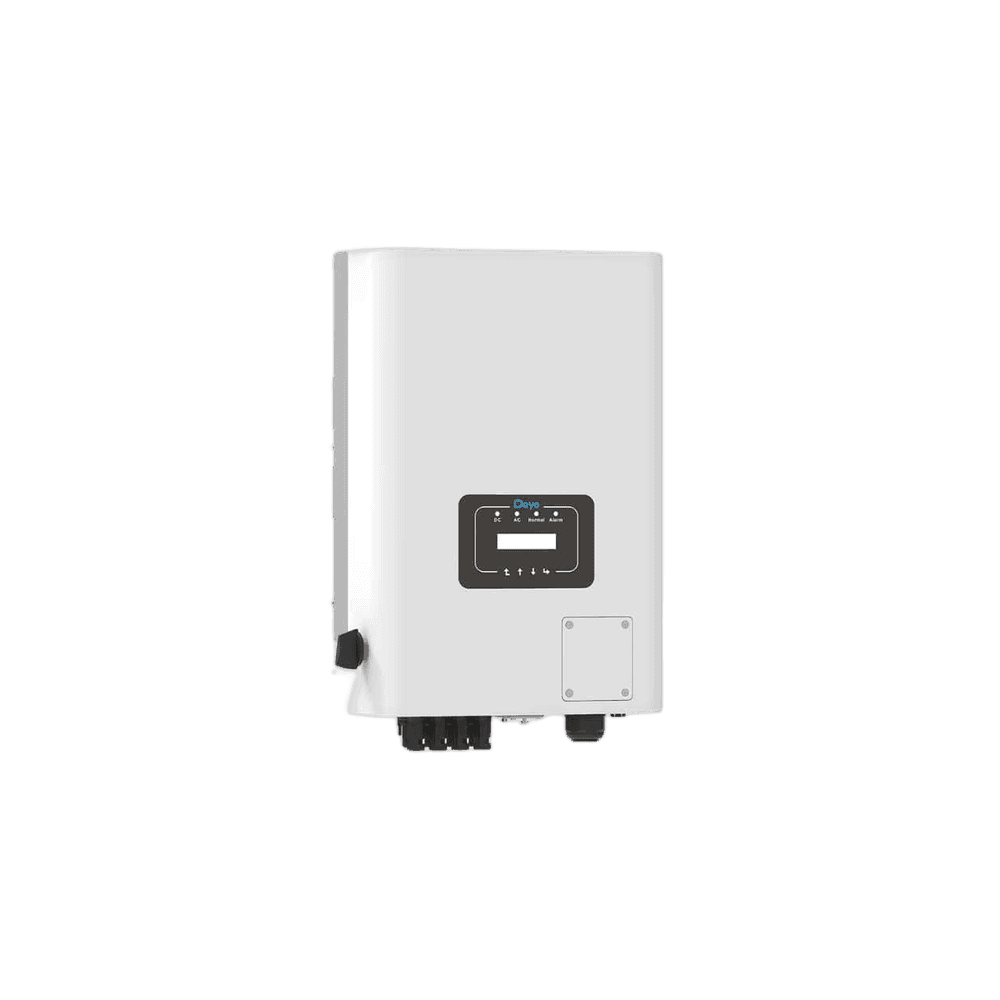
- Rated AC Output Active Power
- 15000 W
- Max. Efficiency
- 98.5 %
- Number of MPPTs
- 2
- Grid Connection Form
- 3L+N+PE
Price incl. VATAED 6,399
Deye 25 kW Three-Phase String Solar Inverter SUN-25K-G05
- Rated AC Output Active Power
- 25000 W
- Max. Efficiency
- 98.5 %
- Number of MPPTs
- 2
- Grid Connection Form
- 3L+N+PE
Price incl. VATAED 8,750
Deye 5 kW Single-Phase String Solar Inverter SUN-5K-G04
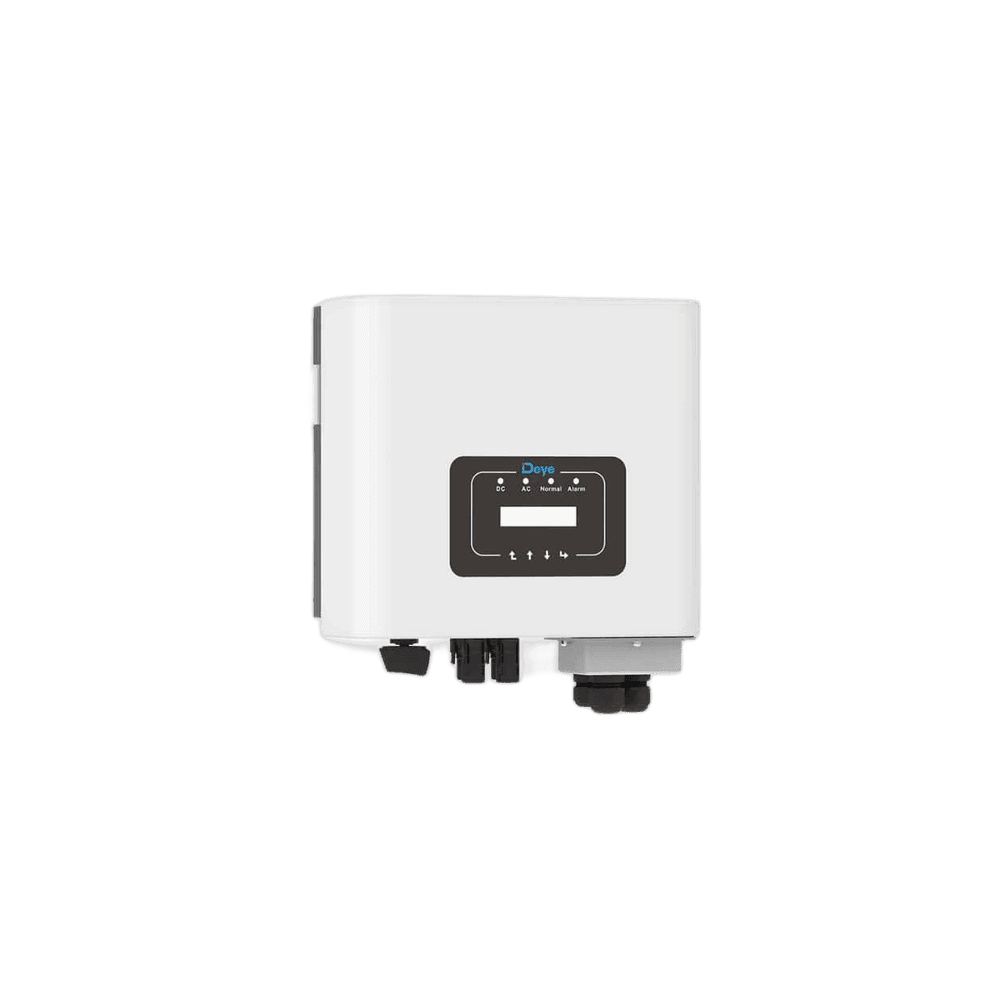
- Rated AC Output Active Power
- 5000 W
- Max. Efficiency
- 97.5 %
- Number of MPPTs
- 2
- Grid Connection Form
- L+N+PE
Price incl. VATAED 2,170
What does “zero export” actually mean?
It is a capability, not a restriction. Zero export means the inverter can hold its own generation to whatever the building is consuming and push nothing back onto the network. It is what you need when the connection agreement says you may generate for yourself but may not feed the grid, which is a very common condition on residential connections in a lot of markets.
People read the phrase backwards. They see “zero export” and hear “this inverter cannot export”, then look for a model without it. The row does not work that way: it is the published ability to guarantee no feed-in when that is the requirement. An inverter that states it is more flexible than one that does not, because it can be configured either way where the connection allows both.
Which Deye inverters publish zero-export support?
The split is completely clean by family, which is unusual and makes the shortlist easy:
| Family | Records | Zero Export Support | Grid connection |
|---|---|---|---|
| String (G) — grid-tie | 70 | Yes | Single and three phase |
| Hybrid (SG) | 49 | Not stated | Single and three phase |
| Micro (M) | 12 | Not stated | Single phase |
| Off-Grid (OG) | 3 | Not stated | Single phase |
All 70 records in the first row also state Virtual Synchronous Generator support as Yes, and none of the other 64 states it. The two rows travel together across the whole catalogue, which is worth noticing when you are comparing a string inverter against a hybrid of the same power: you are not comparing two versions of the same machine.
- Single-phase grid-tie, zero export stated: the SUN-5K-G04 at 5,000 W, 97.5 % maximum efficiency, IP65, under 35 dB and 8 kg.
- Three-phase grid-tie, zero export stated: the SUN-10K-G06P3 at 10,000 W, 98.3 % maximum efficiency, under 45 dB, naturally cooled and 11.5 kg.
- Larger three-phase grid-tie: the SUN-15K-G05 at 15,000 W and under 40 dB, or the SUN-25K-G05 at 25,000 W, both stating 98.5 % maximum efficiency and a 4,000 m maximum operating altitude.
Why does a hybrid not state it?
We do not know, and we are not going to guess on your behalf. The row is unstated on all 49 hybrid records, and an unstated row is exactly that — it is not a No, and it is not a Yes we are entitled to infer. If an export condition is written into your connection, the models that publish the capability are the 70 string inverters, and that is the safe reading of the data we have.
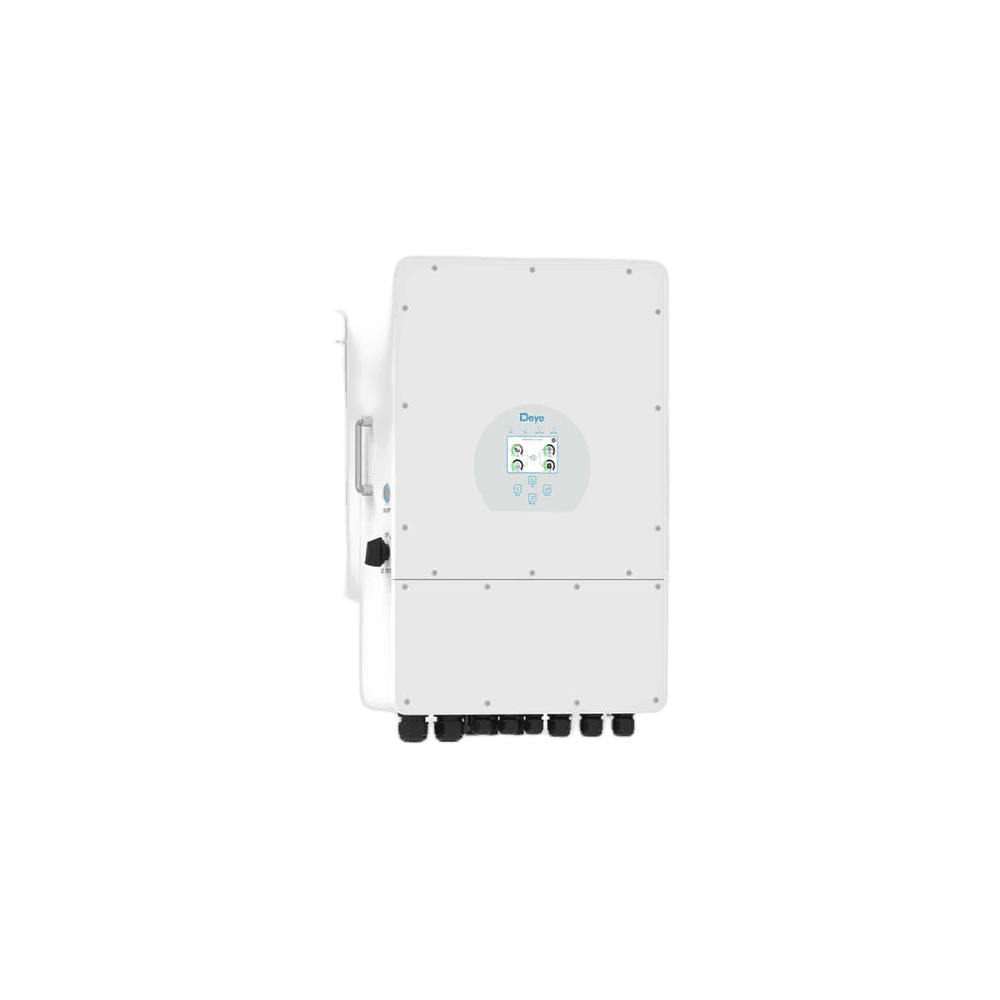
What the hybrids do publish is a different set of strengths, and if your requirement is backup rather than export control, they are the family to be in. The SUN-8K-SG04LP3 states anti-islanding protection, residual current detection, twice rated power for 10 seconds, a diesel generator input, 45 A of continuous AC pass-through, 100 % unbalanced output capability, AC coupling support and six configurable charge and discharge time periods. None of that appears on a string inverter record.
Anti-islanding: the row that is almost universal
This is the safety behaviour people often confuse with export control, and it is published separately. Anti-islanding protection reads Yes on 131 of the 134 inverter records. The only three that state Not Applicable are the off-grid OG01LP1 units, which is consistent with the rest of their data: they also state Not Applicable for residual current detection and for grid regulations, because they are not designed to connect to a network at all.
Residual current detection reads Yes on 119 records. So on a grid-connected Deye inverter, disconnecting safely when the network goes down is standard across the range and is not a differentiator. Whether you may put power onto that network in the first place is the separate question, and it is not answered by any of these rows.
The grid codes each unit is certified to — and the one that is missing
The grid regulations row is populated on 131 records, and 15 distinct codes appear across the fleet: CEI 0-16, CEI 0-21, EN 50549, EN 50549-1, G98, G99, IEC 61727, IEC 62116, NC RFG, NRS 097, OVE-Richtlinie R25, RD 140, UNE 217002, VDE-AR-N 4105 and VDE-AR-N 4110. IEC 61727 and IEC 62116 appear on all 131; the largest three-phase units add the medium-voltage codes such as CEI 0-16 and VDE-AR-N 4110.
Now the part worth being straight about: none of those fifteen is a Saudi code. The row tells you which international and European regulations a unit is certified to, and it does not tell you that your local network operator will accept it. Anyone quoting you local approval on the strength of this row is reading something into it that is not there. Treat it as evidence of engineering compliance, and treat local acceptance as a separate question with a separate owner.
So what should a Riyadh or Jeddah household actually buy?
- You may generate but not export: a string inverter from the group of 70 that publishes zero export support. This is the only row in the catalogue that speaks directly to that condition.
- You want backup during a cut, and export is not the issue: a hybrid, and read the pass-through, generator and peak power rows instead.
- You want both: say so before you buy. The two capabilities sit in different families, and which one you sacrifice is a decision to make deliberately rather than discover at commissioning.
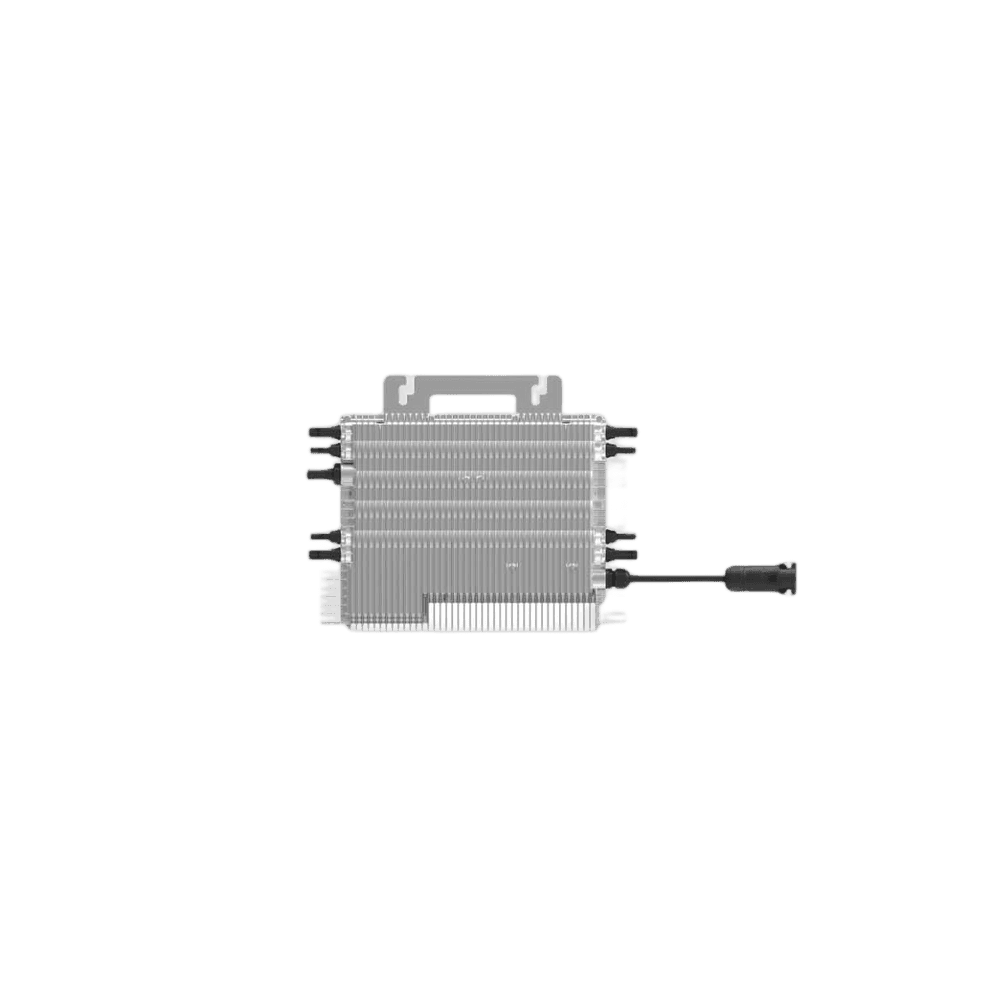
- A shared or split roof: the SUN-M225G4 microinverter leaves the zero-export row unstated too, so it belongs in the backup-and-flexibility conversation rather than the export-control one.
Where the export and tariff answers actually live
With your electricity provider, and with the licensed contractor who submits the application on your behalf. They hold the connection conditions, the capacity limit, the metering arrangement and whatever commercial terms apply to anything you feed back. Ask them three things in this order: may I export at all, what capacity may I install, and what metering arrangement applies. Every one of those changes the equipment shortlist, and none of them is on a spec sheet.
Our half is the equipment. Order online: every model in the catalogue shows its price, and checkout takes a minute.
Frequently Asked Questions
What does zero export support mean on a solar inverter?
Which Deye inverters support zero export?
Can a Deye hybrid inverter do zero export?
Do Deye inverters disconnect automatically when the grid fails?
Are Deye inverters certified for the Saudi grid?
Can I sell electricity back to the grid in Saudi Arabia?
- #net metering
- #zero export
- #Riyadh
- #Jeddah
- #grid connection
- #solar inverter
Ready to order?
Every unit in the catalogue carries its price — add it to the cart and order online, then collect it from our store in Dubai or Riyadh.