Best Three-Phase Solar Inverter for a Business in Ras Al Khaimah
72 of 134 Deye inverter records are three-phase, and every unit rated under 65 dB is one of them. How noise and weight decide between a plant room and an outdoor wall on an RAK site.
Ras Al Khaimah runs on sites, not living rooms: quarries and crushers, ceramics and cement, cold stores, poultry and produce farms, labour accommodation, workshops on the industrial roads. Almost all of them share two things — a three-phase supply, and a load that peaks while the sun is up.
Which makes solar an easy argument and the inverter choice a harder one, because at this scale the first real question is not the brand on the box. It is where the box goes. A 60 kW unit is not a thing you hang in a corridor, and the number that tells you so is printed in the record: the noise figure, which on the largest three-phase units reaches under 65 dB.
We are an authorised Deye distributor supplying contractors and site owners across the northern emirates from our office in Deira, Dubai. Order online: every model in the catalogue shows its price, and checkout takes a minute.
Products mentioned in this article
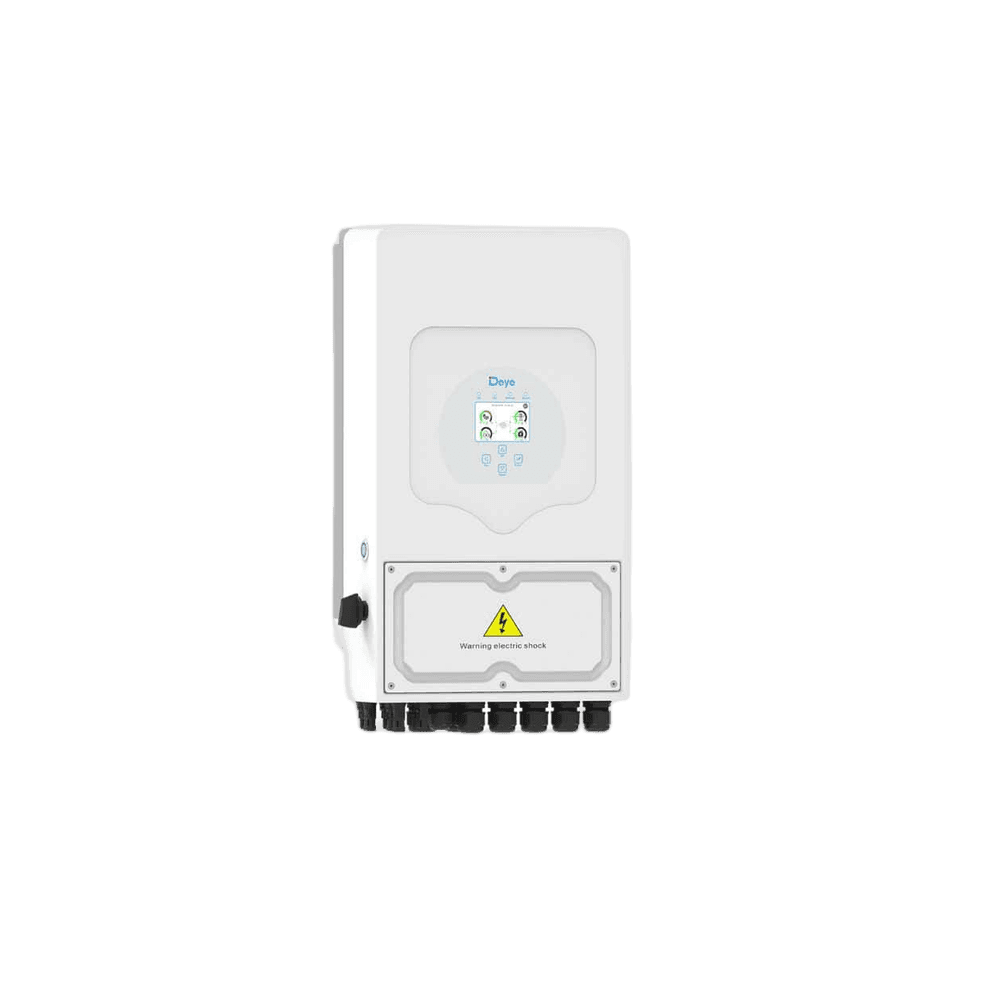
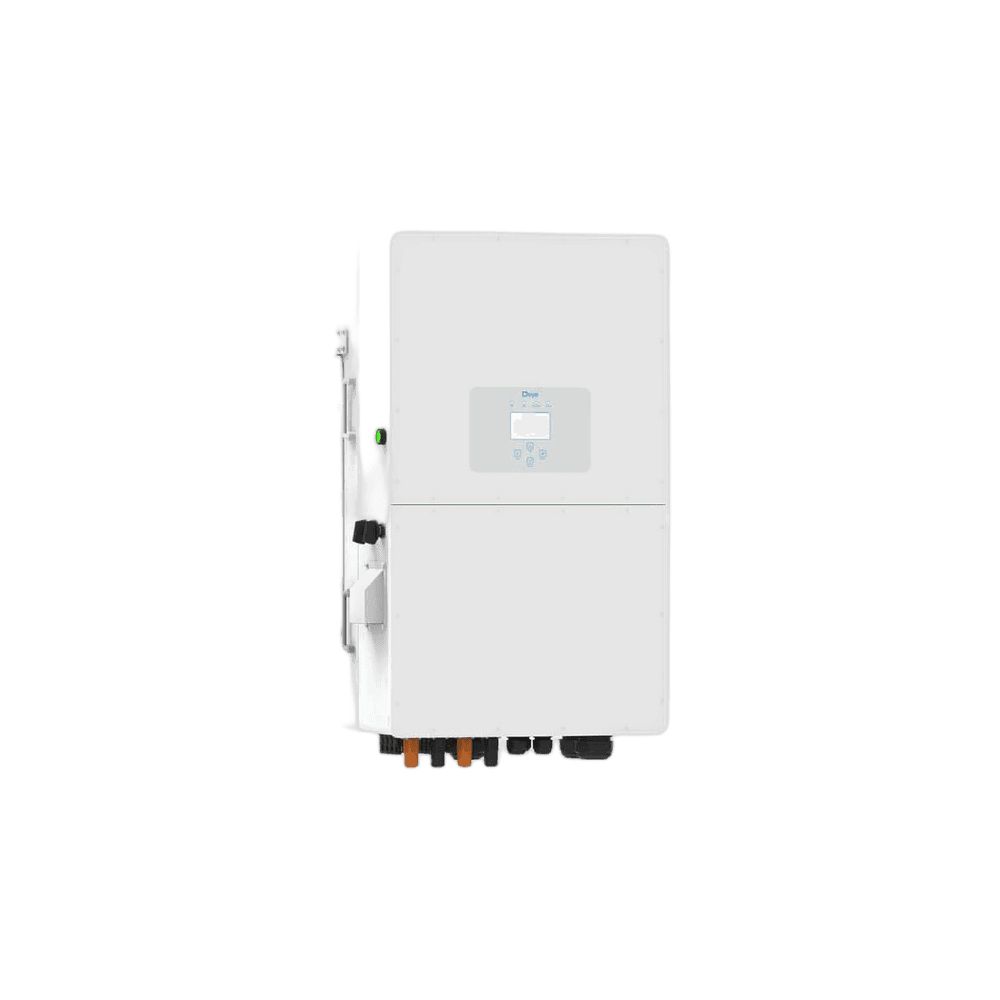
Deye 40 kW Three-Phase Hybrid Solar Inverter SUN-40K-SG01HP3

- Rated AC Output Active Power
- 40000 W
- Max. Efficiency
- 97.6 %
- Number of MPPTs
- 4
- Grid Connection Form
- 3L+N+PE
Price incl. VATAED 16,844
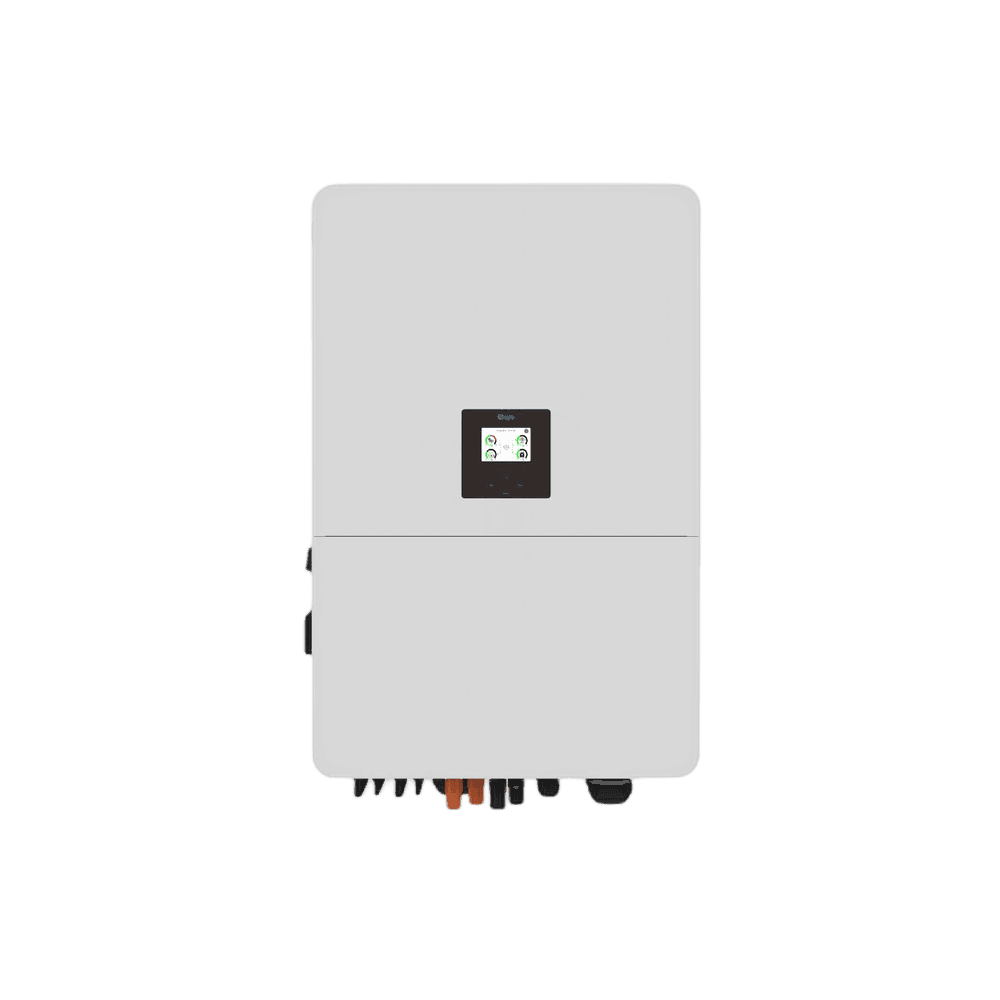
Deye 60 kW Three-Phase Hybrid Solar Inverter SUN-60K-SG02HP3-EU-EM6
- Rated AC Output Active Power
- 60000 W
- Max. Efficiency
- 98.7 %
- Number of MPPTs
- 6
- Grid Connection Form
- 3L+N+PE
Price incl. VATAED 44,000
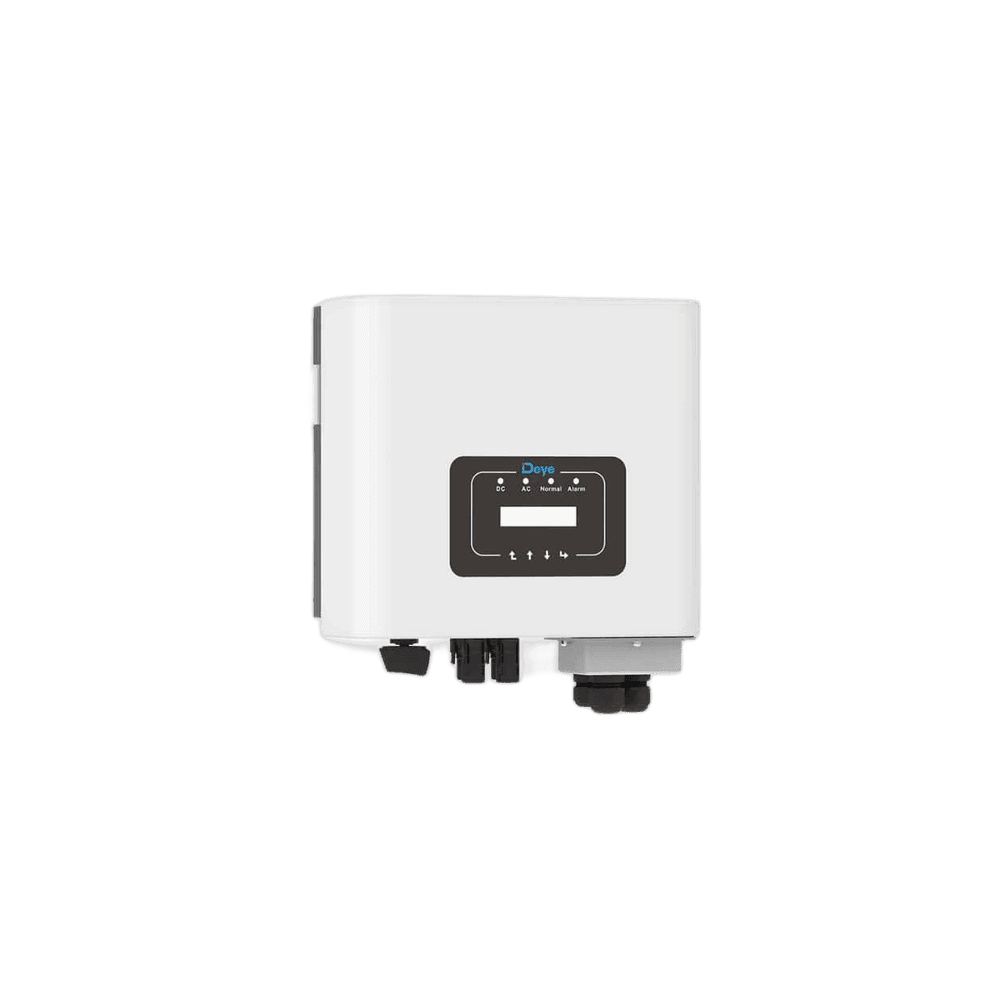
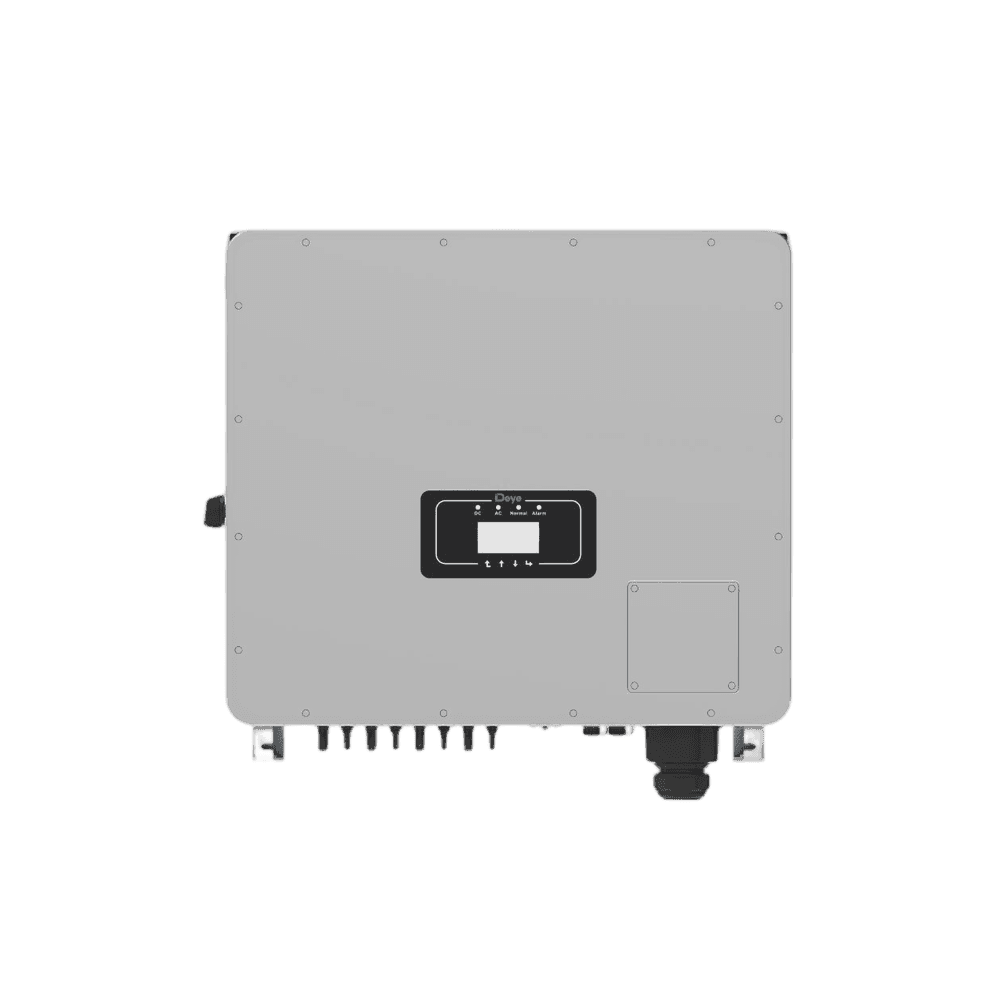
Deye 75 kW Three-Phase String Solar Inverter SUN-75K-G04P3-EU-AM4
- Rated AC Output Active Power
- 75000 W
- Max. Efficiency
- 98.7 %
- Number of MPPTs
- 4
- Grid Connection Form
- 3L+N+PE
Price incl. VATAED 24,000
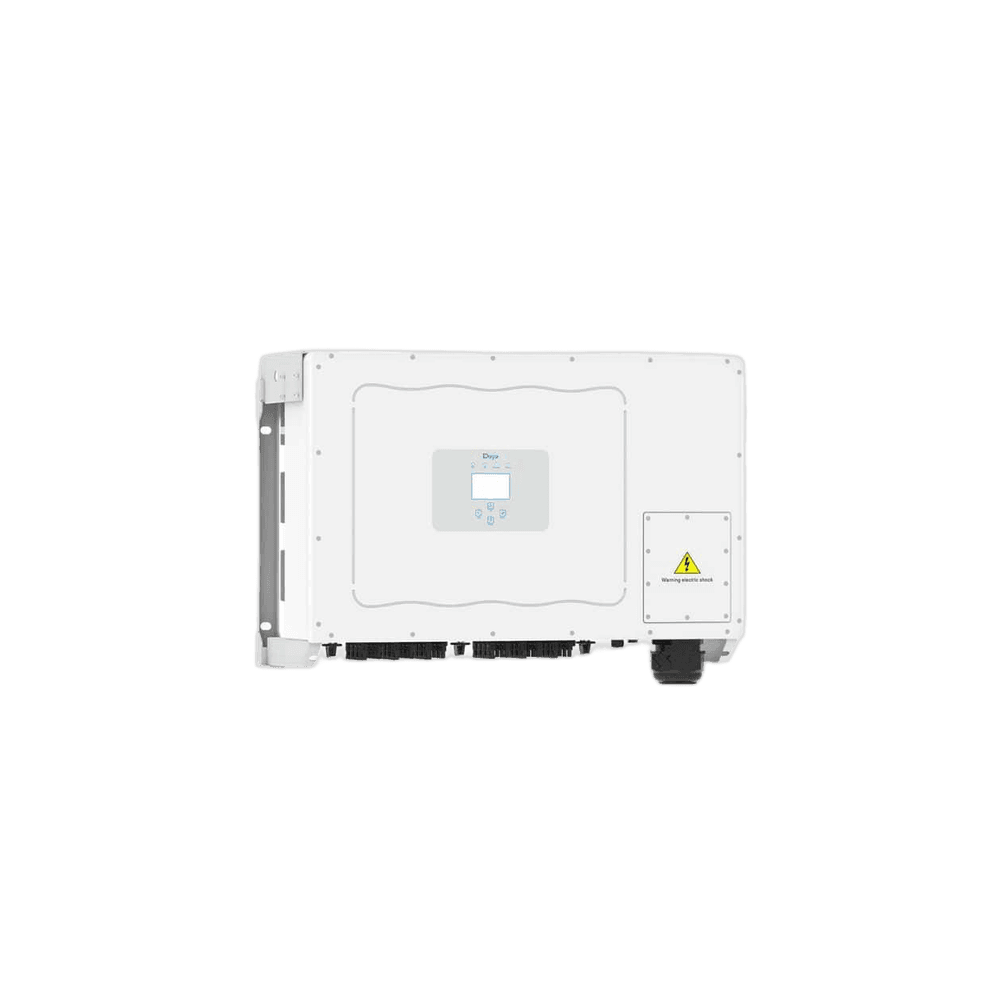
Deye 100 kW Three-Phase String Solar Inverter SUN-100K-G03
- Rated AC Output Active Power
- 100000 W
- Max. Efficiency
- 98.8 %
- Number of MPPTs
- 6
- Grid Connection Form
- 3L+N+PE
Price incl. VATAED 27,500
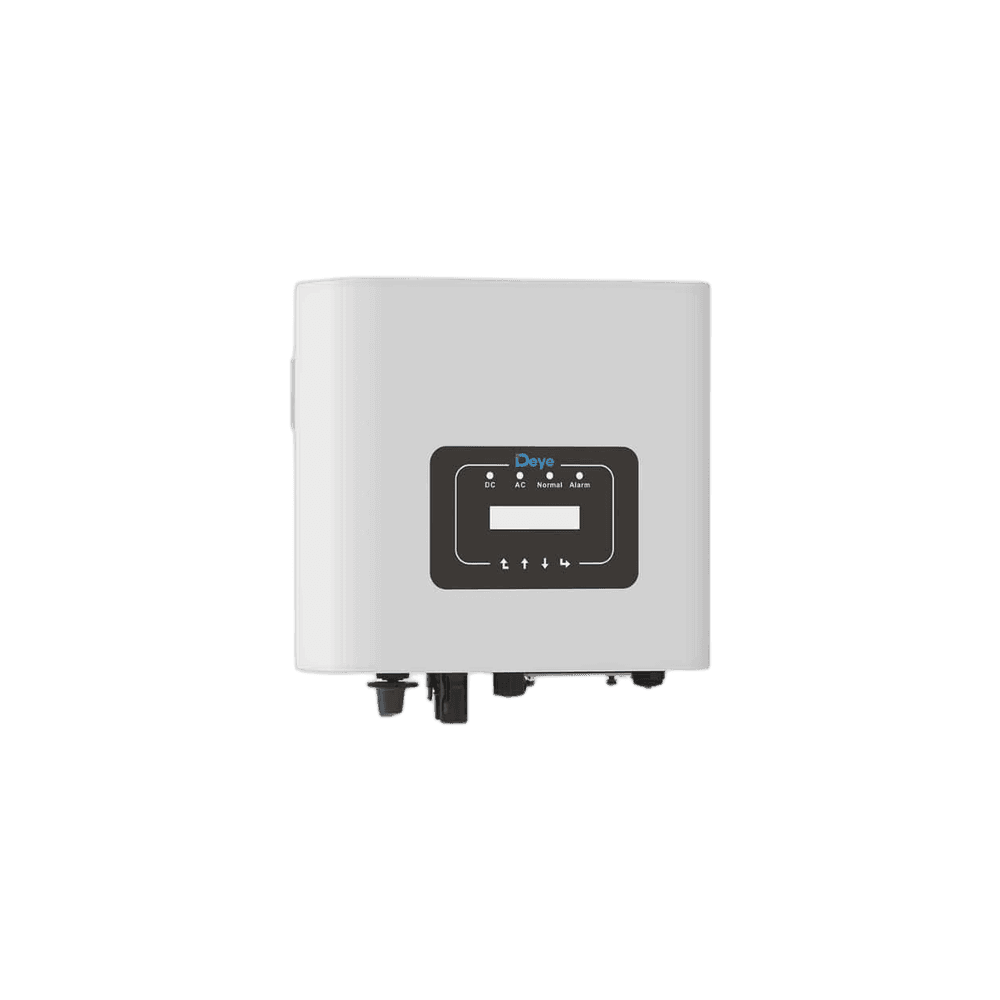
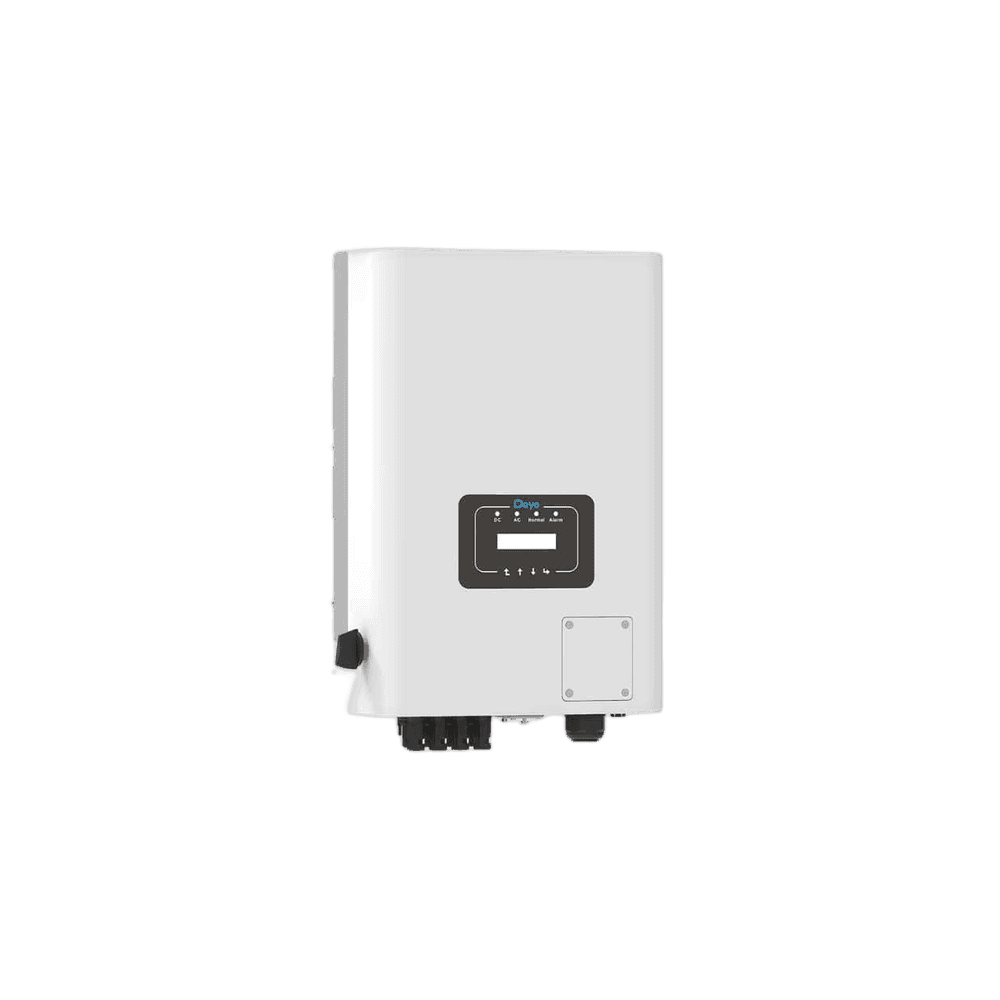
Deye 15 kW Three-Phase String Solar Inverter SUN-15K-G05
- Rated AC Output Active Power
- 15000 W
- Max. Efficiency
- 98.5 %
- Number of MPPTs
- 2
- Grid Connection Form
- 3L+N+PE
Price incl. VATAED 6,399
Deye 25 kW Three-Phase Hybrid Solar Inverter SUN-25K-SG01HP3-EU-AM2
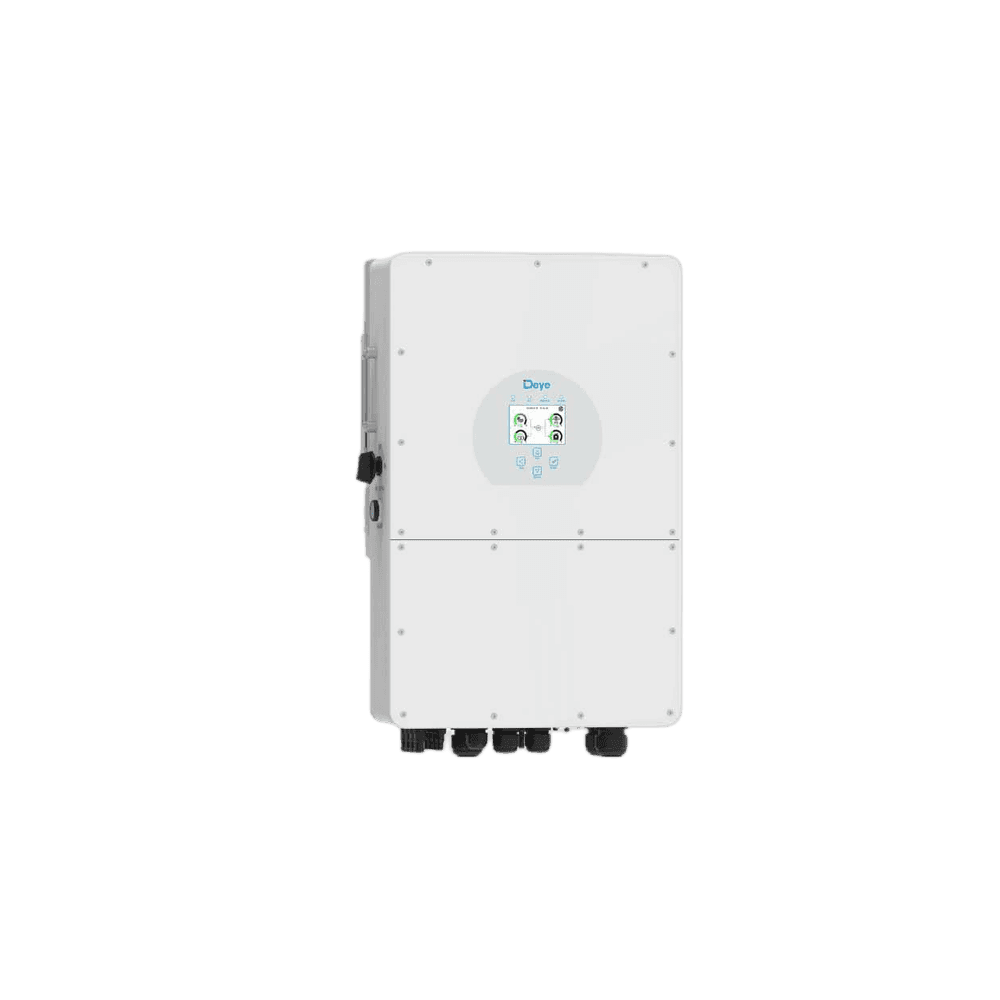
- Rated AC Output Active Power
- 25000 W
- Max. Efficiency
- 97.6 %
- Number of MPPTs
- 2
- Grid Connection Form
- 3L+N+PE
Price incl. VATAED 4,423
Which three-phase solar inverter suits a site in Ras Al Khaimah?
Start from the connection form, because it is the one thing that is not negotiable. Of the 134 Deye inverter records, 72 are three-phase (3L+N+PE) and 62 are single-phase (L+N+PE). Then choose the architecture: a string inverter if the site simply wants to burn its own generation during the day — all 70 Deye string records state zero-export support, which matters when the connection is not approved to feed back — or a three-phase hybrid if the site needs storage, generator integration or backup for a process it cannot lose. Finally, let the noise figure choose the room. A SUN-15K-G05 at under 40 dB and 15 kg will live on an outdoor wall almost anywhere; a SUN-60K-SG02HP3-EU-EM6 at under 65 dB and 105 kg wants a plant room or a wall well away from anyone working.
Three-phase is a connection form, not a size class
It is worth saying plainly, because the two get conflated in quotations. Three-phase does not mean big; it means the unit is wired to three live conductors and a neutral. Deye's three-phase records start at modest ratings and run to the largest units in the range, and the single-phase side of the fleet reaches 16 kW.
The practical consequence is that a three-phase site should be quoted three-phase equipment even when the array is small, because a three-phase board fed from a single-phase inverter is unbalanced by construction. Look at the incoming conductors at the main switchgear and the question is settled before any modelling begins.
The noise column decides the building, not the comfort
On a domestic wall, noise is a comfort question. On an RAK industrial site it is a siting question, and it has a hard edge: every Deye unit rated at under 65 dB is three-phase — 17 records — and no single-phase unit in the fleet exceeds under 55 dB. Here is how the 72 three-phase records distribute:
| Noise band | Three-phase records | Practical placement |
|---|---|---|
| Under 40 dB | 1 | Outdoor wall anywhere, including near occupied space |
| Under 45 dB | 10 | Outdoor wall, plant room, most service areas |
| Under 50 dB | 5 | Outdoor wall or plant room |
| Under 55 dB | 30 | Plant room, or an outdoor wall away from offices |
| Under 60 dB | 9 | Plant room or external wall, not beside a workspace |
| Under 65 dB | 17 | Plant room or open external wall, with distance |
The pattern to take away: the quiet end of the three-phase range gives you freedom about where to put the unit, and the loud end takes that freedom away. If the only available wall is beside an office, a canteen or accommodation, the noise column has just narrowed your model list for you — and it is far cheaper to accept that at the quotation stage than after the brackets are drilled.
Weight is the other building decision
Nobody thinks about this until collection day, and then everybody does. Deye's three-phase range spans from a unit two people can carry up a ladder to one that needs planned lifting and a wall that will take it.
| Model | Rated AC output | Weight | Cabinet (mm) | Noise |
|---|---|---|---|---|
| SUN-15K-G05 | 15,000 W | 15 kg | 332 x 472 x 203 | <40 dB |
| SUN-30K-G04 | 30,000 W | 28.7 kg | 330 x 572 x 206 | <60 dB |
| SUN-25K-SG01HP3-EU-AM2 | 25,000 W | 30.5 kg | 408 x 638 x 237 | <55 dB |
| SUN-50K-G04 | 50,000 W | 39 kg | 434 x 570 x 243 | <65 dB |
| SUN-75K-G04P3-EU-AM4 | 75,000 W | 53.7 kg | 698 x 613 x 236.5 | <55 dB |
| SUN-40K-SG01HP3 | 40,000 W | 80 kg | 527 x 894 x 294 | <65 dB |
| SUN-100K-G03 | 100,000 W | 81 kg | 824 x 516 x 312.7 | <55 dB |
| SUN-60K-SG02HP3-EU-EM6 | 60,000 W | 105 kg | 606 x 927 x 314 | <65 dB |
Read that table alongside the noise column and a shape appears. The SUN-75K-G04P3-EU-AM4 delivers 75 kW at under 55 dB and 53.7 kg; the SUN-40K-SG01HP3 delivers 40 kW at under 65 dB and 80 kg. The second is not a worse unit — it is a hybrid, doing a job the first cannot — but it is a heavier, louder box, and that is a building consequence you should price before you commit to a position.
Grid-tie string, or three-phase hybrid?
This is the real architectural fork, and the records draw it clearly.
String inverters (the G family) — 70 records, all with zero-export support.
- Zero-export support is stated on all 70. On a site whose connection is not approved to feed back, that is not a nice-to-have; it is the feature that lets the system run at all.
- String monitoring is listed as an option on all 70 — the way you find a dirty or failed string on a large industrial roof before it shows up in a bill.
- Maximum efficiency reaches 98.8 % at the top of the range, with the SUN-100K-G03 at 98.8 % and the SUN-75K-G04P3-EU-AM4 and SUN-50K-G04 at 98.7 %.
- Permissible altitude is 4,000 m on 38 records, which is more headroom than any RAK site will ever use — but it tells you these are units built for a wide operating envelope.
Three-phase hybrids (the SG family) — 49 records, 34 of them three-phase.
- Diesel generator support is stated on 52 records across the fleet, and AC coupling on 49. On a site that already runs a standby genset, that combination lets the genset charge storage instead of idling, and lets an existing grid-tied array stay in service behind new storage.
- Battery voltage ranges are high-voltage: 160-700 V on the SUN-25K-SG01HP3-EU-AM2, 160-800 V on the SUN-40K-SG01HP3, 160-1000 V on the SUN-60K-SG02HP3-EU-EM6.
- Continuous AC passthrough reaches 200 A on the SUN-40K-SG01HP3 and SUN-60K-SG02HP3-EU-EM6 — the figure that decides how much of the site stays live behind the inverter.
- Up to 10 units in parallel on those hybrid records, which is how a larger site is built out in stages rather than in one purchase.
Plant room or outdoor wall — a short decision list
- Read the noise figure first. Under 55 dB and above generally means a plant room or an external wall with distance from occupied space.
- Check the weight against the wall and the access. 105 kg is a planned lift, not two people and a ladder.
- Confirm shade and clearance either way. 113 of the 134 records state that output begins derating at 45 °C ambient, and a sealed plant room without ventilation is hotter than a shaded external wall.
- Keep the DC run short and the AC run tidy. On a large roof that usually favours a position near the array rather than near the incoming supply.
- Leave service space. Every one of these units will be opened again — for a string fault, a firmware update, a filter check — and a unit boxed into a tight corner turns a one-hour visit into a half-day.
All 134 records are dust-tight, with 122 at IP65 and 12 at IP67, so an outdoor position is not a compromise on ingress. The trade is heat and noise, not sealing.
Where to get the Ras Al Khaimah connection answer
We can quote the connection form, the noise figure, the weight, the efficiency and the export behaviour of any unit in the range, because all of those are published in the technical record. What we cannot tell you is your site's approval route, the capacity your supply will be allowed to export, or what the application will cost — those belong to the distribution authority named on your electricity bill and to the contractor it has enrolled.
Get their answer first, because it can change the family and not just the size: a connection with no export approval points at the string family and its zero-export support, while a connection with an existing genset and a process that cannot stop points at a hybrid. Send us what they tell you and we will specify against it.
Order online: every model in the catalogue shows its price, and checkout takes a minute.
Frequently Asked Questions
How many Deye inverters are three-phase?
Does a big solar inverter need its own plant room?
Which Deye inverters can be set not to export to the grid?
Should an industrial site choose a string inverter or a hybrid?
How heavy are large three-phase solar inverters?
Can I add more inverters to the site later?
- #Ras Al Khaimah
- #three-phase inverter
- #commercial solar
- #zero export
- #plant room
- #inverter noise
- #industrial solar
Ready to order?
Every unit in the catalogue carries its price — add it to the cart and order online, then collect it from our store in Dubai or Riyadh.