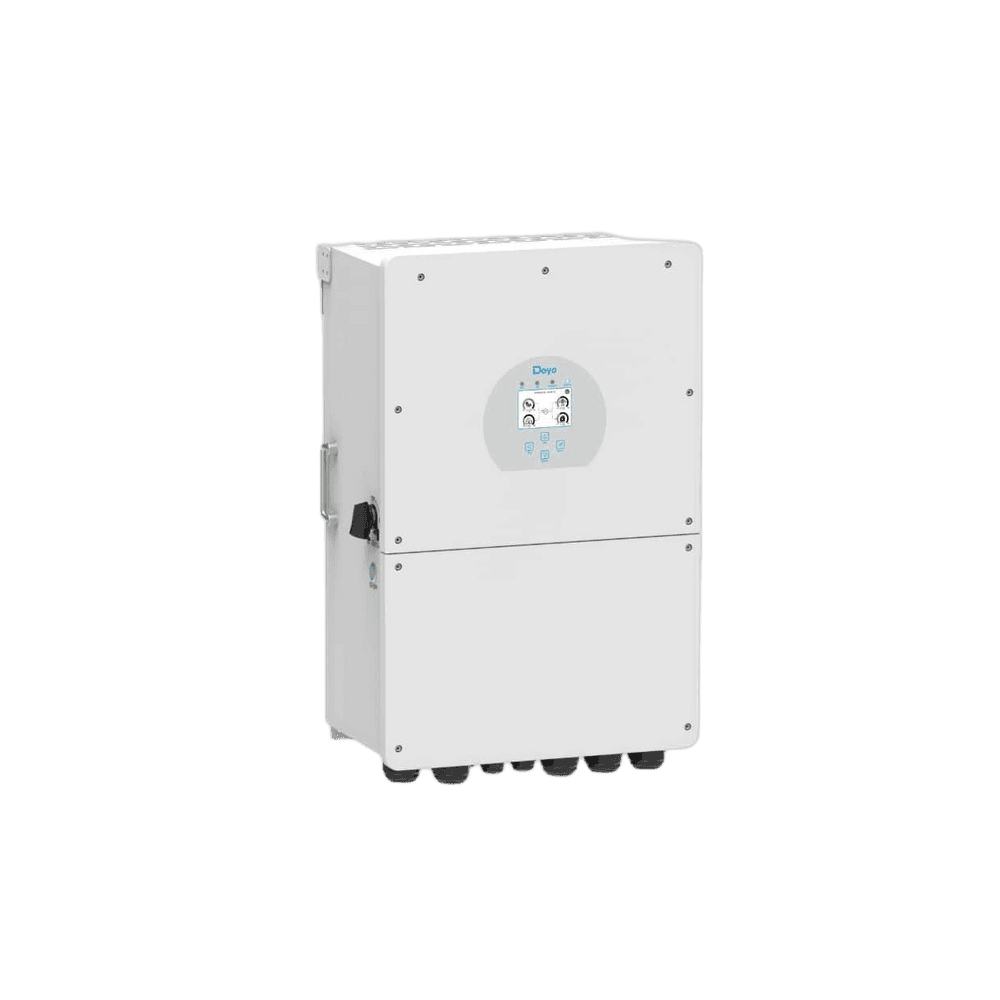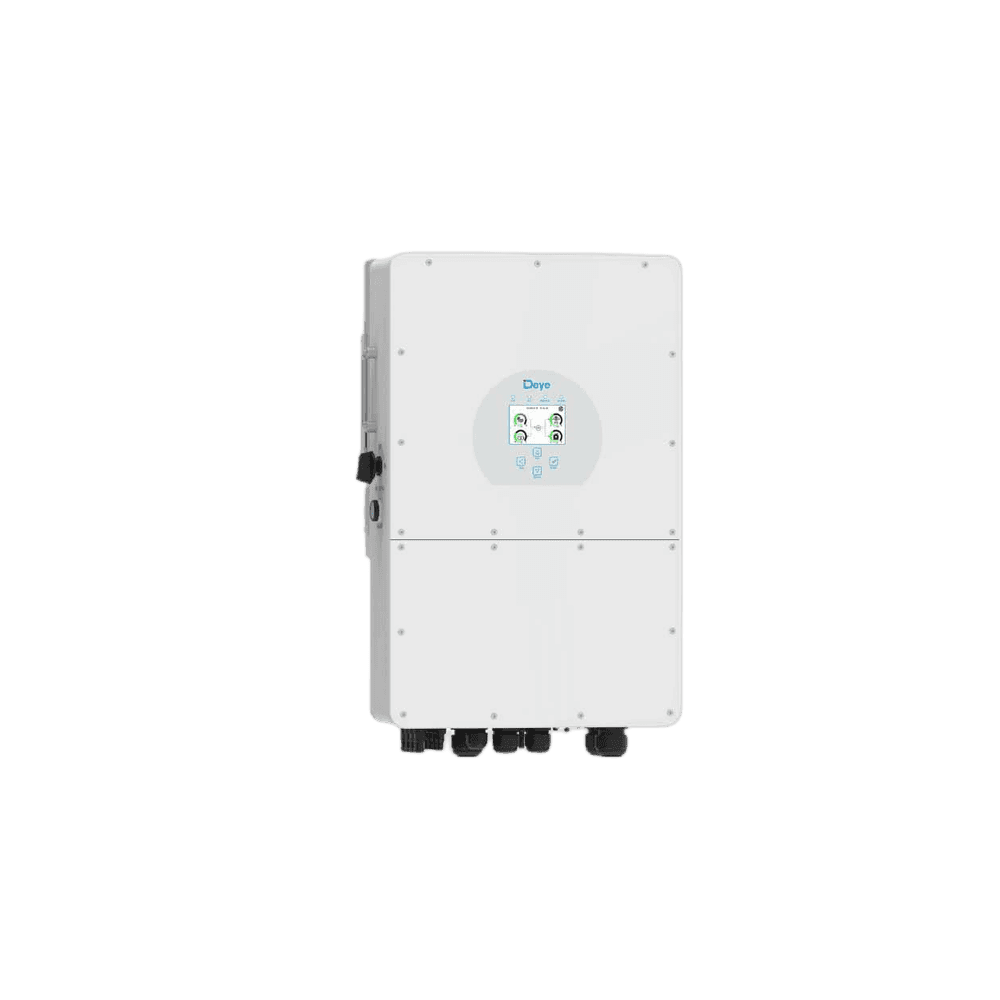
A Deye inverter datasheet is one table in five blocks. We read the SUN-5K-SG04LP1 line by line: PV input, battery, AC output, and what a missing line means.
A Deye inverter catalogue is not a brochure to skim. It is a table, and every decision you will make about the unit, from the number of panels to the battery you can pair with it, is one of its lines. Each family has a page on our datasheets index that prints the table in full. This guide reads one of them, the SUN-3/3.6/5/6K-SG04LP1 datasheet, in the column of the SUN-5K-SG04LP1-EU.
Products mentioned in this article
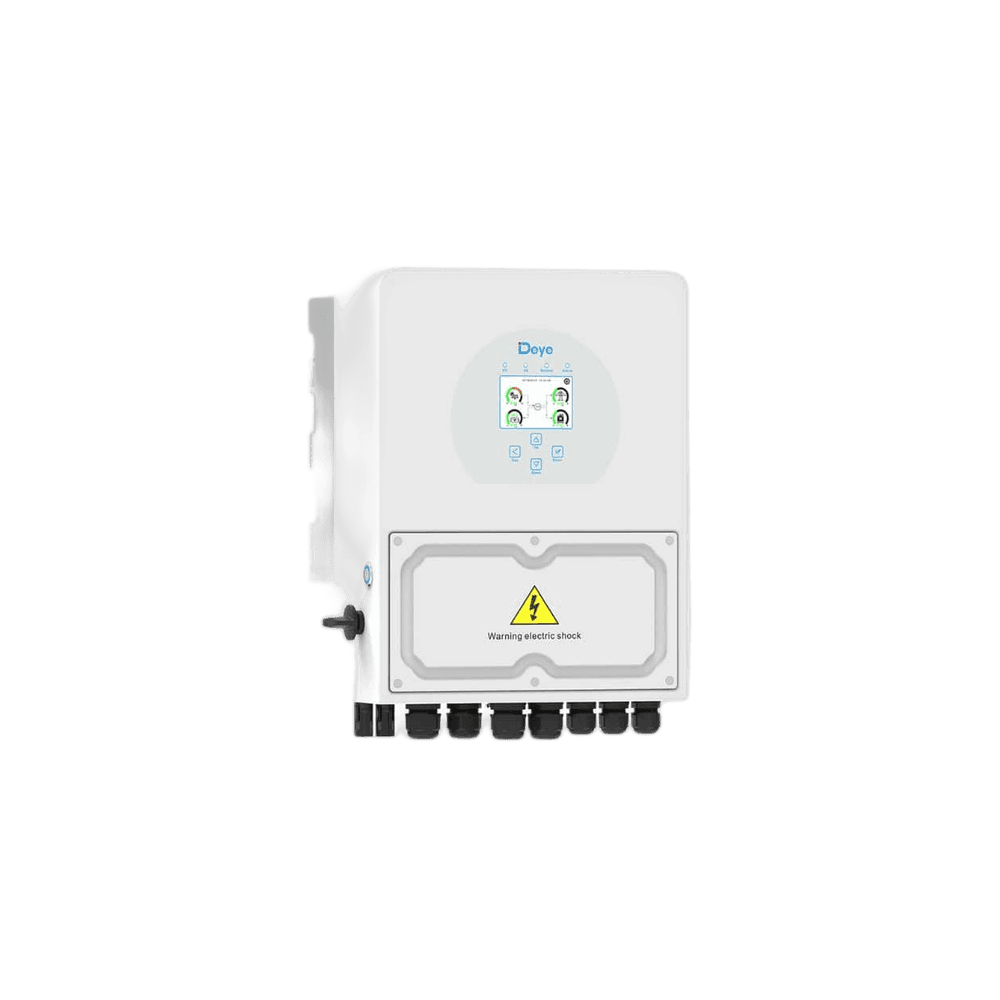
Deye 3 kW Single-Phase Hybrid Solar Inverter SUN-3K-SG04LP1-EU
- Rated AC Output Active Power:3000 W
- Max. Efficiency:97.6 %
Deye 5 kW Single-Phase Hybrid Solar Inverter SUN-5K-SG04LP1-EU
- Rated AC Output Active Power:5000 W
- Max. Efficiency:97.6 %
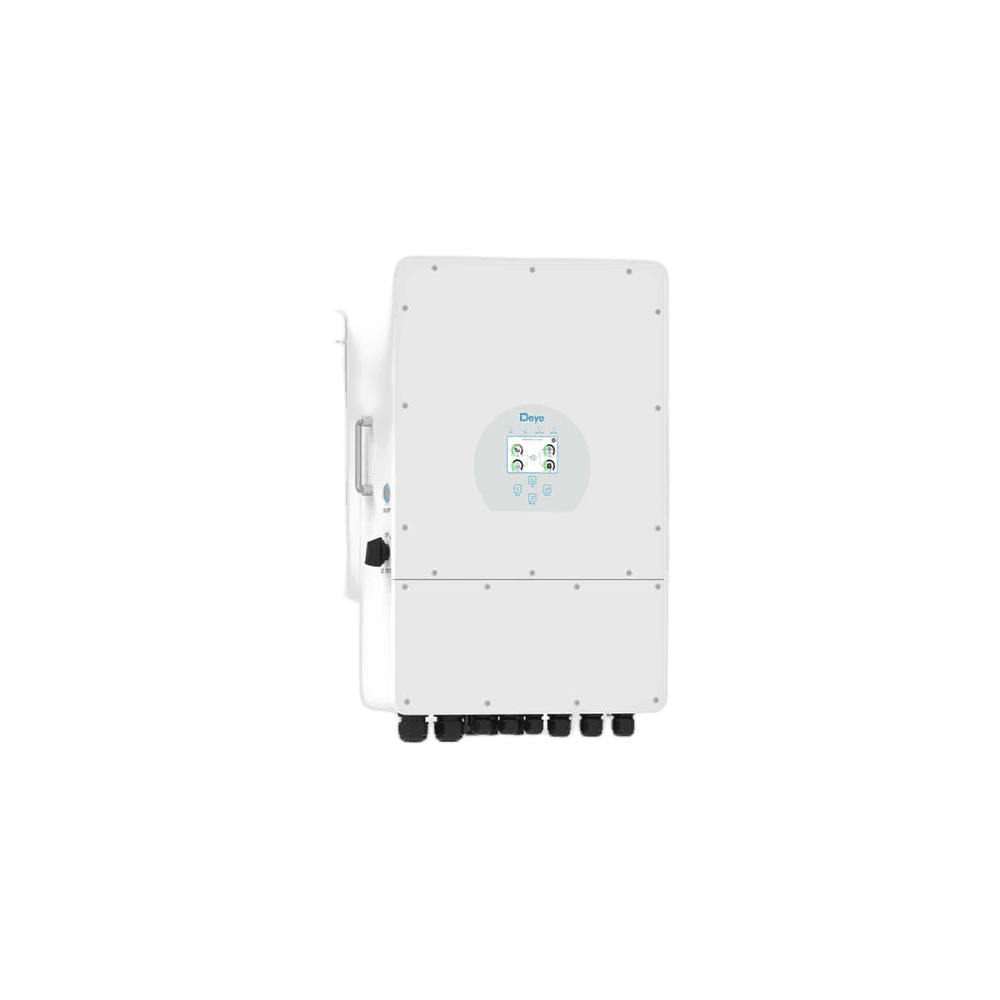
Deye 5 kW Three-Phase Hybrid Solar Inverter SUN-5K-SG04LP3-EU
- Rated AC Output Active Power:5000 W
- Max. Efficiency:97.6 %
Deye 6 kW Single-Phase Hybrid Solar Inverter SUN-6K-SG04LP1-EU
- Rated AC Output Active Power:6000 W
- Max. Efficiency:97.6 %
First, find your column
One datasheet covers a whole family. This one holds four ratings, 3, 3.6, 5 and 6 kW, and the number in the model code tells you which column is yours. Most rows are identical across the four. The ones that change are the ones that matter: maximum PV input power is 4.8, 5.76, 8 and 9.6 kW, and maximum charge current is 70, 90, 120 and 135 A. Reading the wrong column is the commonest mistake, and it is how a SUN-3K-SG04LP1-EU ends up with the array of a SUN-6K-SG04LP1-EU.
Block 1: the PV input
This block decides your panels.
| Line | SUN-5K-SG04LP1 | What it decides |
|---|---|---|
| Max. PV Input Power | 8 kW | Total wattage of the array |
| Max. PV Access Power | 10 kW | A second ceiling the record also states |
| Max. PV Input Voltage | 500 V | Longest string, on a cold morning |
| MPPT Voltage Range | 150-425 V | Where the string should work |
| Startup Voltage | 125 V | Shortest string that wakes the unit |
| Number of MPPTs | 2 | How many independent roof faces |
| Max. Operating PV Input Current | 13+13 A | Which modules suit each input |
The record prints two power ceilings, 8 kW and 10 kW, and we print both. Our sizing engine keeps arrays inside the lower one.
Block 2: the battery
Battery type reads lead-acid or lithium-ion. Battery voltage range reads 40-60 V, which is the line that separates this unit from a high-voltage hybrid: the SUN-5K-SG01HP3 states 160-700 V and accepts lithium-ion only. Maximum charge current and maximum discharge current are both 120 A. The row for charge and discharge time periods reads 6, the number of schedule slots you can program; the guide on programming a Deye inverter covers what goes into them.
Block 3: the AC side
Rated power is 5 kW and maximum apparent power 5.5 kVA. Rated output voltage is 220/230 V and the grid connection form L+N+PE, which is how a datasheet says single-phase; the three-phase SUN-5K-SG04LP3-EU reads 3L+N+PE. Maximum continuous AC pass-through current is 40 A: that is what can flow through the unit to your loads while the grid is present, and it is a different line from the inverter's own output. Parallel units reads 16, and generator support reads yes, diesel.
Block 4: efficiency and environment
Maximum efficiency is 97.6% and European efficiency 96.5%; the second is the weighted figure and the fairer one to compare between units. The IP rating is IP65, the operating temperature range -40 to 60 °C, the cooling natural, and the noise level below 30 dB. The cabinet measures 330 x 433 x 228 mm and the unit weighs 17 kg. Permissible altitude is 2,000 m.
Block 5: protections and standards
A row of yes and optional. On this unit, DC reverse polarity protection, anti-islanding protection, insulation impedance detection, residual current detection and the AC overcurrent, overvoltage and short-circuit protections all read yes; the arc fault circuit interrupter reads optional. Each of these is also the origin of a fault code: when a protection trips, the display shows the code, and our error-code lookup explains it, with the SUN LP1 hybrid series codes for this family.
The grid regulations row lists the standards the unit is declared against, among them IEC 61727, IEC 62116, EN 50549, G98, G99 and VDE-AR-N 4105. Each one is a separate standard. A utility asks for particular ones by name, so look for the exact string it requires.
When a line is missing
A datasheet page can lack a line you expected to find. On this unit, generator input current and ground fault monitoring are two examples: the source table gives no value for either. A missing line does not mean no, and it does not mean yes. Where the source states nothing, our pages print nothing rather than a guess. If a line you need is absent, that is a question to ask before ordering, not a gap to fill by assumption.
Reading two datasheets together
A datasheet answers what one unit does. Choosing means reading two. The comparison tool places two units in adjacent columns so the differing rows stand out, and the single-phase vs three-phase inverter comparison walks through the most common pair.
From the datasheet to a system
Once you can read the PV block and the battery block, a system is arithmetic. The sizing calculator does it from your appliances and returns an inverter, a battery and a panel count whose figures you can now check against the lines above. The price on each product page is the price you pay, and orders are collected in store, in Dubai or Riyadh.
Frequently Asked Questions
Where can I get the Deye inverter catalogue as a PDF?
One datasheet lists four models. Which column is mine?
Which datasheet line tells me which battery I can connect?
What is the difference between rated power and maximum PV input power?
Ready to order?
Every unit in the catalogue carries its price — add it to the cart and order online, then collect it from our store in Dubai or Riyadh.
Deye Datasheets
Error codes in this article
Each code links to its full page: what it means on every model, the cause, and the fix from the official manual.
Search all 699 Deye error codes →