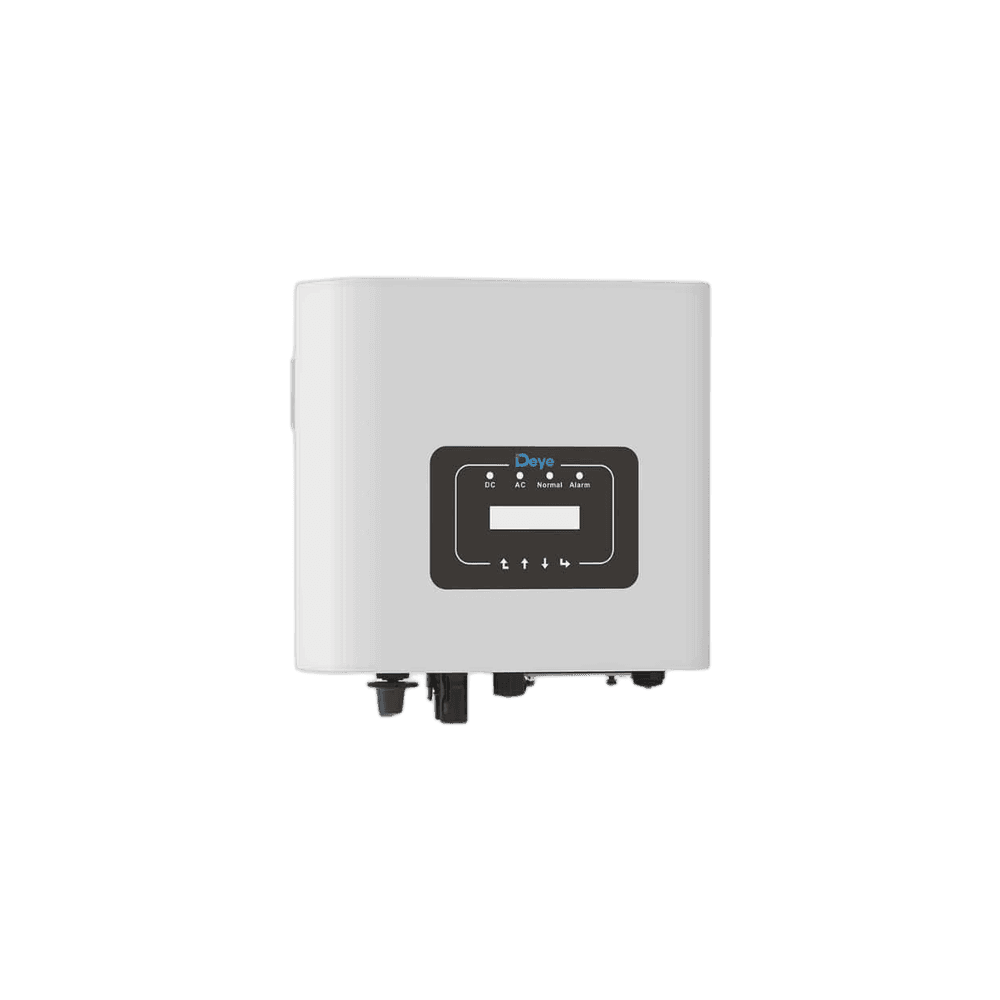
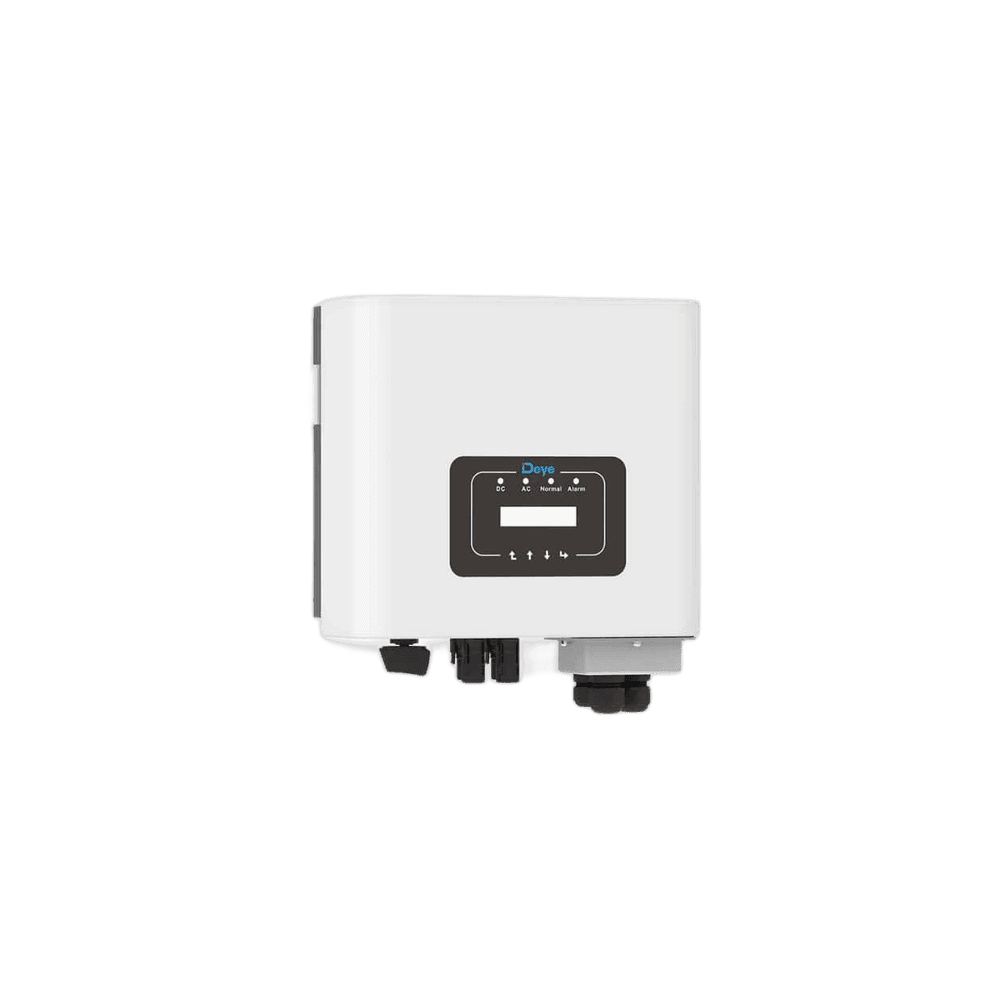
Can You Put Solar on an Apartment Balcony in Dubai or Sharjah?
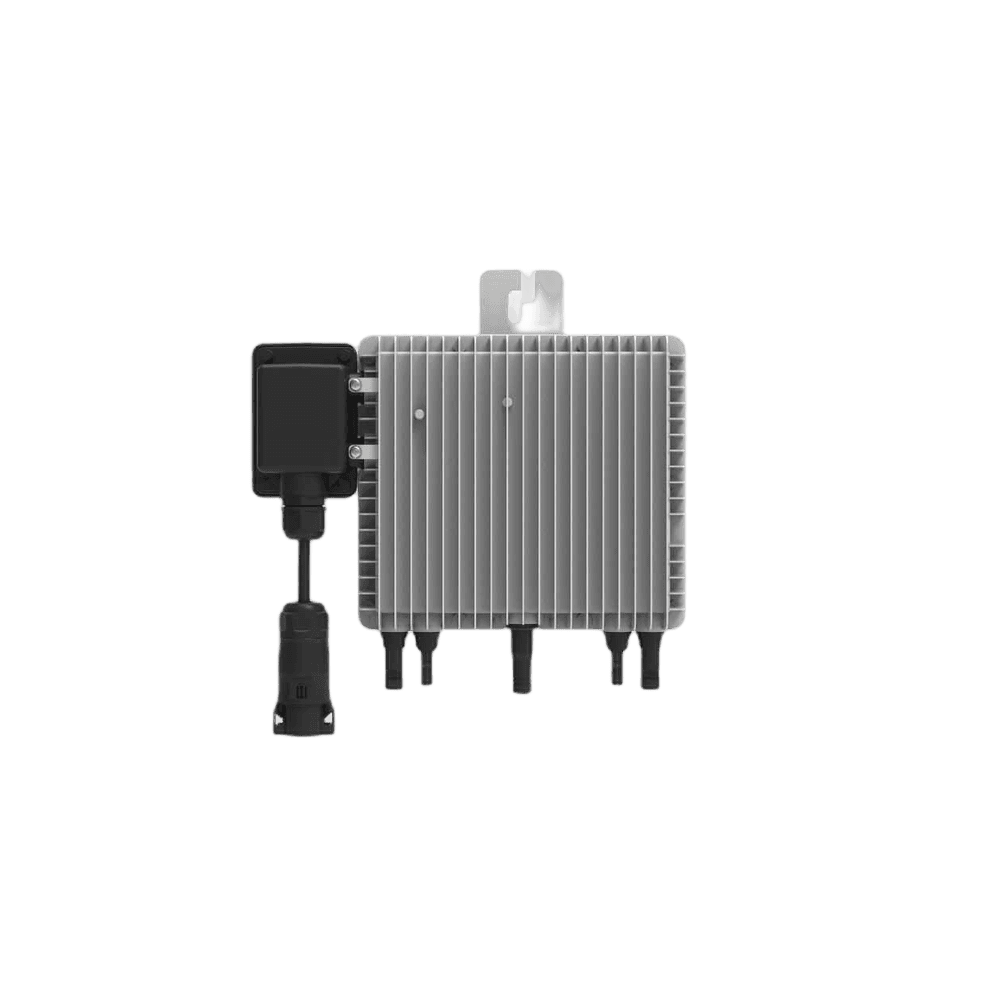
Deye inverter noise runs from under 25 dB to under 65 dB. Which units can live on a flat's balcony or a shared wall, which cannot, and who actually grants the permission.
You live in a flat, you can see the sun on your balcony every afternoon, and you would like some of it on your bill. The question that stops most people is not the panel — it is the box. Where does the inverter go in an apartment, and will the neighbour on the other side of that wall hear it at two in the morning?
Both questions have a number behind them, and it is published. Every Deye inverter record carries a noise figure and an ingress rating, and across the 134 records the noise column runs from under 25 dB to under 65 dB. That is a very wide range for a device most people assume is silent, and the difference between the two ends decides whether an inverter belongs on a balcony, in a store cupboard, or nowhere near a home at all.
We are an authorised Deye distributor and our counter is in Deira, Dubai. Order online: every model in the catalogue shows its price, and checkout takes a minute.
Products mentioned in this article
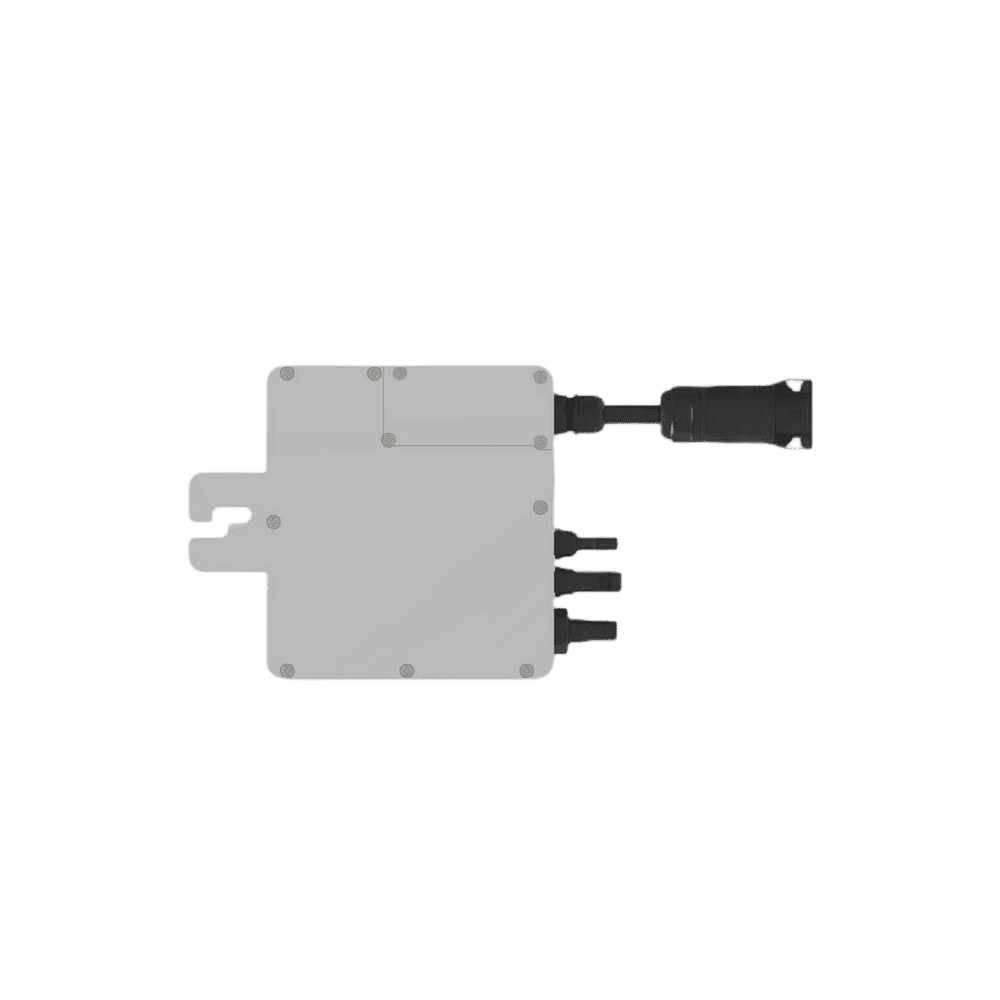
Deye 300 W Single-Phase Micro Solar Inverter SUN-M30G4-EU-Q0-I

- Rated AC Output Active Power
- 300 W
- Max. Efficiency
- 96.5 %
- Number of MPPTs
- 1
- Grid Connection Form
- L+N+PE
Price incl. VATAED 279
Deye 400 W Single-Phase Micro Solar Inverter SUN-M40G4-EU-Q0-I
- Rated AC Output Active Power
- 400 W
- Max. Efficiency
- 96.5 %
- Number of MPPTs
- 1
- Grid Connection Form
- L+N+PE
Price incl. VATAED 279
Deye 500 W Single-Phase Micro Solar Inverter SUN-M50G4-EU-Q0-I
- Rated AC Output Active Power
- 500 W
- Max. Efficiency
- 96.5 %
- Number of MPPTs
- 1
- Grid Connection Form
- L+N+PE
Price incl. VATAED 279
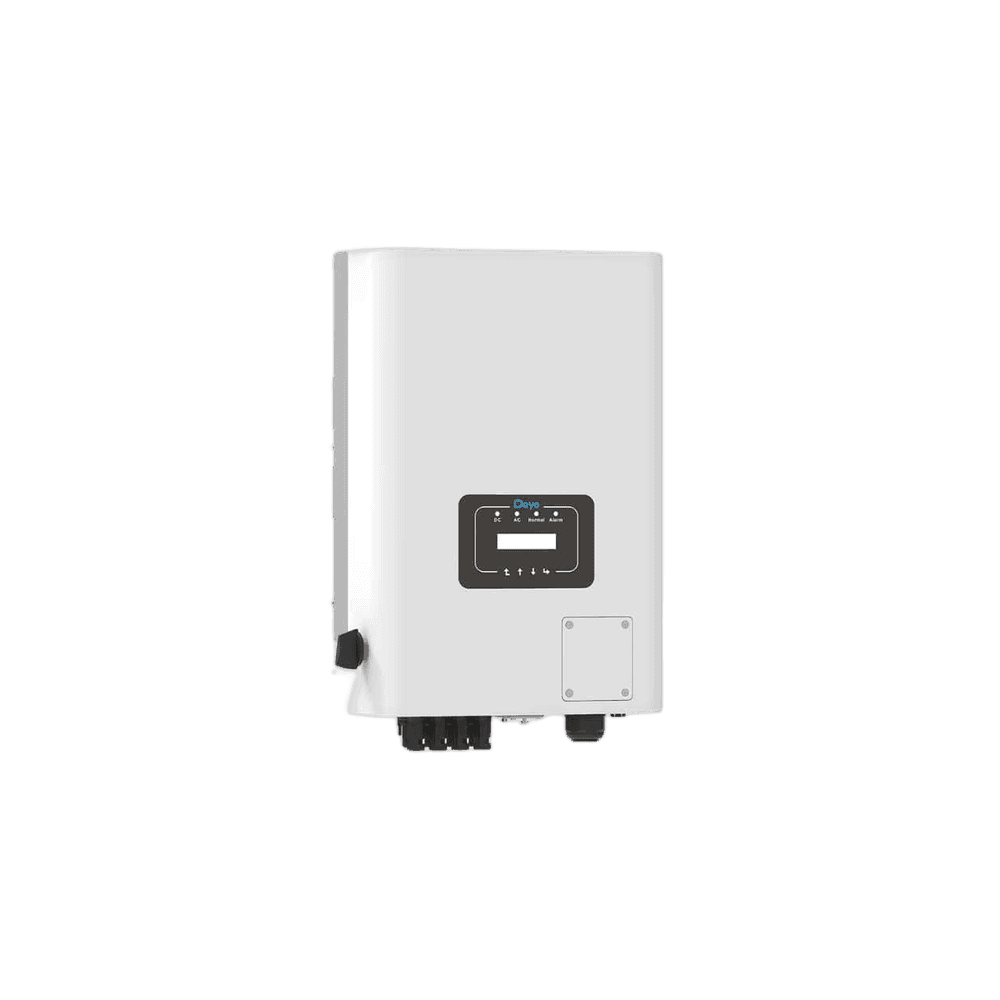
Deye 15 kW Three-Phase String Solar Inverter SUN-15K-G05
- Rated AC Output Active Power
- 15000 W
- Max. Efficiency
- 98.5 %
- Number of MPPTs
- 2
- Grid Connection Form
- 3L+N+PE
Price incl. VATAED 6,399
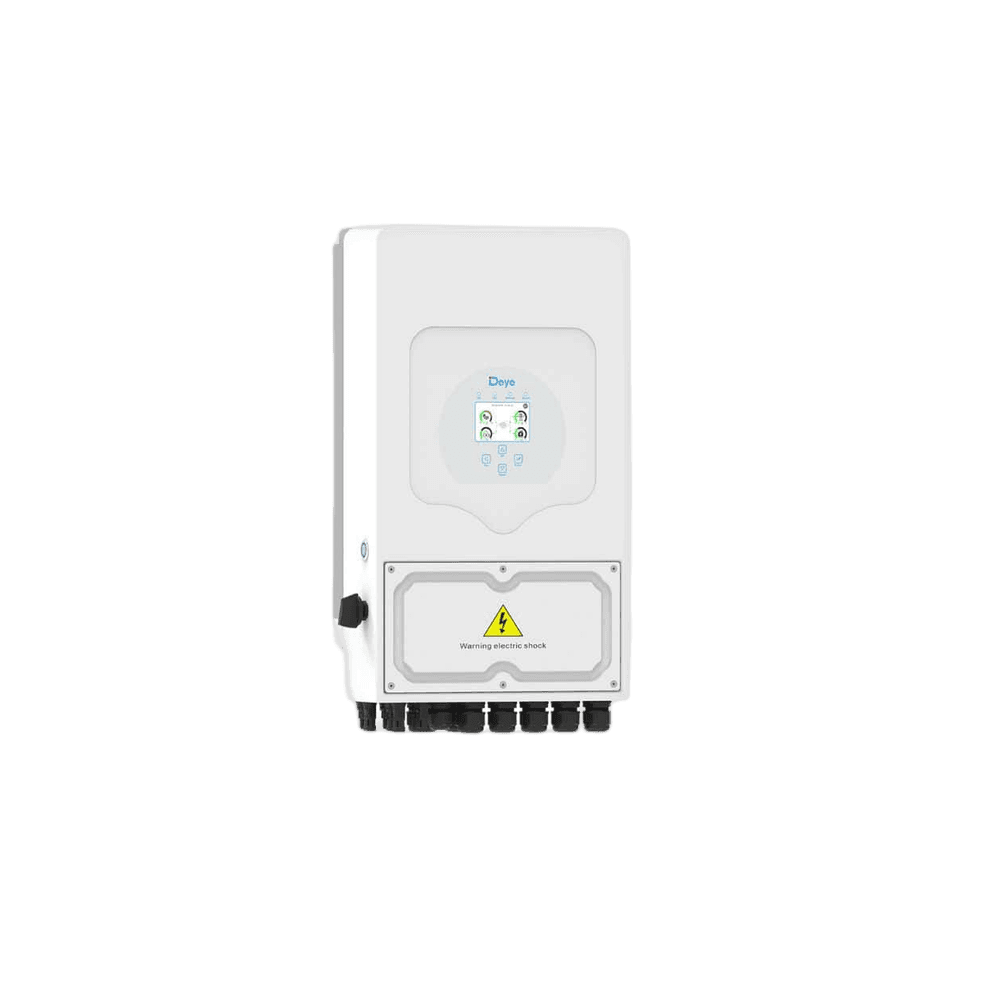
Deye 3.6 kW Single-Phase Hybrid Solar Inverter SUN-3.6K-SG05LP1-EU
- Rated AC Output Active Power
- 3600 W
- Max. Efficiency
- 97.6 %
- Number of MPPTs
- 2
- Grid Connection Form
- L+N+PE
Price incl. VATAED 6,135
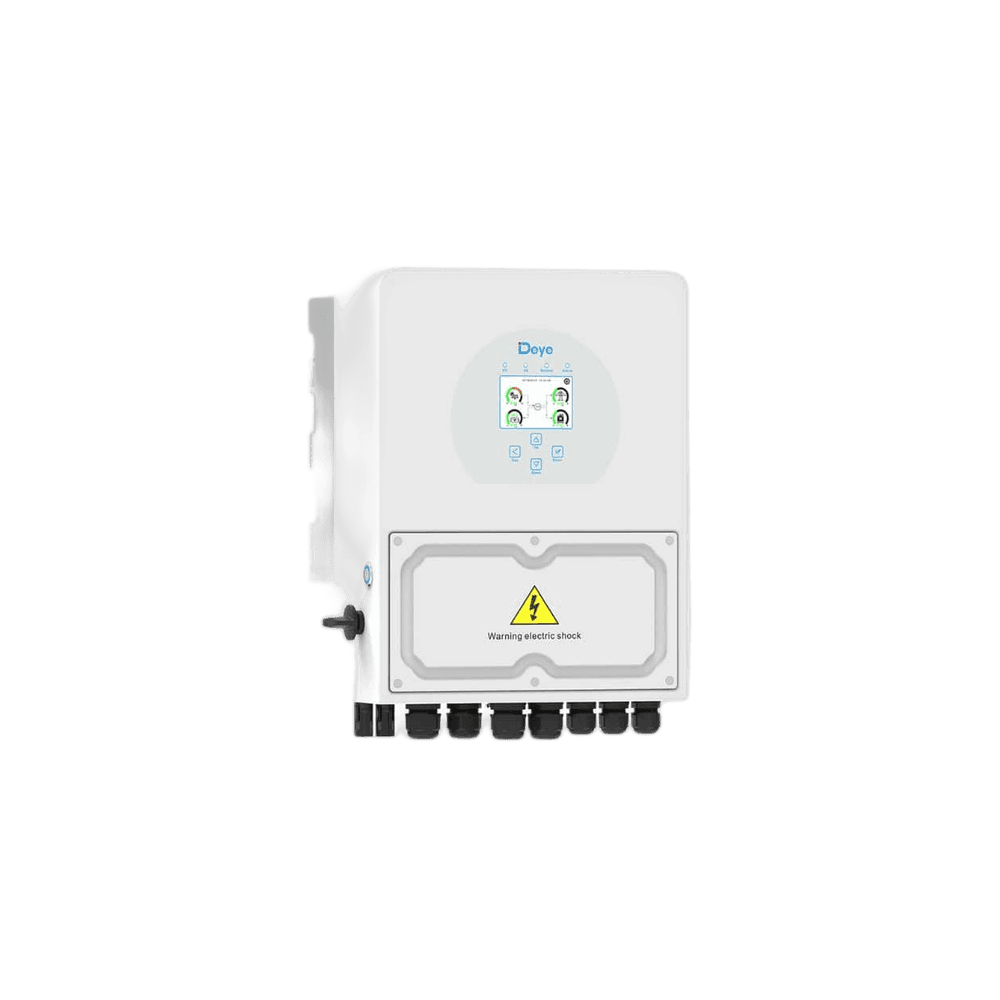
Deye 3 kW Single-Phase Hybrid Solar Inverter SUN-3K-SG04LP1-EU
- Rated AC Output Active Power
- 3000 W
- Max. Efficiency
- 97.6 %
- Number of MPPTs
- 1
- Grid Connection Form
- L+N+PE
Price incl. VATAED 3,211
Can you put solar on an apartment balcony in Dubai or Sharjah?
Technically, yes — and the hardware that makes it possible is the microinverter. Deye's twelve microinverter records are the quietest and best-sealed units in the whole range: every one states noise under 25 dB and an IP67 enclosure, and the smallest three weigh 1.85 kg in a case measuring 173 × 158.5 × 31.5 mm. A unit that size mounts behind the panel or on the rail, needs no wall inside your flat, and takes weather that would end an indoor product. The practical obstacle in a Dubai or Sharjah apartment is almost never the equipment — it is permission. A balcony in a tower is usually governed by the building's owners association, and the grid connection is the utility's decision, not yours or ours.
How loud is a solar inverter, actually?
Loud enough to matter, on the wrong model. Here is the whole Deye inverter fleet sorted by the noise column, with how many records sit in each band:
| Noise band | Records | What sits there |
|---|---|---|
| Under 25 dB | 12 | All twelve microinverters |
| Under 30 dB | 12 | Single-phase hybrids, SG04LP1 and SG05LP1 |
| Under 35 dB | 32 | Single-phase string inverters, G04 and G05 families |
| Under 40 dB | 1 | SUN-15K-G05, three-phase |
| Under 45 dB | 10 | Three-phase G06P3 string inverters |
| Under 50 dB | 8 | Larger single-phase hybrids and mid three-phase string |
| Under 55 dB | 33 | Three-phase hybrids and larger three-phase string |
| Under 60 dB | 9 | Three-phase, 14 kW and above |
| Under 65 dB | 17 | The largest three-phase units in the range |
One pattern in that table decides the apartment question on its own: no single-phase Deye inverter is rated louder than under 55 dB, and everything above that band is three-phase. Three-phase units are not apartment equipment anyway. So a flat is never choosing between a quiet unit and a loud one — it is choosing between very quiet and quiet.
Why the microinverter is the flat's answer
A microinverter converts at the panel instead of at a wall box. For an apartment that changes three things at once.
- It is outdoors by design. All twelve records state IP67, the only IP67 units in the range — the other 122 inverters are IP65. IP67 covers dust and temporary immersion, so weather exposure on an open balcony is not a compromise.
- It is small and light. 1.85 kg for the SUN-M30G4-EU-Q0-I, SUN-M40G4-EU-Q0-I and SUN-M50G4-EU-Q0-I; 3 kg for the 600 to 1,000 W units; 5.1 to 5.2 kg at the top of the family.
- It is the quietest thing Deye publishes, at under 25 dB — and it is not on your wall, so even that figure is measured somewhere you are not sitting.
- It is rated -40 to 65 °C ambient, which is the widest range in the whole inverter fleet and the one you want on an exposed south-facing balcony in August.
There is one architectural difference worth knowing. A DC isolator is listed on 122 inverter records and marked not applicable on the twelve microinverters, because a micro converts at the module and there is no long DC string running into your home. Surge protection is Type II on the AC side on all twelve; the larger units carry Type II on both DC and AC.
Which microinverter for how many panels?
Pick by how many modules the balcony or the roof section actually holds, then check the parallel limit — how many of that model may sit on one branch.
| Model | Rated AC output | Max PV input | MPPTs | Weight | Units in parallel |
|---|---|---|---|---|---|
| SUN-M30G4-EU-Q0-I | 300 W | 420 W | 1 | 1.85 kg | 17 |
| SUN-M40G4-EU-Q0-I | 400 W | 560 W | 1 | 1.85 kg | 13 |
| SUN-M50G4-EU-Q0-I | 500 W | 700 W | 1 | 1.85 kg | 10 |
| SUN-M60G4-EU-Q0 | 600 W | 840 W | 2 | 3 kg | 8 |
| SUN-M80G4-EU-Q0 | 800 W | 1,120 W | 2 | 3 kg | 6 |
| SUN-M100G4-EU-Q0 | 1,000 W | 1,400 W | 2 | 3 kg | 5 |
| SUN-M225G4-EU-Q0 | 2,250 W | 3,160 W | 4 | 5.2 kg | 3 |
A one-panel balcony is a SUN-M30G4 or SUN-M40G4 job. Two panels facing slightly different ways want the two independent MPPTs on a SUN-M60G4 or SUN-M80G4, so one shaded module does not drag the other down. Four panels on a private roof terrace is where the four-MPPT SUN-M225G4 earns its place. All of them state 96.5 % maximum efficiency and a 10-year warranty term in the record.
Where a microinverter can live on a balcony
Under the panel, in its shade, on the mounting rail — not on the wall of the flat behind it. Two reasons. The panel itself is the shade structure that keeps the unit's ambient temperature down on an August afternoon, and mounting on the array rather than the building usually keeps the whole installation reversible, which is what a landlord or an owners association wants to hear.
Keep the AC lead run tidy and terminate it in a proper enclosure, not a socket adapter. And accept the honest limit of a balcony: one or two modules will visibly move a small flat's daytime consumption, but it is a supplement, not an independent supply. A flat with no battery has nothing at night.
When an apartment needs a wall-mounted inverter instead
If your home is a townhouse, a duplex or a ground-floor unit with a private roof or a utility room — the cases people often still call an apartment — a wall-mounted hybrid becomes possible, and with it a battery and real backup.
The twelve quietest wall units in the range are the single-phase hybrids at under 30 dB: the SUN-3K-SG04LP1-EU at 17 kg with natural cooling, the SUN-3.6K-SG05LP1-EU and SUN-5K-SG05LP1-EU at 24.9 kg. All are IP65, all state -40 to 60 °C, and all state 97.6 % maximum efficiency. The naturally cooled 3 kW unit is the one to ask about if the wall is genuinely shared with a bedroom, because a fanless unit has no moving part to age into a rattle.
Where an inverter should not go in a flat
- Any three-phase unit. Every record above the under-55 dB band is three-phase, and a flat's supply is not.
- Inside a sealed store cupboard with no ventilation. 113 of the 134 records state that output begins derating at 45 °C ambient; a closed cupboard in a Dubai summer reaches that on its own.
- On a bedroom wall shared with a fan-cooled unit, if you can choose a naturally cooled one instead. 59 records state natural cooling; 71 state intelligent air cooling and 4 state smart cooling.
- Anywhere the building's rules do not allow a fixed alteration — which on most balconies in a tower means anywhere at all until you have asked.
Where to get the permission answer
We can tell you the noise figure, the IP rating and the weight of any unit in the range, because those are published in the technical record and we sell against them. We cannot tell you whether your particular tower will approve a balcony array, what the connection application costs, or how long it takes — those are not our numbers to publish.
The people who hold them are: your building's owners association or building management for the balcony itself; DEWA for a grid connection in Dubai and SEWA for one in Sharjah, in both cases through a contractor they have enrolled. Ask those three in that order, then come back to us with the answer and we will match the hardware to what you have actually been allowed to do.
Order online: every model in the catalogue shows its price, and checkout takes a minute.
Frequently Asked Questions
How noisy is a solar inverter in an apartment?
Which Deye inverter is best for a balcony?
Is IP67 better than IP65 for a balcony inverter?
Do I need my building's permission to install solar on a balcony?
Can a balcony solar system power my flat at night?
Can I put a hybrid inverter inside an apartment store room?
- #apartment solar
- #balcony solar
- #microinverter
- #inverter noise
- #Dubai
- #Sharjah
- #IP67
Ready to order?
Every unit in the catalogue carries its price — add it to the cart and order online, then collect it from our store in Dubai or Riyadh.