The Quietest Solar Inverter for an Apartment in Mecca or Medina
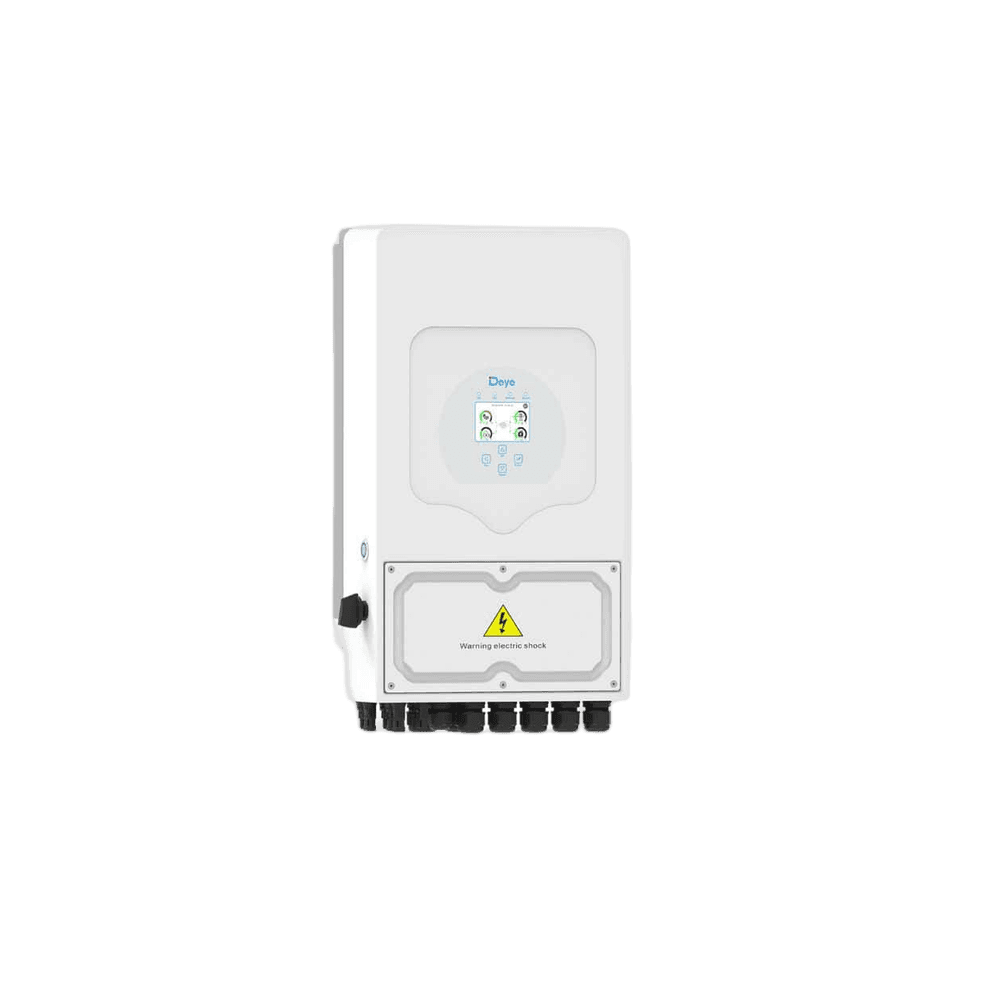
Deye publishes a noise level on all 134 inverter records, from under 25 dB to under 65 dB. Twelve state under 25 dB and twelve state under 30 dB — and every record below 40 dB in the whole range is a single-phase machine.
In an apartment in Mecca or Medina the constraint is not kilowatts. It is the wall you share with a neighbour and the fact that there is no plant room to hide anything in. Deye publishes a noise level on every one of its 134 inverter records, and it runs from under 25 dB to under 65 dB — a 40 dB spread inside one catalogue. Twelve records state under 25 dB and another twelve state under 30 dB. Those 24 are your shortlist, and there is a pattern in them worth knowing before you shop: every single record below 40 dB in the entire range is a single-phase machine. The quiet end of this catalogue and the single-phase end are the same end, which means the question of where an inverter can live in a flat mostly answers itself once you read one row.
We are an authorised Deye distributor with store pickup in Riyadh. To buy, open the catalogue, add the model to the cart and check out online.
Products mentioned in this article
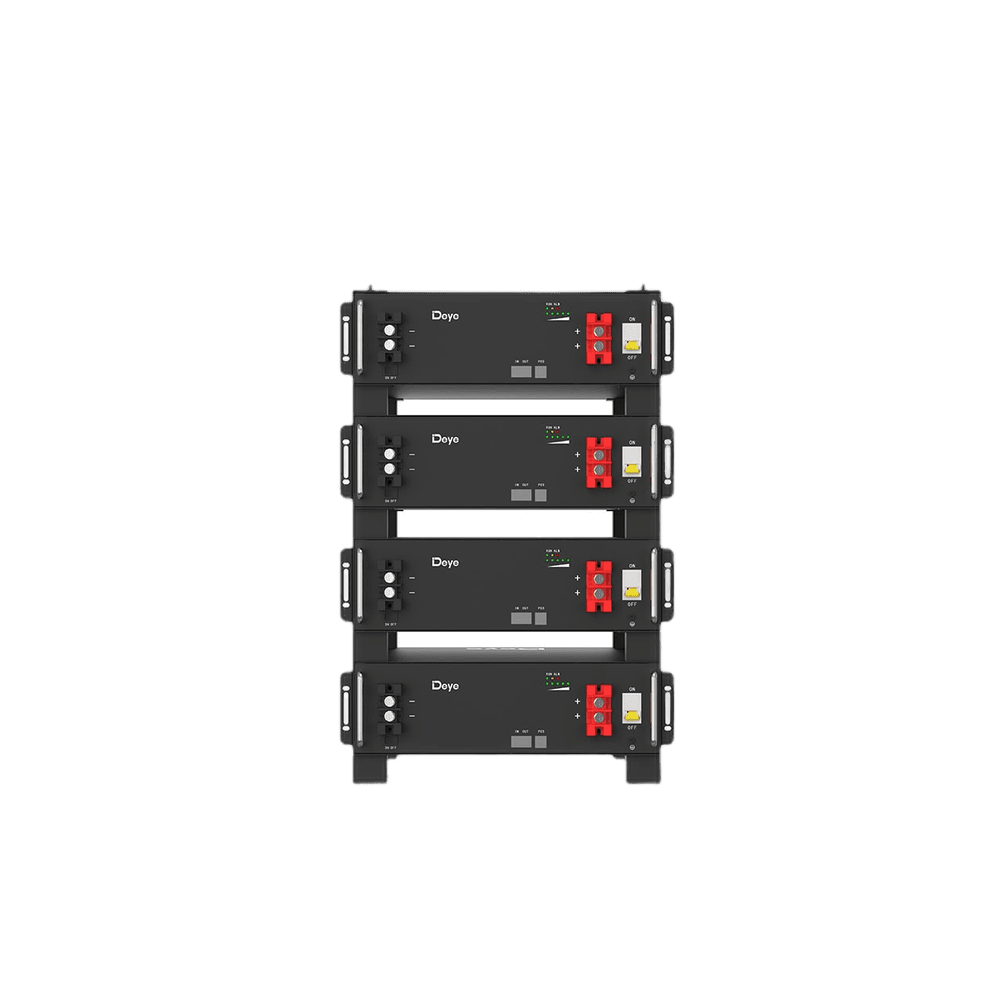
Deye 5.12 kWh 51.2 V Lithium Solar Battery SE-G5.1

- Energy
- 5.12 kWh
- Usable Energy
- 4.1 kWh
- Nominal Voltage
- 51.2 V
- Cycle Life
- >6000
Price incl. VATAED 2,520
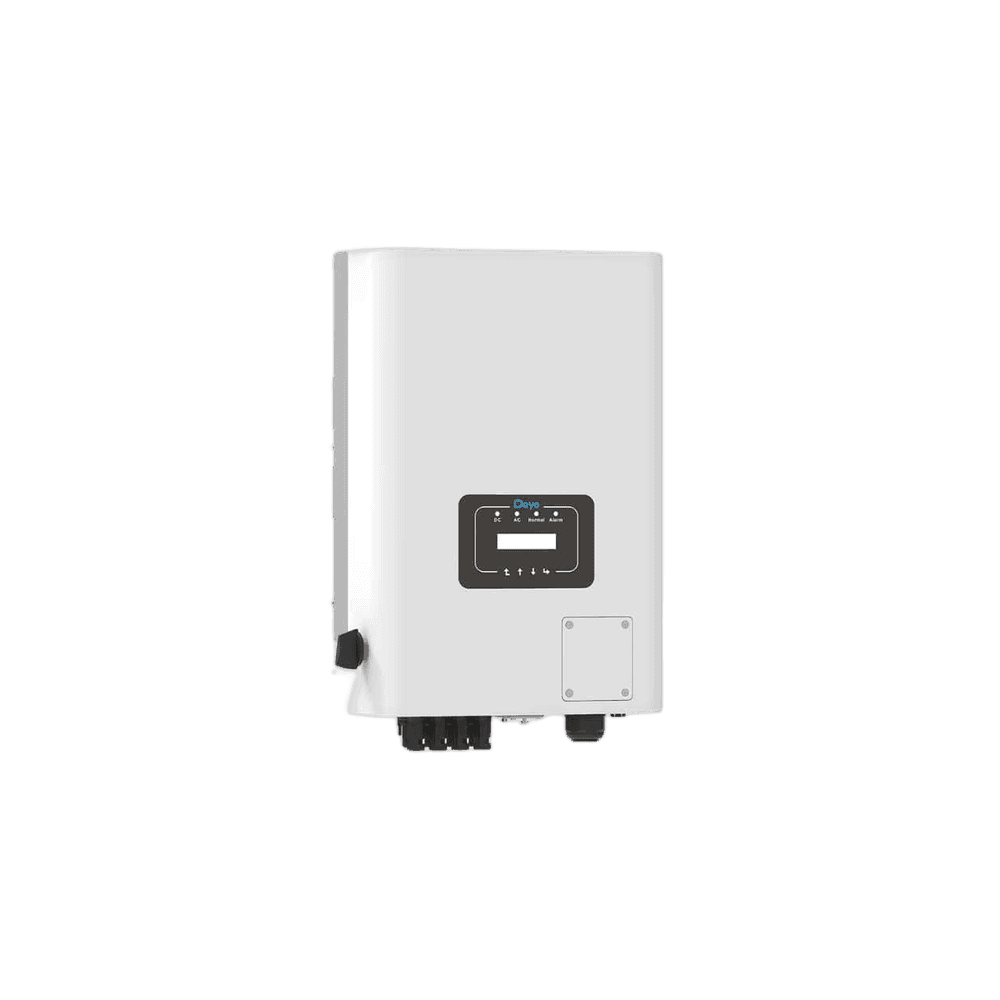
Deye 15 kW Three-Phase String Solar Inverter SUN-15K-G05
- Rated AC Output Active Power
- 15000 W
- Max. Efficiency
- 98.5 %
- Number of MPPTs
- 2
- Grid Connection Form
- 3L+N+PE
Price incl. VATAED 6,399
How quiet is quiet, across this range?
The noise row groups almost perfectly by family, which makes the ladder easy to read:
| Noise level | Records | What they are |
|---|---|---|
| Under 25 dB | 12 | SUN-M microinverters, single phase |
| Under 30 dB | 12 | Single-phase hybrids — SG04LP1 and SG05LP1 |
| Under 35 dB | 32 | Single-phase grid-tie string inverters |
| Under 40 dB | 1 | SUN-15K-G05, three phase |
| Under 45 dB | 10 | G06P3 three-phase string inverters |
| Under 50 dB | 8 | SG01LP1 hybrids and the larger G05 string inverters |
| Under 55 dB | 33 | Three-phase hybrids, G03 string inverters, off-grid units |
| Under 60 dB | 9 | SG05LP3 hybrids and the 30–36 kW G04 string inverters |
| Under 65 dB | 17 | The largest hybrids and string inverters in the range |
Read the bottom half of that table and you can see why apartment quotations go wrong. A three-phase hybrid is a fine machine and it is also a machine that states somewhere between 55 and 65 dB. On a villa it goes on an external wall or in a store and nobody thinks about it again. In a flat there is often nowhere it can go that is not next to somebody.
The under-25 dB group does not live in the flat at all
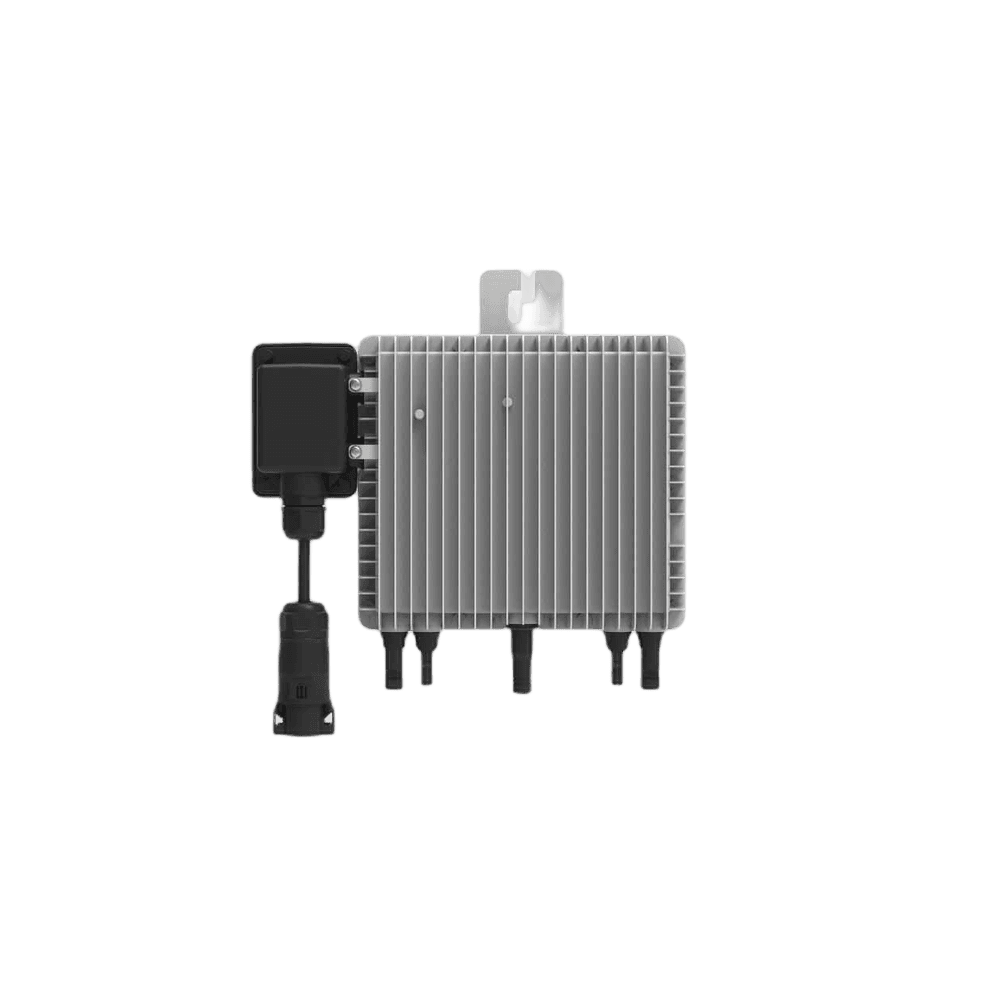
The twelve records at under 25 dB are the SUN-M microinverters, and their noise figure is almost beside the point, because they are designed to sit on the racking under the panels rather than inside your home. They state IP67, natural cooling with no fan, an isolated topology and a 10-year warranty term, at rated outputs from 300 W to 2,250 W.
What makes them interesting for apartment living is size rather than sound. The SUN-M60G4 is 3 kg and measures 280.5 × 190 × 40 mm; the SUN-M130G4 is 5.1 kg at 311 × 250.5 × 36.5 mm with four MPPTs; the SUN-M225G4 is 5.2 kg at 358 × 255.5 × 36.5 mm, also with four MPPTs. There is no wall-mounted box in the apartment at all, which for a small balcony array or a few panels on a shared roof is often the only arrangement a building will permit.
The under-30 dB group is the one that goes on your wall
If you want a battery and backup rather than daylight generation, this is the group. All twelve records are single-phase hybrids, and they split into two shapes.
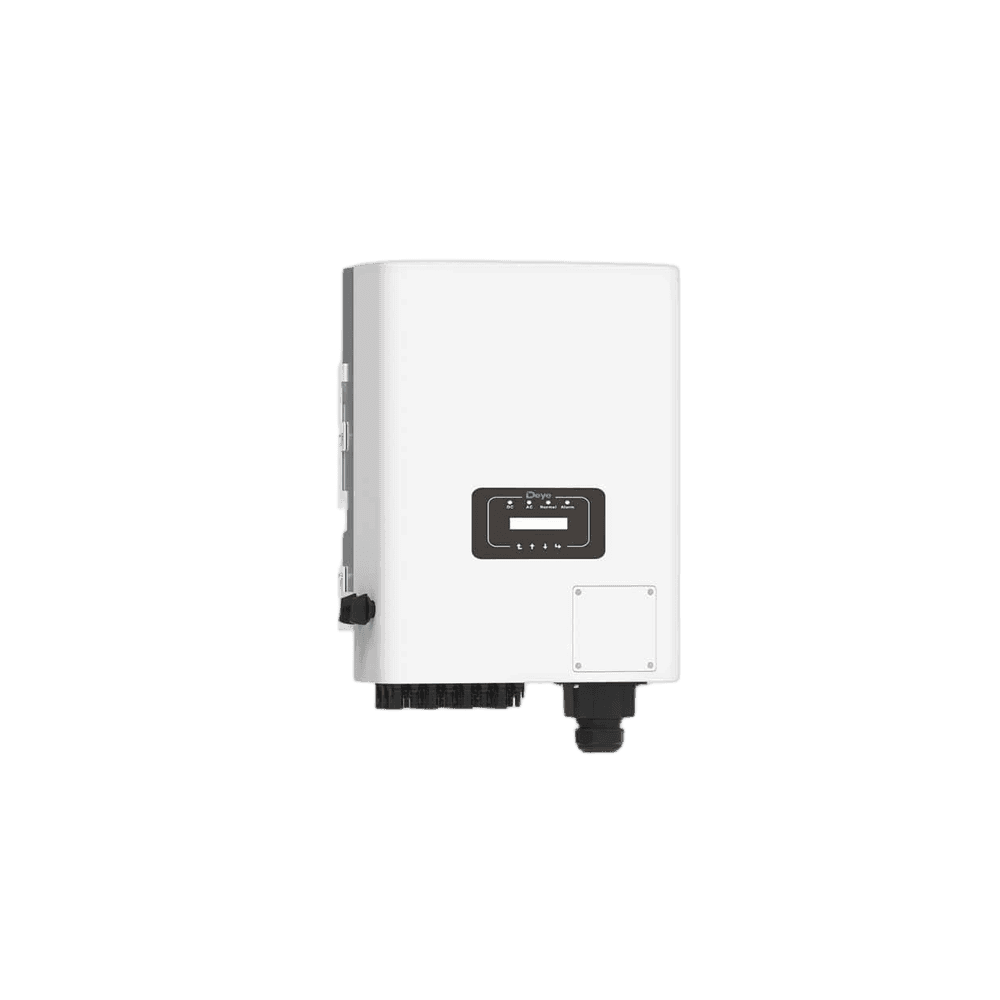
- SG04LP1 — naturally cooled, no fan. The SUN-3K-SG04LP1 states 3,000 W rated output, 17 kg, 330 × 433 × 228 mm, one MPPT and 4,800 W maximum PV input, with a warranty term of 5/10. The 3.6 kW, 5 kW and 6 kW versions share the same box and weight.
- SG05LP1 — fan-assisted, and still under 30 dB. The SUN-3.6K-SG05LP1 and SUN-5K-SG05LP1 state 24.9 kg and 330 × 580 × 232 mm, two MPPTs, and 5,760 W and 8,000 W maximum PV input respectively. The line runs up to 10 kW and every member of it still states under 30 dB.
That second point is the one that surprises people. The SG04LP1 units use natural cooling and the SG05LP1 units use intelligent air cooling, and both state the same noise ceiling. A fan in this range does not automatically mean a louder unit — it means a unit that can move more heat out of a denser box. What it does mean is a moving part and an airflow path, so if the inverter is going into a utility cupboard, the fanless option asks less of the ventilation.
Both groups are heavier than they look for a plasterboard partition. 17 kg and 24.9 kg are masonry fixings, and the battery beside them is heavier again.
Single phase or three phase for a flat?
Almost certainly single phase, and the catalogue reflects it. 62 of the 134 inverter records state L+N+PE — single phase plus neutral and earth — and they run from 1,000 W to 16,000 W of rated AC active power. The other 72 state 3L+N+PE and are three-phase machines. Fifty-six of those 62 single-phase records state under 35 dB, which is why the quiet end and the single-phase end are the same end of this catalogue.
Where the battery goes in an apartment
Indoors, and for once the specification agrees with the constraint. Across the 34 Deye battery records the enclosure rating is IP20 on 12 and IP65 on 10, with IP21, IP54 and IP55 accounting for the rest. IP20 is an indoor rating, which in a flat is exactly where the battery was always going to be.
- The SE-G5.1 states 5.12 kWh, 44 kg, 440 × 133 × 540 mm, an IP20 enclosure, and wall, floor or rack mounting — which is the format that fits an apartment utility area.
- Storage temperature is stated as 0–35 °C on most battery records, which is a narrower window than the charge range and worth checking if the unit will sit unused for a season.
- Charge temperature is stated as 0–55 °C on 19 records and discharge as −20 to 55 °C on 26. A closed cupboard in a hot building pushes toward the top of that window.
- All 34 records are LiFePO4 with a cycle life stated as greater than 6,000, and 27 of them state a 10-year warranty term.
- Weight is the real apartment constraint. A 44 kg battery on a wall is a structural question, and stacking several is a floor-loading one.
Where to get permission to install
Whether you may put panels on the roof of an apartment building, run a cable down a riser, or alter the meter arrangement is not an equipment question, and no spec sheet settles it. Those answers sit with the building owner or the owners' association, and with your electricity provider for anything that touches the connection. Ask them before you choose a model, because a shared-roof restriction can move you from a wall-mounted hybrid to a handful of microinverters in a single conversation.
Related reading: what happens to output above 45 °C and which inverter suits a coastal rooftop. Order online: every model in the catalogue shows its price, and checkout takes a minute.
Frequently Asked Questions
What is the quietest Deye solar inverter?
How loud is a solar inverter in a flat?
Which solar inverter can I put on a bedroom wall?
Do fanless inverters run quieter than fan-cooled ones?
Do I need a three-phase inverter for an apartment?
Where should the battery go in an apartment?
- #Mecca
- #Medina
- #quiet inverter
- #apartment solar
- #noise level
- #single phase
Ready to order?
Every unit in the catalogue carries its price — add it to the cart and order online, then collect it from our store in Dubai or Riyadh.